



கம்பராமாயணம் 3098 · ஆரணிய 6.141
பாடல் · The poem
Tap a word to see its gloss in the commentary and where else it occurs.
பாட வேறுபாடு · Project Madurai reads
பொருள் · Meaning in Tamil
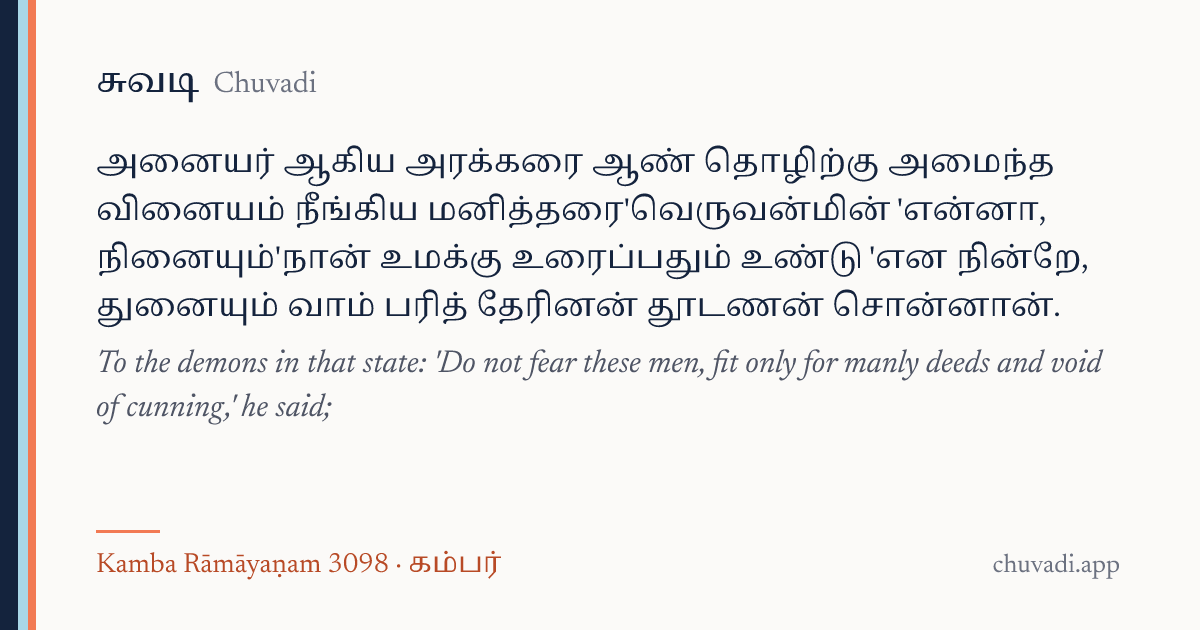
அனையர் ஆகிய அரக்கரை - அத்தன்மையராய் அஞ்சியோடுகின்ற இராக்கதர்களை (நோக்கி); துனையும் வாம் பரித் தேரினன் தூடணன் - விரைந்து தாவிச் செல்லும் குதிரைகள் பூட்டப் பெற்ற தேரின் மேல் ஏறியவனான தூடணன் என்னும் படைத் தலைவன்; 'ஆண் தொழிற்கு அமைந்த - 'ஆண்மைச் செயலுக்குப் பொருந்திய; வினையம் நீங்கிய மனித்தரை - தந்திரங்களை மேற்கொள்ளாத இந்த மனிதர்களைக் கண்டு; வெருவன்மின்' என்னா - நீங்கள் அஞ்சாதீர்கள் என்று கூறி; 'நான் நினையும் உமக்கு உரைப்பதும் உண்டு' என - 'நான் கருதக் கூடிய ஒன்றை உங்களுக்குச் சொல்ல வேண்டியுள்ள தென்று; நின்று சொன்னான் - ஓரிடத்தில் நின்று (அவர்களுக்குக்) கூறினான்.
தங்களைப் போல மாயையால் வஞ்சகப் போரைச் செய்யாமல் சூதின்றித் தருமப் போர் செய்வதையே இராமலக்குவர்க்கு ஒரு குறையாக்கி 'ஆண் தொழிற்கு அமைந்த வினையம் நீங்கிய மனித்தர்' என்றான். மனித்தர் - விரித்தல் விகாரம். வினையம் - சாமர்த்தியம் அல்லது உபாயமும் ஆம்.
ஆங்கிலம் · English translationAI
Translation
- To the demons in that state: 'Do not fear these men,
- fit only for manly deeds and void of cunning,' he said;
- and saying, 'I have something to tell you; think on it,' he stood firm,
- Tūṭaṇaṉ of the chariot with swift, bounding horses, and spoke.
What the poem says
Tūṭaṇaṉ, a commander of Karaṉ's army, drives up in his chariot drawn by leaping horses and stops the fleeing demons. He tells them not to fear these humans, and says he has something for them to consider.
He sneers at Irāmaṉ and Ilakkuvaṉ as men fit only for plain manly fighting with no cunning. Ironically, what he presents as a weakness, their refusal to fight by trickery and illusion as the demons do, is their virtue.