



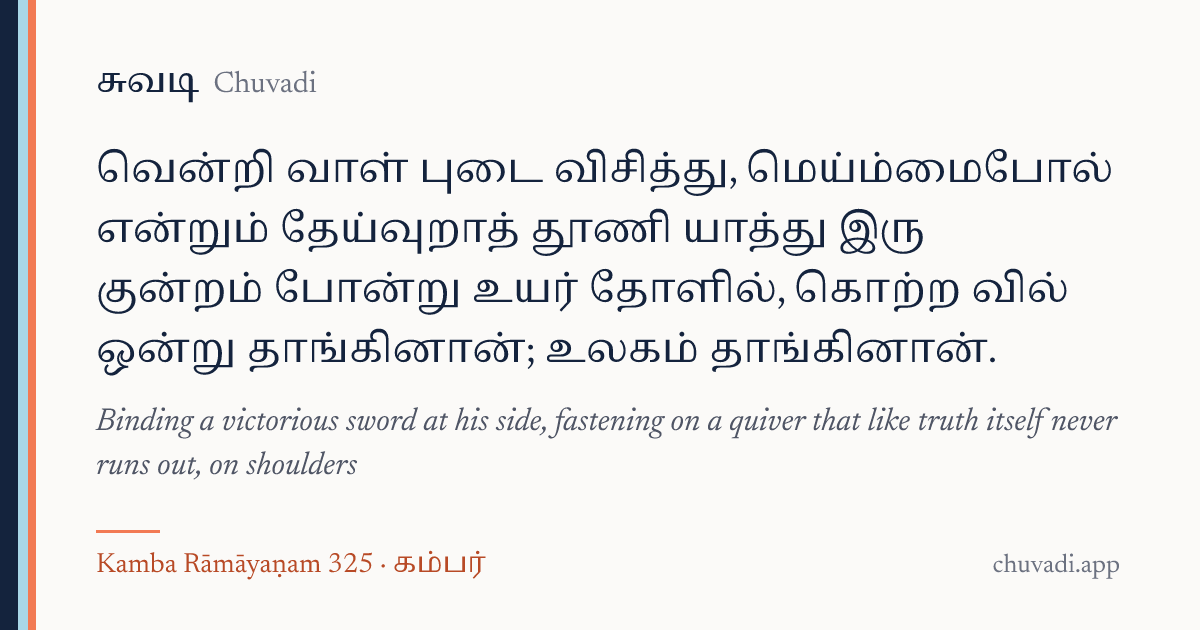
கம்பராமாயணம் 325 · பால 6.19
பாடல் · The poem
Tap a word to see its gloss in the commentary and where else it occurs.
பொருள் · Meaning in Tamil
உலகம் தாங்கினான் - காக்கும் கடவுளின் அம்சமான ராமன்; வென்றி வாள் புடை விசித்து - வெற்றியை உடைய வாளை இடையிலே கட்டிக் கொண்டு; மெய்ம்மை போல் - என்றும் அழியாத உண்மை போன்ற; என்றும் தேய்வு உறா தூணி யாத்து - அம்புகள் என்றும் தேயாத அம்பறாத்தூணியைத் தோளில் கட்டி; குன்றம் போன்று உயர் தோளில் - இரண்டு மலைகளைப் போன்று உயர்ந்த (மற்றொரு) தோளில்; கொற்றவில் ஒன்று தாங்கினான் - வெற்றி மிகுந்த வில் ஒன்றினையும் சுமந்தான்.
வென்றி: வெற்றி. வெல்: பகுதி. விசித்தல்: கட்டல். விசி: பகுதி. புடை: பக்கம். தூணியில் அம்புகள் என்றும் அறாத்தன்மையுடைமையால் “மெய்ம்மை போல் என்றும் தேய்வுறாத் தூணி” என்றார். இரு குன்றம்: பெரிய மலை எனலுமாம். உலகம் தாங்கும் உறுதி தோள்களுக்கு உண்மை பற்றி உலகம் தாங்கினான் என்றார். உலகம் தாங்கினான் - விசித்து - யாத்து - வில் தாங்கினான் என்க.
ஆங்கிலம் · English translationAI
Translation
- Binding a victorious sword at his side, fastening on a quiver
- that like truth itself never runs out, on shoulders
- high as two hills, he bore
- a single bow of victory: he who bears the world.
What the poem says
Irāmaṉ arms himself with sword, quiver and bow. His quiver never runs short of arrows, just as truth never wears away.
The play in the last line is the point: 'he bore a bow; he who bears the world.' The shoulders that carry a bow are those of the god who sustains the universe.