



கம்பராமாயணம் 34 · பால 2.14
பாடல் · The poem
Tap a word to see its gloss in the commentary and where else it occurs.
பாட வேறுபாடு · Project Madurai reads
பொருள் · Meaning in Tamil
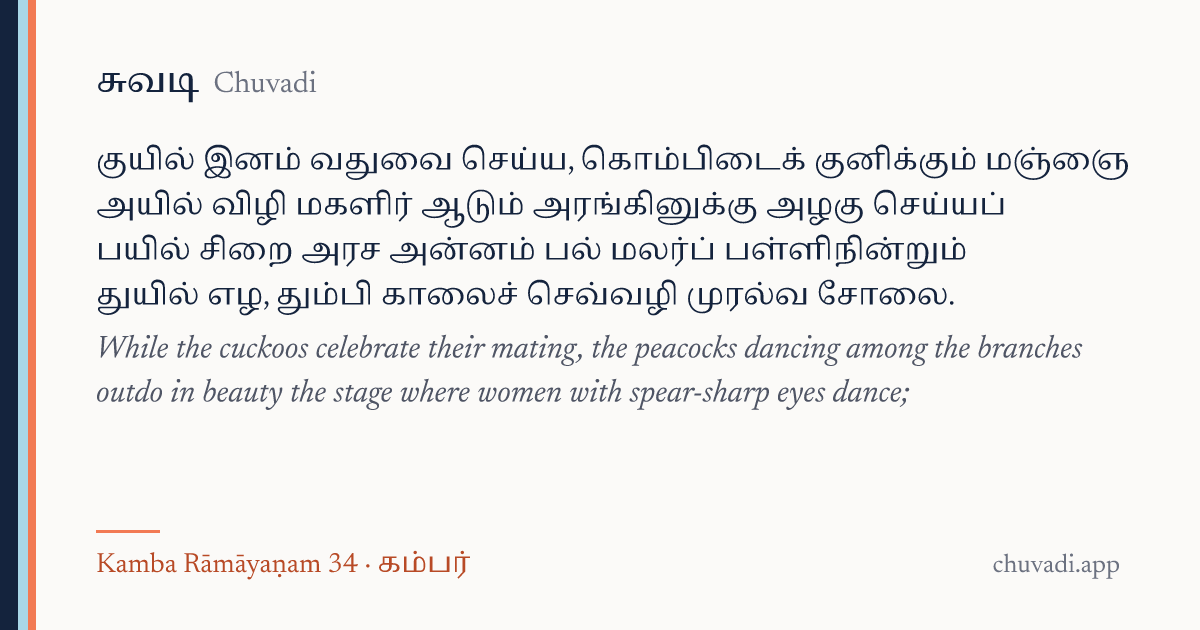
சோலை - சோலைகளில் உள்ள; குயில் இனம் வதுவை செய்ய - சேவலும் பெடையுமான குயில்கள் மணம் புணர; கொம்பிடைக் குனிக்கும் மஞ்ஞை - மரக் கிளைகளுக்கிடையே ஆடுகின்ற மயில்கள்; அயில் விழி மகளிர் ஆடும் - வேல் போன்ற கண்களையுடைய பெண்கள் ஆடுகின்ற; அரங்கினுக்கு அழகு செய்ய - நடன ஆடரங்கத்தை விட அழகை உண்டாக்க; பயில் சிறை அன்னம் - நெருக்கமான சிறகுகளை உடைய அன்னப் பறவைகள்; பல் மலர்ப் பள்ளி நின்றும் - பல தாமரை மலர்களாகிய படுக்கையி லிருந்தும் துயில் எழ - தூக்கம் கலைந்து எழுவதற்காக; தும்பி - வண்டும் காலைச் செவ்வழி பாடும் - காலை நேரத்தில் செவ்வழிப் பண்ணைப் பாடும்.
குயில்கள் மகிழ்ச்சியாக உள்ளன; மயில்கள் ஆடுகின்றன; அன்னங்கள் மட்டும் தூங்குகின்றன. அவற்றை எழுப்புவதற்காக வண்டுகள் பாடுகின்றன. நல்ல எண்ணம்தான்; ஆனால் காலை நேரத்தில் பூபாளப் பண் பாட வேண்டும்; வண்டுகளோ மாலை நேரத்துக்கு உரிய செவ்வழிப் பண்ணை இசைக்கின்றன; தேன் உண்ட மயக்கத்தால் மாலைப் பண்ணினைக் காலை வேலையில் பாடுகின்றன. வள்ளல் நள்ளி வழங்கிய கொடையின் வளத்தால் திளைத்த பாணர்கள் மாலையில் மருதப் பண்ணும் காலையில் செவ்வழிப் பண்ணும் பாடி, இசை மரபை மறந்துவிட்டனர் என்று வன்பரணர் (புறநா. ) பாடிய பாடற் செய்தி இங்கே கம்பருக்குக் கை கொடுத்திருக்கக் கூடும்.
ஆங்கிலம் · English translationAI
Translation
- While the cuckoos celebrate their mating, the peacocks dancing among the branches
- outdo in beauty the stage where women with spear-sharp eyes dance;
- and so that the royal swans with close-set wings may rise from their beds of many flowers
- out of sleep, the bees in the groves hum the evening melody at dawn.
What the poem says
Morning in the groves. Cuckoos pair and mate, and peacocks dance among the branches more beautifully than dancing girls on a stage. Only the swans are still asleep on their lotus beds, so the bees sing to wake them.
But the bees, drunk on honey, have muddled their music. They hum cevvaḻi, a melody meant for evening, when a morning tune such as pūpāḷam is called for. The conceit may come from an old Puṟanāṉūṟu poem by Vaṉparaṇar. There, bards made giddy by the patron Naḷḷi's generosity forgot themselves and sang the morning and evening melodies at the wrong times.