



கம்பராமாயணம் 3412 · ஆரணிய 8.10
பாடல் · The poem
Tap a word to see its gloss in the commentary and where else it occurs.
பாட வேறுபாடு · Project Madurai reads
பொருள் · Meaning in Tamil
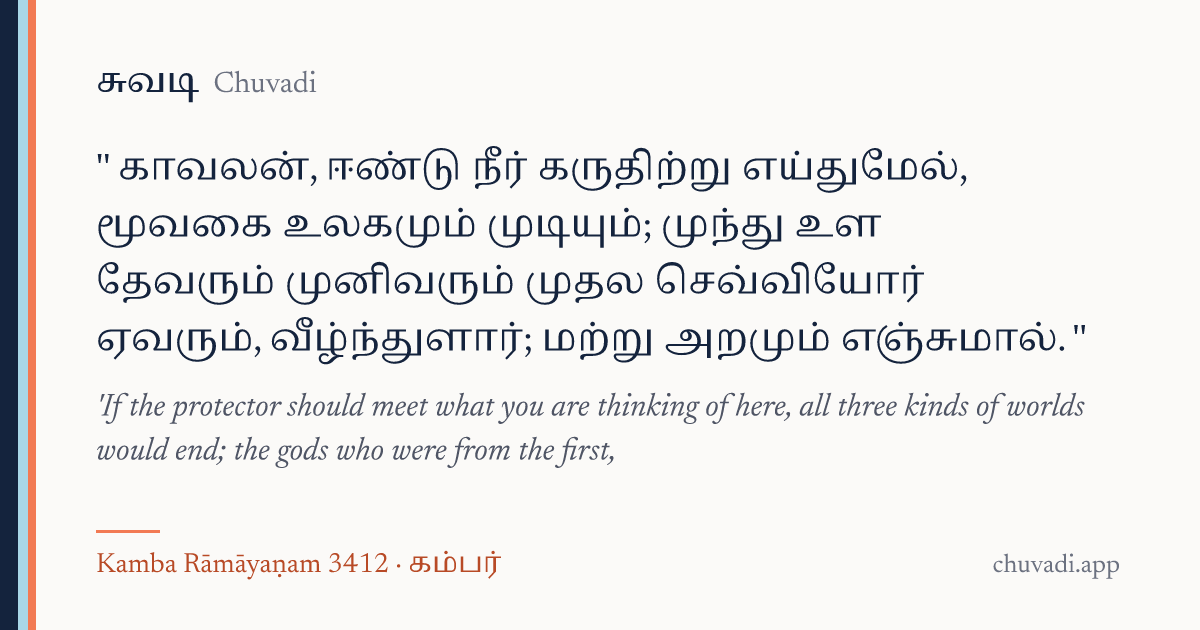
காவலன் ஈண்டு நீர் கருதிற்று எய்துமேல் - இராமன் இப்பொழுது நீவிர் எண்ணியதான அழிவை அடைவானென்றால், மூவகை உலகமும் முடியும் - மேல் உலகம் மண்ணுலகம் பாதலம் ஆகிய மூன்று உலகங்களும் அழிந்து போய் விடும்; முந்து உள தேவரும் முனிவரும் முதல செவ்வியோர் ஏவரும் வீழ்ந்துளார் - தொன்மைக் காலம் முதல் உள்ள தேவர்களும் முனிவர்களும் முதன்மையாகக் கொண்ட சிறந்தவர் யாவரும் அழிந்திருப்பர்; மற்று அறமும் எஞ்சும் - அது மட்டுமன்றி அறமும் அழியும்; ஆல் - ஈற்றசை.
காவலன் - தன்னைத் தானே காக்கும் வல்லமை உடையவன். நீர் கருதிற்று - இராமன் இறந்தான் எனச் சீதை எண்ணியது அதனைச் சொல்ல விரும்பாமல் மறை பொருளாக நீர் கருதிற்று எனக் கூறுகிறான் இலக்குவன். எஞ்சும் என்பது அழியும் என்ற பொருளில் 'வழி எஞ்சல் எஞ்ஞான்றும் இல்' (குறள். 44) என வரும். முழு முதற்பொருளாம் இராமன் அழியின் தேவர் முனிவர் செவ்வியோர் யாவரும் வீழ்வதுடன் அறமும் அழியும் என்று உறுதியாக உரைக்கிறான் இலக்குவன்.
அறமும் - சிறப்பும்மை.
ஆங்கிலம் · English translationAI
Translation
- 'If the protector should meet what you are thinking of here,
- all three kinds of worlds would end; the gods who were from the first,
- the sages, and all the excellent ones headed by them
- would have fallen; and righteousness too would come to an end.'
What the poem says
Ilakkuvaṉ cannot bring himself to say that Irāmaṉ is dead. He calls it only 'what you are thinking of'.
If that had happened, he says, the three worlds would be destroyed, the gods and sages and all good beings would fall, and dharma itself would perish, since Irāmaṉ is the ground of everything.