



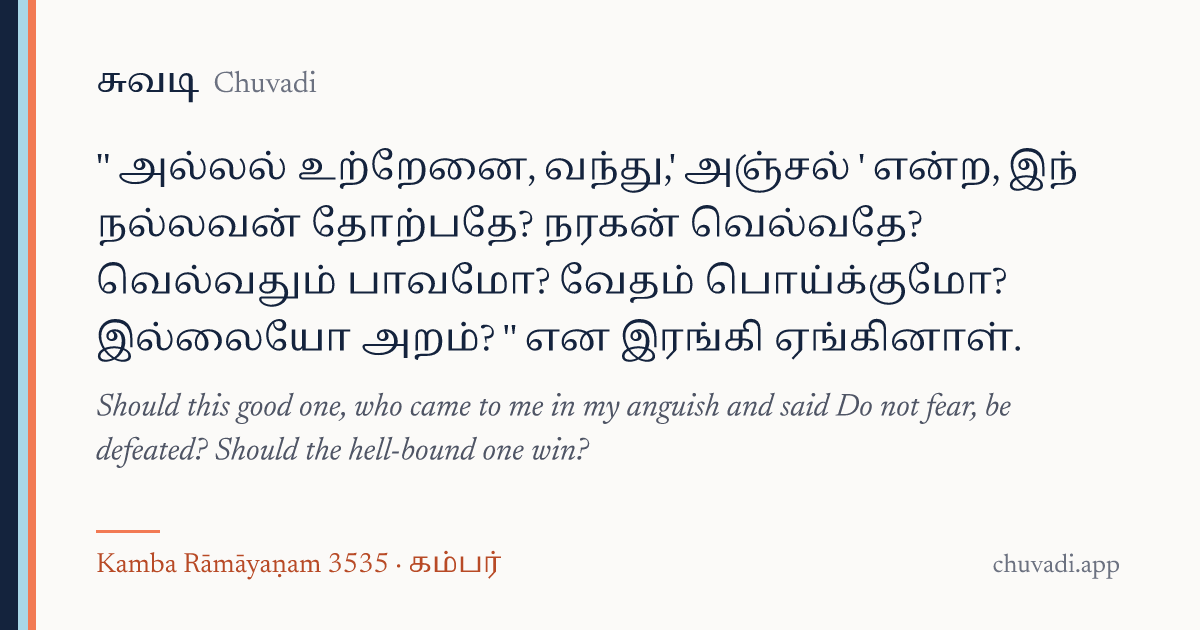
கம்பராமாயணம் 3535 · ஆரணிய 8.133
பாடல் · The poem
Tap a word to see its gloss in the commentary and where else it occurs.
பொருள் · Meaning in Tamil
அல்லல் உற்றேனை - பெருந்துன்பம் அடைந்தவளாகிய என்னை; வந்து அஞ்சல் என்ற - (காக்க) வந்து அஞ்சாதே (என்று ஆறுதல் கூறிய); இந்நல்லவன் தோற்பதே - இந்த நல்ல அறப் பண்புகள் உடையவன் ஆகிய (சடாயு) தோல்வி அடைவதா?, நரகன் வெல்வதே - நரகைச் சேர்தற்கு உரியான் ஆகிய (இராவணன்) வெல்வதா?; பாவமோ வெல்வதும் - பாவந்தானோ வெற்றி பெறுவது; வேதம் பொய்க்குமோ - வேதம் விளக்கும் (அறம்) பொய்த்து விடுமோ?; அறம் இல்லையோ - (இவ்வுலகில்) தருமம் இல்லாமல் போய்விட்டதோ; என இரங்கி ஏங்கினாள் - என்று மனம் கலங்கிப் புலம்பினாள்.
'என்னைப் பாதுகாக்க வந்த இந்த நல்லவன் தோல்வியடைய, நரகத்தில் புகத்தகு தீச் செயல் செய்த இராவணன் வெல்வதா? தருமமே வெல்லும் என்ற வேத மொழி பொய்த்து விட்டதோ? பாவம் தான் வெல்லும் போலும். அறம் உலகில் இல்லையோ?' எனச் சீதை இரங்கி ஏங்கினாள். உற்றேனை - வினையாலணையும் பெயர். ஏகார ஓகாரங்கள் வினாப் பொருளில் வந்து, இது மிகத் தகுதியில்லா நிலை என்பதை விளக்குகின்றன. நரகன் - நரகத்தைச் சேர்தற்கு உரியனான இராவணன். தீமையின் அழிவில் அவலம் இல்லை. அத்தீமையை அழிக்க நன்மைபடும் பெருந்துயரிலே உள்ளதுதான் அவலம் என்பார் கூற்றை ஈண்டு உன்னுக.
ஆங்கிலம் · English translationAI
Translation
- Should this good one, who came to me in my anguish and said Do not fear,
- be defeated? Should the hell-bound one win?
- Is it sin, then, that wins? Will the Vedas prove false?
- Is there no Dharma?, she lamented, grieving.
What the poem says
Cītai cannot accept what she has seen. The good Caṭāyu, who came to tell her not to fear, has lost, while Irāvaṇaṉ, whose deeds have earned him hell, has won. Is it sin that triumphs after all? Do the Vedas lie when they say that righteousness prevails? Has Dharma vanished from the world?
The commentary observes that the destruction of evil holds no tragedy; true tragedy lies in the suffering the good endure in order to destroy evil.