



கம்பராமாயணம் 3556 · ஆரணிய 8.154
பாடல் · The poem
Tap a word to see its gloss in the commentary and where else it occurs.
பொருள் · Meaning in Tamil
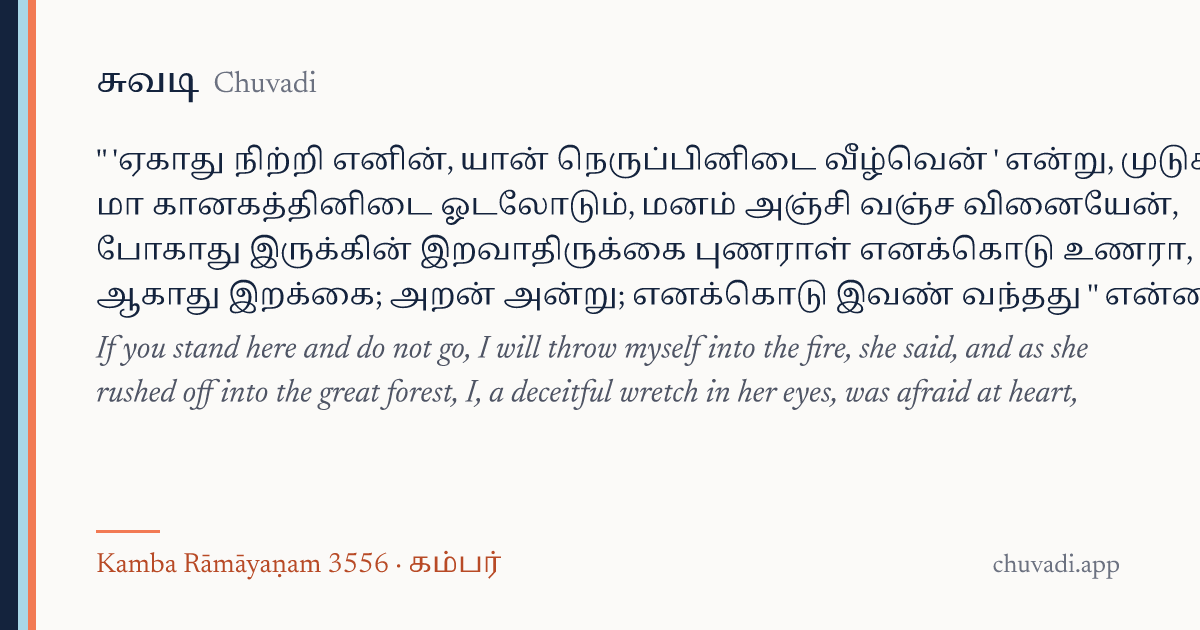
ஏகாது நிற்றி எனின் - நீ (இராமனைத் தேடிச்) செல்லாமல் இருப்பாயானால்; யான் நெருப்பினிடை வீழ்வென் என்று - நான் நெருப்பில் விழுந்து உயிரைப் போக்கிக் கொள்வேன் என்று சொல்லி; முடுகா - விரைந்து; மா கானகத்தினிடை ஓடலோடும் - சீதை பெரிய காட்டில் ஓடத் தொடங்கிய போது; மனம் அஞ்சி - (நான்) மனத்தால் பயந்து; வஞ்சவினையேன் போகாது இருக்கின் - வஞ்சனை உடையவன் என்று கருதப்பட்ட (நான்) போகாமல் இருந்தால்; இறவாதிருக்கை புணராள் எனக்கொடு உணரா - (அவள்) இறக்காமல் இருப்பதிலிருந்து நீங்காள் என்று (என்) மனத்தில் கொண்டு உணர்ந்து; இறக்கை ஆகாது அறன் அன்று எனக்கொடு - (அவ்வாறு சீதை) இறத்தல் ஆகாது (அது) அறம் அல்ல என்று கொண்டு; இவண் வந்தது என்ன - (நான்) இங்கு வந்தது என்று (இலக்குவன்) சொல்ல; அமலன் - குற்றமற்றவனாகிய இராமன்... (அடுத்த பாடலில் தொடரும்.)
சினந்த சீதை 'நீ இராமனைத் தேடிச் செல்லா விட்டால் நான் நெருப்பில் விழுந்து உயிரை மாய்த்துக் கொள்வேன்' என்று காட்டில் ஓடத் தொடங்கியதால், அஞ்சிப் போகாமல் இருந்தால் பிராட்டி இறந்து படுவார் இது அறன் அன்று என்று எண்ணி, 'உன்னைத் தேடி வந்தேன்' என இலக்குவன் இராமனிடம் கூறினான். முடுகா - முடுகி, விரைந்து. இறக்கை - இறத்தல், அமலன் - குற்றமற்றவன்; ஈண்டு இராமன். வஞ்ச வினையேன் - சீதை தன்னை வஞ்சகன் என்று எண்ணிக் கூறிய 'நின்ற நின் நிலை இது நெறியிற்று அன்று' (3330) என்ற சொல்லை உள்ளடக்கிக் கூறியதாகும். வீழ்வென் - தன்மை ஒருமை வினைமுற்று. மாகானகம் - உரிச்சொல்தொடர்; முடுகா - செய்யா என்னும் வாய்பாட்டு உடன்பாட்டு வினையெச்சம்.
ஆங்கிலம் · English translationAI
Translation
- If you stand here and do not go, I will throw myself into the fire, she said, and as she rushed
- off into the great forest, I, a deceitful wretch in her eyes, was afraid at heart,
- and, knowing that if I did not go she would not keep herself from dying,
- and that her death must not be, that it would be against Dharma, I came here, he said; and the Spotless One
What the poem says
Ilakkuvaṉ finishes his account. Cītai threatened to throw herself into a fire if he did not go, and began running off into the forest. He was terrified. She had already accused him of treachery, and he understood that if he stayed she would surely take her own life. Letting that happen would be a sin, so he came.
He calls himself a deceitful wretch, echoing Cītai's accusation that his staying behind was not honest. The sentence carries on into the next verse with Irāmaṉ's reply.