



கம்பராமாயணம் 3558 · ஆரணிய 8.156
பாடல் · The poem
Tap a word to see its gloss in the commentary and where else it occurs.
பாட வேறுபாடு · Project Madurai reads
பொருள் · Meaning in Tamil
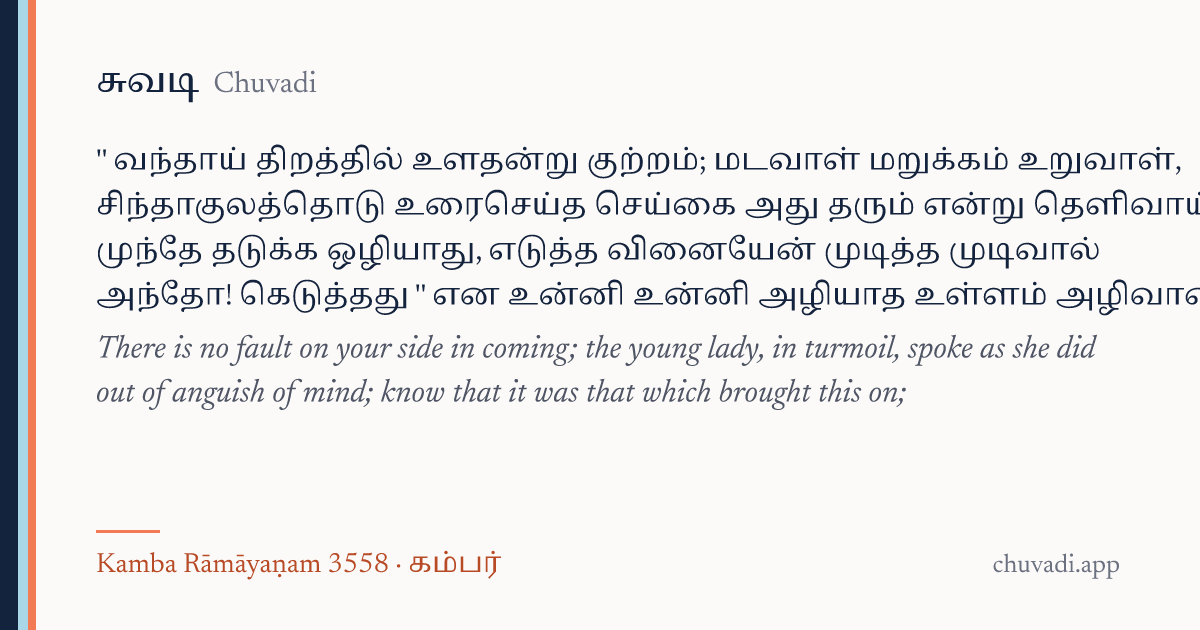
வந்தாய் திறத்தில் - (சீதையைத் தனியே விட்டு விட்டு) வந்த உன் பக்கலில்; குற்றம் உளது அன்று - குற்றம் எதுவும் இல்லை, மடவாள் - பேதைமைப் பண்புள்ளவளாகிய சீதை; மறுக்கம் உறுவாள் - மனத் தடுமாற்றம் உடையவளாய், சிந்தா குலத்தொடு - மனத்தில் தோன்றிய பெரும் துயரத்தோடு; உரைசெய்த செய்கை - சொல்லியதும் அதன் விளைவும்; அது தரும் என்று தெளிவாய் - மனந் தடுமாறியவர் சொல்லியது என்று நீ கருதினால்) அவள் சொல்லால் தோன்றிய வருத்தம் தீரும் என்று கூறி; (வந்தது மாயவல் அரக்கன் கொண்ட பொன் மான் உரு என்று) தெளிந்து கொண்டு; முந்தே தடுக்க - (நீ) முன்பே தடுத்தலைச் செய்ய; ஒழியாது - (உன் சொல்கேட்டு அதை) விட்டு விடாமல்; எடுத்த வினையேன் - (மானைப் பிடிக்க) எடுத்த செயல் உடையவனாய், முடித்த முடிவால் - (நான்) செய்து முடித்த (அந்த) முடிவினால்; அந்தோ கெடுத்தது என - ஐயோ (அம்முடிவு) என்னைக் கெடுத்து விட்டது என்று; உன்னி உன்னி - எண்ணி எண்ணி; அழியாத உள்ளம் அழிவான் - என்றும் அழிந்து வருந்தாத (தன்) மனம் அழிந்தவனாய்.... (அடுத்த பாடலில் தொடரும்.
'சீதை மனத்தில் பெருந்துயர் கொண்டு சொல்லிய சொல்லை ஏற்று அவளைத் தனியே விட்டு விட்டு வந்தது உன் குற்றம் அன்று. அவளும் மாய மானின் குரலை என் குரல் என்று எண்ணி உன்னிடம் கூறியதால் அவளிடமும் எக்குற்றமும் இல்லை. நீ தடுத்தும் அதை ஏற்காது மாய மானைத் தொடர்ந்து சென்று உங்கள் இருவரின் செயல்களுக்கும் காரணமான என்னால் தான் இத் துன்பம் ஏற்பட்டது' என இராமன் இலக்குவனிடம் கூறினான். அந்தோ - இரங்கல் குறிப்பு.
ஆங்கிலம் · English translationAI
Translation
- There is no fault on your side in coming; the young lady, in turmoil,
- spoke as she did out of anguish of mind; know that it was that which brought this on;
- it was the deed I, wretched one, took up and would not give up though you tried to stop me beforehand,
- that has ruined us, alas!, he said, and brooding on it again and again, his heart that never broke was breaking.
What the poem says
Irāmaṉ does not blame Ilakkuvaṉ for leaving Cītai; nor does he blame Cītai, who spoke out of terror, believing the cry was his. The fault, he says, is his own: Ilakkuvaṉ warned him the deer was a demon, but he would not listen and went after it, and that has brought on all that followed. Brooding on this, Irāmaṉ, whose heart has never before given way, begins to break down.