



கம்பராமாயணம் 3795 · ஆரணிய 11.9
பாடல் · The poem
Tap a word to see its gloss in the commentary and where else it occurs.
பாட வேறுபாடு · Project Madurai reads
பொருள் · Meaning in Tamil
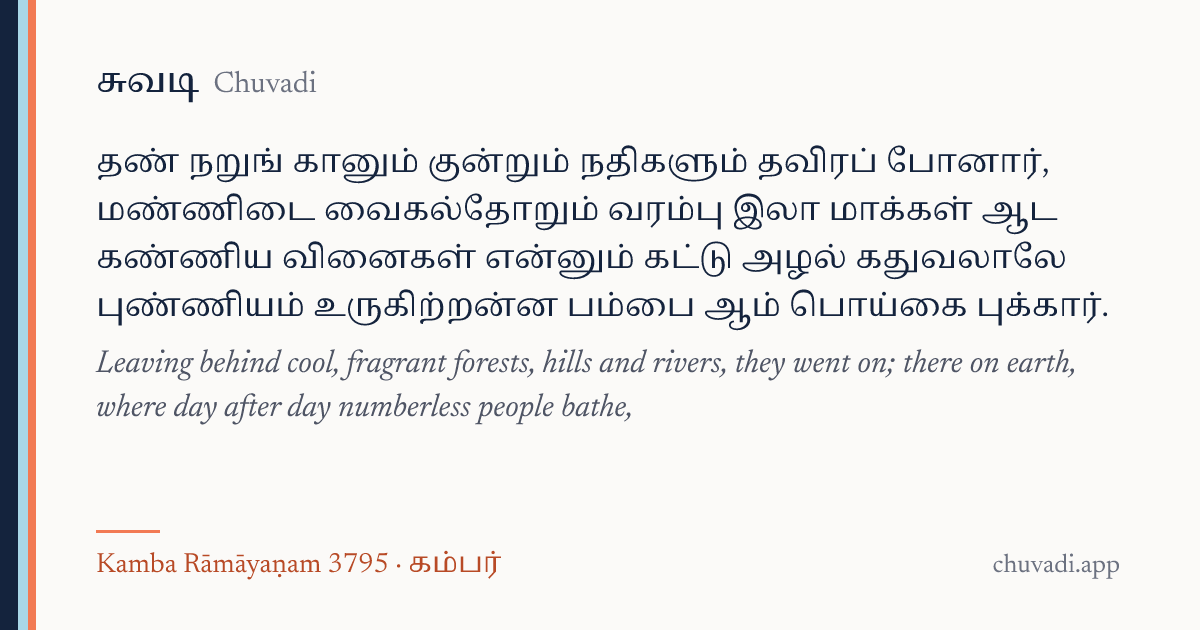
தண் நறுங் கானும் குன்றும் நதிகளும் - குளிர்ச்சியும் நல்ல மணமும் கொண்ட காடு குன்று ஆறு ஆகியவை; தவிரப் போனார் - நீங்கிப் பின்போகுமாறு கடந்து இராமலக்குவர் சென்றனர்; மண்ணிடை - இவ்வுலகிலே; வைகல்தோறும் - நாள்தோறும்; வரம்பு இலா மாக்கள் ஆட - கண்ணிய வினைகள் என்னும் - (அம்மக்களால்) கருதிச் செய்யப்பட்ட வினைகளாகிய; கட்டு அழல் கதுவலாலே - உறுதியான நெருப்புப் பற்றி (உருக்குதலாலே); புண்ணியம் உருகிற்றன்ன - நல் வினையே உருகித் தோன்றுவது போன்ற; பம்பை ஆம் பொய்கை புக்கார் - பம்பை என்னும் பொய்கையை அடைந்தார்கள்.
காடு, மலை, ஆறுகள் பலவும் கடந்து பம்பையை இராமலக்குவர் அடைந்தனர் என்பது திரண்ட கருத்து. பம்பை பற்றிய சிறப்பு மிக அருமையான முறையில் இதன்கண் வருணிக்கப்பட்டுள்ளது. எண்ணத் தொலையாத மக்கள் நாள்தோறும் பம்பையில் நீராடுகின்றனர்; அவர்கள் செய்த வினைகள் என்ற நெருப்பு அப் பம்பையை உருக்குகிறது; அப்படி உருக்குதலால் புண்ணியப் பயனே உருகிவிட்டது போலத் தூயதாய்த் துலங்குகிறது பம்பை. இயல்பாகவே தூயதாய் இலங்கும் பொய்கை நீர்ப் பரப்பை ஏதோ ஒரு காரணத் தூண்டலால் இவ்வாறு இருந்தது என்று கவிஞர்தம் குறிப்பைச் சேர்த்து வருணிப்பதால் இது தற்குறிப்பேற்ற அணியாகும். வினைகள் என்னும் நெருப்பு என்ற உருவகமும் இதில் இருப்பதால் உருவகத்தை உறுப்பாகக் கொண்ட தற்குறிப்பேற்ற அணி என்பர்.
தீவினை புரிந்தோர் ஆதலின் அத் தாழ்வு தோன்ற மக்களை இச் செய்யுளில் மாக்கள் என்றார்.
ஆங்கிலம் · English translationAI
Translation
- Leaving behind cool, fragrant forests, hills and rivers, they went on;
- there on earth, where day after day numberless people bathe,
- as though the deeds those people had done, a fierce fire, had caught hold of it
- and merit itself had melted: Pampai, the lake, they reached.
What the poem says
Crossing forests, hills and rivers, the brothers come to Pampai, a lake near Kiṭkintai. The poet explains its purity with a fanciful reason. Every day countless people bathe there, and the fire of their sinful deeds melts the lake, so that what is left looks like merit itself turned to liquid. The commentary notes that the word used for the people here suggests their lowliness as sinners. This verse closes the Āraṇya Kāṇṭam.