



கம்பராமாயணம் 3849 · கிட்கிந்தா 2.12
பாடல் · The poem
Tap a word to see its gloss in the commentary and where else it occurs.
பொருள் · Meaning in Tamil
காய்எரி கனலும் கற்கள் - சுடும் நெருப்புப்போல வருத்துகின்ற பரற்கற்கள்; தூய செங்கமல பாதம் - தூய்மையான (இவர்களது) செந்தாமரை மலர் போன்ற திருவடிகள்; தோய்தொறும் - படும்போதெல்லாம்; கள்ளுடை மலர்களே போல் - தேன் பொருந்திய புதிய மலர்களைப் போல; குழைந்து தோன்றும் - மென்மையாகக் குழைந்து விளங்குகின்றன; போயின திசைகள் தோறும் - (இவர்கள்) சென்ற இடங்களில் எல்லாம்; மரனொடு புல்லும் எல்லாம் - மரங்களோடு புல் முதலிய யாவும்; தொழுவபோல் - (இவர்களை) வணங்குவன போல; சாய்வுறும் - சாய்ந்து நிற்கின்றன; இங்கு - இதனால்; தருமம் ஆவார் - தருமதேவதைகள் ஆவார்; இவர்களோ - இவர்கள் தாமோ?
இவர்களின் திருவடிகள் பட்டமாத்திரத்தில் சுடுகின்ற பரற்கற்கள் மென்மையாகின்றன; இவர்களைக் கண்டபோது ஓரறிவுடைய மரமும் புல்லும் வணங்குகின்றன என்று இவர்களின் கடவுள் தன்மையைக் குறித்து அனுமன் வியந்தான். மரமும் புல்லும் சாய்வுறும் தொழுவபோல் என்றது தற்குறிப்பேற்ற அணியாம். "மரங்கள் நின்று மதுத்தாரைகள் பாயும், மலர்கள் வீழும் வளர் கொம்புகள் தாழும், இரங்கும் கூம்பும் திருமால் நின்ற பக்கம் நோக்கி அவை செய்யும் குணமே" (பெரியாழ்வார் - 3 - 6- 284) என்பது இங்கு ஒப்பு நோக்கத்தக்கது. 'வறுத்து வித்திய அனையன வல்லயில் பரல்கள், பறித்து வித்திய மலரெனக் குளிர்ந்தன' (2038) என முன்னரும் வருதல் காண்க.
இவர்களோ - ஓகாரம் வியப்புப் பொருள்.
ஆங்கிலம் · English translationAI
Translation
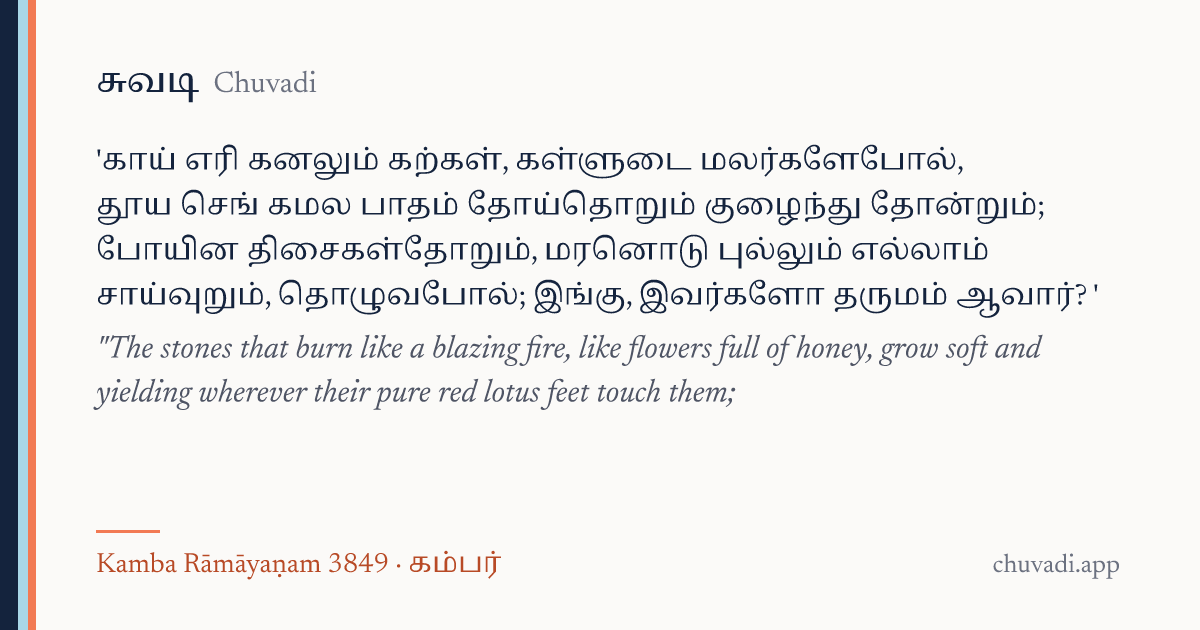
- "The stones that burn like a blazing fire, like flowers full of honey,
- grow soft and yielding wherever their pure red lotus feet touch them;
- in every direction they have gone, the trees and the grass and everything
- bend down as if in worship; are these men, here, Dharma itself?"
What the poem says
Aṉumaṉ's wonder grows. The sun-baked stones of the path turn soft as fresh flowers under the brothers' lotus feet, and wherever they go the trees and grasses bow as though worshipping them.
The bowing of the plants is the poet's fancy, a figure that gives a natural sight an imagined cause. Aṉumaṉ concludes that these two must be righteousness itself in human form. The commentary compares a hymn of Periyāḻvār in which trees pour honey and bend their branches toward Tirumāl.