



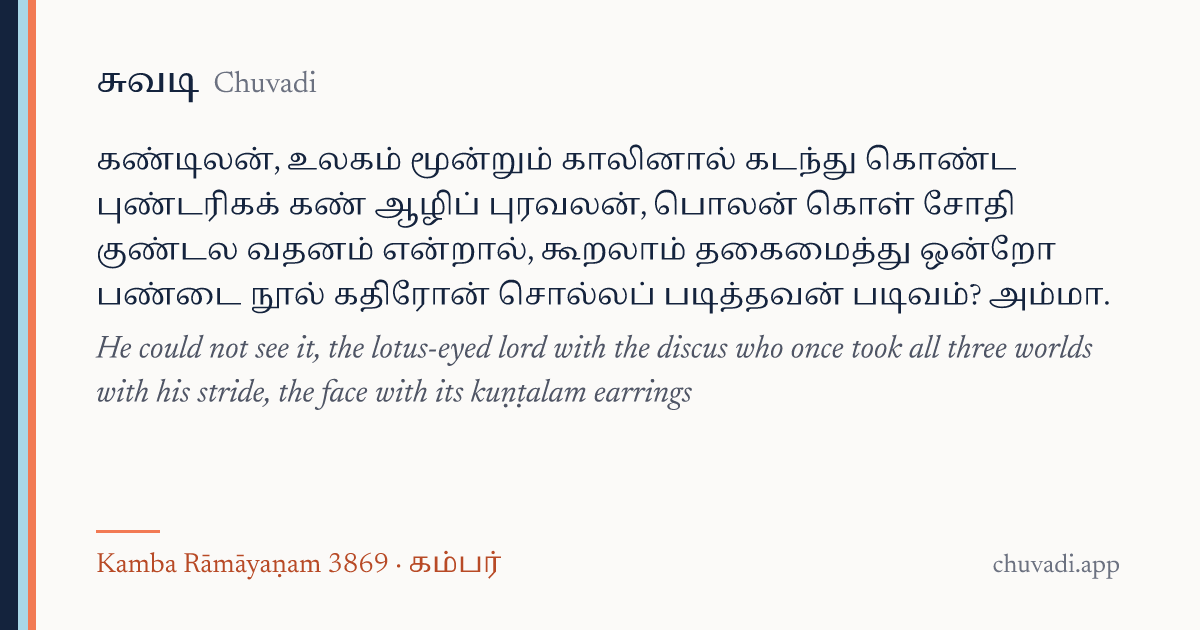
கம்பராமாயணம் 3869 · கிட்கிந்தா 2.32
பாடல் · The poem
Tap a word to see its gloss in the commentary and where else it occurs.
பாட வேறுபாடு · Project Madurai reads
பொருள் · Meaning in Tamil
உலகம் மூன்றும் - விண், மண், பாதாளம் என்னும் மூன்று உலகங்களையும், காலினால் கடந்து கொண்ட - (திரிவிக்கிரம அவதாரத்தில்) தனது திருவடியால் அளந்து தனதாக்கிக்கொண்ட; புண்டரீகக் கண் - தாமரை மலர் போன்ற கண்களையும்; ஆழி - சக்கரப் படையையும் உடைய, புரவலன் - காத்தற்கடவுளாகிய திருமாலின் அமிசமான இராமபிரான்; பொலன் கொள் சோதி - பொன்னாலாகிய ஒளி பொருந்திய; குண்டல வதனம் - குண்டலங்களை அணிந்த (அனுமனின்) முகத்தை; கண்டிலன் என்றால் - காண முடியாதவன் ஆனான் என்றால்; பண்டை நூல் - பழமையான இலக்கணம் முதலிய நூல்களை; கதிரோன் சொல்ல - சூரியன் கற்பிக்க; படித்தவன் படிவம் - கற்றவனான அனுமனின் பேருருவம்; கூறலாம் தகைமைத்து ஒன்றோ - இத்தன்மைத்து என ஒருவரால் கூறத்தக்க தன்மையுடையதொன்று ஆகுமோ? (ஆகாது)
முன்பு திரிவிக்கிரமனாக வடிவங்கொண்ட திருமாலான இராமபிரானே அனுமானின் முகத்தைக் காண இயலவில்லையெனில், அப்பேருருவத்தின் பெருமையைக் கூற எங்ஙனம் இயலும் என்பது கருத்து. திரிவிக்கிரமனாக உலகளந்த திருமாலே இராமனாக வந்துள்ளமையால் 'உலக மூன்றும் காலினால் கடந்து கொண்ட புண்டரிகக் கண் ஆழிப் புரவலன்' என்றார். "மூவுலகும் ஈரடியால் முறை நிரம்பா வகை முடியத் தாவிய சேவடி" எனச் சிலப்பதிகாரம் (ஆய்ச்சியர் குரவை) உலகளந்த செய்தியைக் கூறுகிறது. கதிரவனின் மாணவனாய், அவனை நெருங்கிப் பாடம் கேட்கும் பெரும் வடிவுடையனாய் விளங்கிய தன்மை புலப்படக் 'கதிரோன் சொல்லப் படித்தவன் படிமம்' என்றார்.
அம்மா - வியப்பிடைச்சொல். அனுமனின் பேருருவ (விசுவரூப) வர்ணனையைச் சுந்தரக்காண்டத்தும் (5326 - 5332) காணலாம்.
ஆங்கிலம் · English translationAI
Translation
- He could not see it, the lotus-eyed lord with the discus who once took
- all three worlds with his stride, the face with its kuṇṭalam earrings
- shining with golden light; then can it be described,
- the form of him who learned the ancient books as the Sun taught them? Ah!
What the poem says
Aṉumaṉ's true form is so vast that even Irāmaṉ cannot see his face, set high above with gleaming golden earrings. Yet Irāmaṉ is Tirumāl, who as Trivikrama measured all three worlds in his strides. If even he cannot take in this form, no one could describe it.
Aṉumaṉ studied the ancient sciences under the Sun himself; he needed a body large enough to keep pace with his teacher as the Sun crossed the sky. His giant form is described again in the Cuntara Kāṇṭam.