



கம்பராமாயணம் 3890 · கிட்கிந்தா 3.18
பாடல் · The poem
Tap a word to see its gloss in the commentary and where else it occurs.
பாட வேறுபாடு · Project Madurai reads
பொருள் · Meaning in Tamil
நோக்கினான் - (அவ்வாறு சுக்கிரீவன்) இராமலக்குவரை நோக்கி; நெடிது நின்றான் - (அவர்கள் அழகில் ஈடுபட்டு) நீண்ட நேரம் நின்றவனாய்; நொடிவு அரும் - அழிவு இல்லாத, கமலத்து அண்ணல் - தாமரையில் தோன்றிய நான்முகன்; ஆக்கிய உலகம் எல்லாம் - படைத்த உலகில் உள்ள உயிர்கள் எல்லாம்; அன்று தொட்டு - படைப்புக் காலந்தொட்டு; இன்று காறும் - இன்று வரையிலும்; புரிந்த பாக்கியம் எல்லாம் - செய்த நல்வினைகள் எல்லாம்; குவிந்து - திரண்டு; இருபடிவம் ஆகி - இரண்டு திருவுருவமாய்; மேக்கு உயர் - மேலே உயர்ந்த; தடந்தோள் பெற்று - பெரிய தோள்களைப் பெற்று; வீரர் ஆய் விளைந்த - இவ்வீரர்களாய்த் தோன்றின; என்பான் - என்று எண்ணுபவன் ஆவான்.
படைப்புக் காலந் தொட்டு இன்று வரையிலும் உலகம் செய்த பாக்கியமெல்லாம் சேர்ந்து இருவடிவமாகிப் பெருந்தோளும் பெற்று இராமலக்குவராய்த் தோன்றினர் எனச் சுக்ரீவன் கருதினான். 'அறத்தின் மூர்த்தி வந்து அவதரித்தான்' (1349), என்றும் 'வீர, நின்குல மைந்தனை, வேதியர் முதலோர் யாரும் 'யாம் செய்த நல்லறப்பயன்' என இருப்பார்' (1351) என்னும் வசிட்டர் கூறுவது காண்க. சுக்கிரீவன் வேண்டுவது வாலியைத் தொலைக்கும் வீரத்தையேயாதலால் அழகு, அறிவு முதலியன பற்றிக் கூறாது 'வீரராய் விளைந்த' என்றான். நொடிவு - சொல்லுதல் என்றுமாம். இது தொழிற்பெயர்
ஆங்கிலம் · English translationAI
Translation
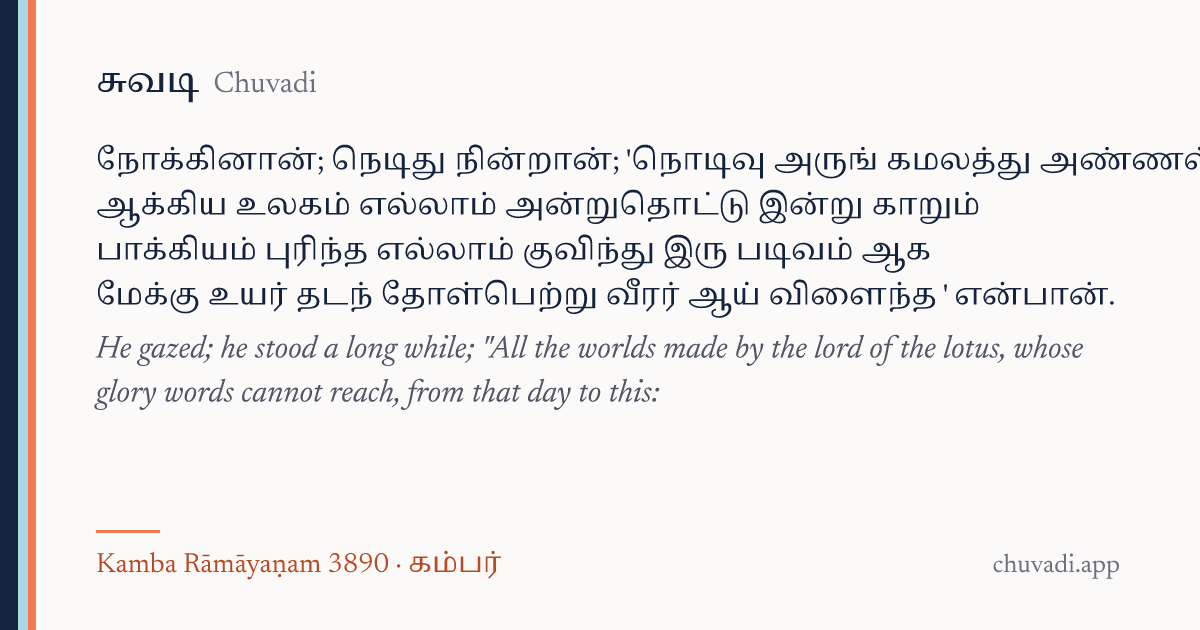
- He gazed; he stood a long while; "All the worlds made by the lord of the lotus,
- whose glory words cannot reach, from that day to this:
- all the good fortune they have earned has gathered into two forms
- and, with broad shoulders rising high, has ripened into these heroes," he thought.
What the poem says
Cukkirīvaṉ stands gazing for a long time. It seems to him that all the merit earned by every creature in Brahmā's creation, from the beginning until now, has gathered together and taken shape as these two heroes with towering shoulders.
What Cukkirīvaṉ needs is a warrior to destroy Vālī, so he thinks of them as heroes rather than dwelling on their beauty or wisdom. The commentary compares Vacuṭṭaṉ's words in an earlier book, that Irāmaṉ is the fruit of everyone's good deeds.