



கம்பராமாயணம் 3936 · கிட்கிந்தா 3.64
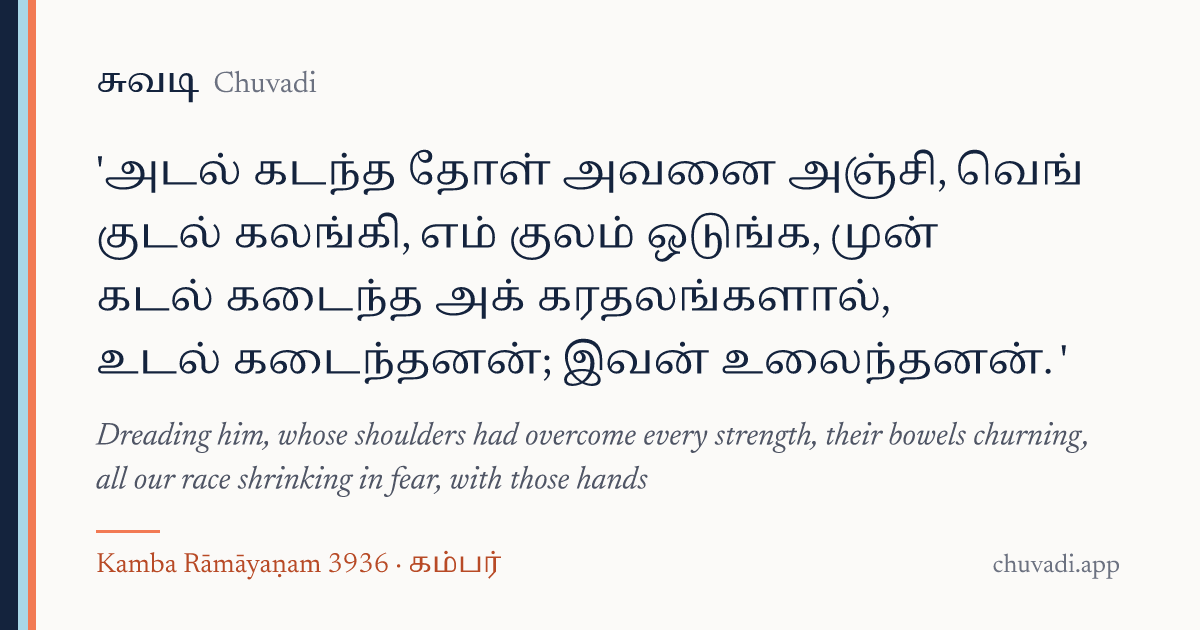
பாடல் · The poem
Tap a word to see its gloss in the commentary and where else it occurs.
பொருள் · Meaning in Tamil
அடல் கடந்த தோள் - பகைவரின் வலிமையைப் போரில் கடந்து வெற்றிபெற்ற தோள்களை உடைய; அவனை அஞ்சி - வாலிக்குப் பயந்து; வெங்குடல் கலங்கி - கொடிய குடல் கலங்கி, எம் குலம் ஒடுங்க - எம் வானர இனம் முழுமையும் அஞ்சி ஒடுங்கிநிற்க; முன் கடல் கடைந்த - முன்பு திருப்பாற்கடலைக் கடைந்த; அக்கரதலங்களால் - அந்தக் கைகளால்; உடல் கடைந்தனன் - (சுக்கிரீவனது) உடலைத் தாக்கிக் கலக்கினான் (வாலி); இவன் உலைந்தனன் - சுக்கிரீவன் பெரிதும் வருந்தினான்.
வாலியின் சினத்திற்குக் குரக்கினம் முழுவதும் குடல் கலங்கி அஞ்சி நடுங்கின. பாற்கடலைக் கடைந்த வாலியின் கைகளுக்குச் சுக்கிரீவன் உடம்பைக் கலக்குதல் எளிது. ஆதலின் 'கடல் கடைந்த அக்கரதலங்களால் உடல் கடைந்தனன்' என்றான். உடல் கடைதல் - உடம்பைத் தாக்கி உறுப்புகள் கலங்குமாறு செய்தல். கொடுமையான வார்த்தைகளைப் பேசியதோடு வாலி சுக்கிரீவனைத் தாக்கவும் செய்தான் என அவன் கொடுமையை இராமனுக்கு அனுமன் உணருமாறு கூறினான். உடல் கடைதல்; இதன்கண் அமைந்த (வினைப்) படிமம் கருதத்தக்கது.
ஆங்கிலம் · English translationAI
Translation
- Dreading him, whose shoulders had overcome every strength, their bowels
- churning, all our race shrinking in fear, with those hands
- that once churned the sea
- he churned this one's body; and this one suffered greatly.
What the poem says
Aṉumaṉ goes on: not content with harsh words, Vālī attacked Cukkirīvaṉ. The whole monkey race cowered in terror. Vālī had once helped churn the Ocean of Milk, so the poet plays on the word: the hands that churned the ocean "churned" his brother's body, beating him until his very organs were shaken.