



கம்பராமாயணம் 3956 · கிட்கிந்தா 4.5
பாடல் · The poem
Tap a word to see its gloss in the commentary and where else it occurs.
பொருள் · Meaning in Tamil
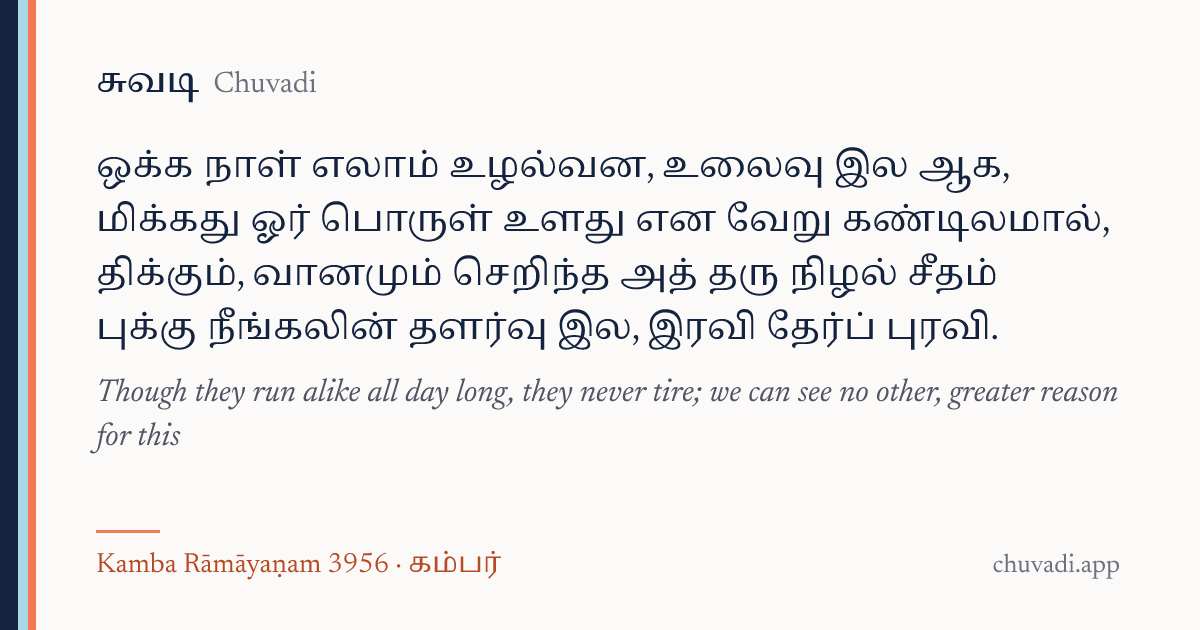
திக்கும் வானமும் - எல்லாத் திசைகளிலும் வானத்திலும், செறிந்த அத்தரு - நெருங்கிப் பரந்த அம்மரங்களின்; சீத நிழல் - குளிர்ந்த நிழலை; புக்கு நீங்கலின் - அடைந்து செல்வதால்; இரவி தேர்ப்புரவி - சூரியனது தேரில் கட்டப் பெற்ற குதிரைகள்; தளர்வு இல - தளர்ச்சியில்லாதனவாம், ஒக்க நாள் எலாம் - நாள் முழுவதும் ஒரே விதமாக; உழல்வன - ஓடிக் கொண்டிருப்பன; உலைவு இல ஆக - (எனினும்) வருத்தம் இல்லாதனவாய் இருப்பதற்கு; மிக்கது ஓர் பொருள் - மேம்பட்டதொரு காரணம்; உளது என- உண்டு என்று; வேறு கண்டிலம் - வேறு கண்டோமில்லை.
சூரியனது தேர்க்குதிரைகள் நாள் முழுவதும் ஓடுவனவாய் இருந்தும் தளர்வு அடையாமைக்குக் காரணம், ஒவ்வொரு நாளும் இளைப்பு நீங்க அம்மரங்களின் குளிர்நிழலில் தங்கிச் செல்வதே காரணமாகும் என்று கூறியவாறு. இச்செய்யுள் ஏதுத்தற்குறிப்பேற்ற அணி. இதனால் அம்மரங்களின் இலையடர்ந்த உச்சிக் கிளைகள் சூரிய மண்டலத்திற்கும் மேலே உயர்ந்திருந்தன என்பது புலனாகும். முந்திய செய்யுளில் கதிரவன், மரங்களின் நுனி கண்டோட இயலாமை கூறி, இச் செய்யுளில் அவன் அவற்றின் குளிர்ந்த நிழலுள் கூறப்பெற்றது. புரவி - பால்பகா அஃறிணைப் பெயர்
ஆங்கிலம் · English translationAI
Translation
- Though they run alike all day long, they never tire;
- we can see no other, greater reason for this
- than that, entering and leaving the cool shade of those trees
- that fill the directions and the sky, the horses of the Sun's chariot do not flag.
What the poem says
Why do the Sun's horses never tire, though they run all day? The poet offers a fanciful cause: each day they rest in the cool shade of these trees, which must therefore rise above the Sun's own sphere. The figure is a poetic invention of a reason, as in the next verse too.