



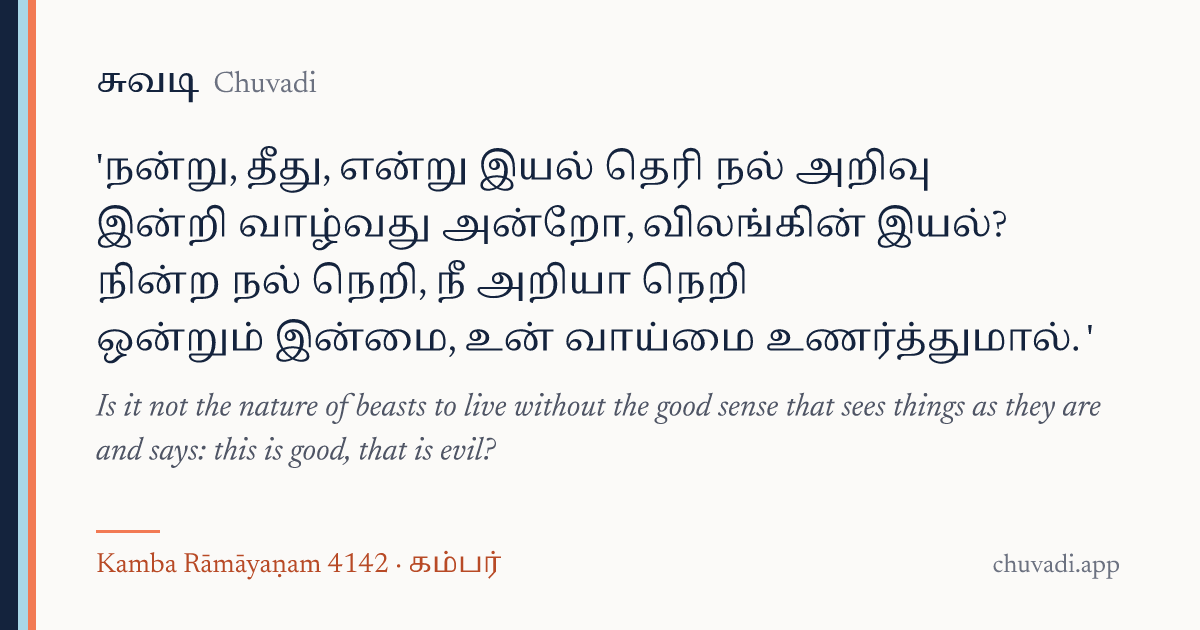
கம்பராமாயணம் 4142 · கிட்கிந்தா 7.120
பாடல் · The poem
Tap a word to see its gloss in the commentary and where else it occurs.
பொருள் · Meaning in Tamil
விலங்கின் இயல் - விலங்குகளின் இயல்பாவது; நன்று தீது என்று - நல்லது இது, தீயது இது என்று; இயல் தெரி - அதனதன் இயல்புகளை உள்ளபடி உணர்கின்ற; நல் அறிவு இன்றி - நல்ல அறிவில்லாமல்; வாழ்வது அன்றோ - (மனம் போனவாறு) வாழ்வது அல்லவா? நின்ற நல்நெறி - நிலைபெற்ற நல்ல அற நெறிகளில், நீ அறியாநெறி - நீ ஆராய்ந்து உணராத அறவழி; ஒன்றும் இன்மை - ஒன்றும் இல்லை என்பதை; உன் வாய்மை உணர்த்தும் - இப்பொழுது நீ பேசிய உன் வாய்மொழியே உணர்த்தும்.
நல்லறிவு - நல்லது, தீயதைப் பகுத்துணர வைத்துத் தீயநெறியினின்று விலக்கி நல்லவழியில் செலுத்துவதாகும். அறிவின் இலக்கணம் வகுக்கப்பட்டமை இங்குக் காண்க. "சென்ற இடத்தால் செலவிடா தீதொரீஇ நன்றின்பால் உய்ப்பதறிவு" (குறள். 422) என்றார் வள்ளுவர்.
எல்லா நன்னெறிகளையும் அறிந்தும் அறநெறிக்கு மாறாக நடந்து கொண்டது வாலியின் குற்றம் என உணர்த்தப்பட்டது. ஏனெனில் அவன் வாய்ச் சொற்களே அவன் அறநெறி எது பயக் நன்கு அறிந்தவன் என்பதைப் புலப்படுத்தி விட்டது.
ஆங்கிலம் · English translationAI
Translation
- Is it not the nature of beasts to live without the good sense
- that sees things as they are and says: this is good, that is evil?
- Of all the abiding paths of virtue, that there is not one
- you do not know, your own words make plain.
What the poem says
Irāmaṉ defines what makes a creature a mere animal: living as the mind pulls, without the discernment that separates good from evil. The commentary cites the Tirukkuṟaḷ (422), which says true wisdom restrains the mind from going where it wanders and leads it from evil to good.
Vāli's eloquent speech has proved that he knows every path of righteousness. His fault is that he acted against what he knew.