



கம்பராமாயணம் 4151 · கிட்கிந்தா 7.129
பாடல் · The poem
Tap a word to see its gloss in the commentary and where else it occurs.
பாட வேறுபாடு · Project Madurai reads
பொருள் · Meaning in Tamil
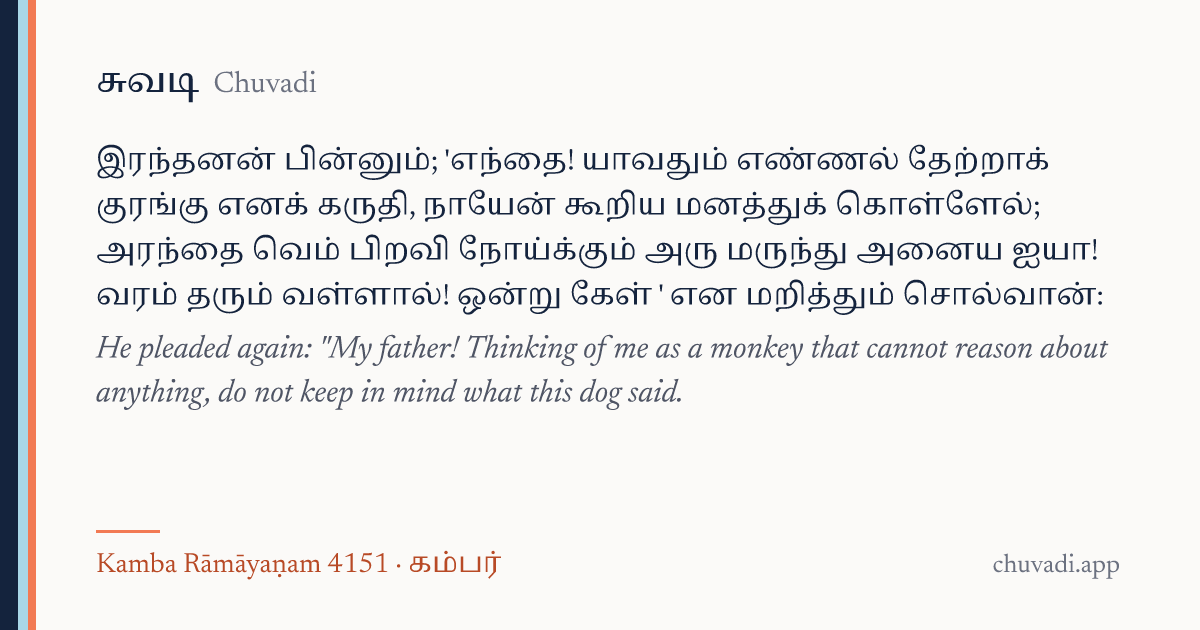
பின்னும் இரந்தனன் - (வாலி) பின்னும் இரந்து வேண்டுபவனாய்; எந்தை - எந்தையே! யாவதும் எண்ணல் தேற்றா - நல்லது, தீயது என எதையும் எண்ணி அறியமாட்டாத, குரங்கு எனக் கருதி - குரங்கு என (உன் உள்ளத்தில்) என்னைக் கருதி; நாயேன் கூறிய - நாய்போல் கடைப்பட்டவனாகிய நான் (உன்னைப்பற்றிச்) சொன்ன சுடு சொற்களை; மனத்துக் கொள்ளேல் - உன் மனத்தில் கொள்ளாதே. அரந்தை வெம் பிறவி நோய்க்கும் - துன்பத்தைத் தருகின்ற கொடிய பிறவியாகிய நோய்க்கும்; அரு மருந்து அனைய - அரிய மருந்து போன்ற; ஐயா- ஐயனே! வரம் தரு வள்ளால் - விரும்பிய வரங்களை அளிக்கும் வள்ளல்தன்மை உடையவனே! என மறித்தும் சொல்வான் - என்று மீண்டும் சொல்பவனானான்.
இராமனைப் பழித்துரைத்தமைக்காகத் தன்னைப் பொறுத்தருள வேண்டுமென இப்பாடலில் வாலி வேண்டினான். குரங்கு நிலையிலாத சித்தத்தை உடையதால் 'யாவதும் எண்ணல் தேற்றாக் குரங்கு' எனக் குறித்தான். தன் பிறவியை நீக்கப் போவதாலும், அந்தமில் பேரின்ப வாழ்வை அளிக்கப் போவதாலும் இராமனைப் பிறவி நோய்க்கும் அரு மருந்தனைய ஐயா என்றும், வரம்தரும் வள்ளால் என்றும் அவன் கருணையை எண்ணித் துதித்தான். 'மரம்பொ தச்சரம் துரந்து வாலி வீழ முன்னொர்நாள், உரம்பொ தச்சரம் துறந்த உம்பராளி எப்பிரான் வரம் குறிப்பில் வைத்தவர்க் கலாது வானம் ஆளினம் நிரம்பு நீடு போகம் எத்திறத்தும் யார்க்கும் இல்லையே' (திருச்சந்தவிருத்தம் - 73) என்றதும் காண்க. பிறவி நோய் நீக்கும் அருமருந்து இராமனே என்பது ஈண்டு உணர்த்தப்பட்டது. "மருள் உறு பிறவி நோய்க்கு மருந்தும் ஆம்; மாறிச் செல்லும் உருளுது சகட வாழ்க்கை ஒழித்து, வீடு அளிக்கும் அன்றே" (7410) என்ற வீடணன் கூற்றும் காண்க.
ஆங்கிலம் · English translationAI
Translation
- He pleaded again: "My father! Thinking of me as a monkey
- that cannot reason about anything, do not keep in mind what this dog said.
- Lord, you are like a rare medicine for the cruel disease of rebirth with its sorrows,
- bountiful giver of boons! Hear one thing," and he spoke once more.
What the poem says
Vāli asks Irāmaṉ to forgive the harsh words he spoke earlier, putting them down to the restless mind of a monkey. He praises Irāmaṉ as the rare medicine for the sickness of repeated birth, and as a generous giver of boons, since Irāmaṉ is about to free him from rebirth.
He is about to ask a favour, which the next verses reveal. The commentary compares a Vaiṣṇava hymn, and Vīṭaṇaṉ's later words calling Irāmaṉ the cure for the disease of birth, who ends life's turning wheel and grants release.