



கம்பராமாயணம் 4187 · கிட்கிந்தா 7.165
பாடல் · The poem
Tap a word to see its gloss in the commentary and where else it occurs.
பொருள் · Meaning in Tamil
உரை சேர் ஆர் உயிரே - புகழ் பொருந்திய (என்) அரிய உயிரே! என் உள்ளமே - என் மனமே; அரைசே - என் அரசனே! வரைசேர் தோளிடை - மலையினை ஒத்து விளங்கும் உன் தோள்களைச் சார்ந்து; நாளும் வைகுவேன் - எந்நாளும் இனிது வாழும் இயல்பினளாகிய யான்; கரைசேரா இடர்வேலை - கரை காண முடியாத துன்பக் கடலின் (எல்லையை); காண்கிலேன் - காண இயலாதவளாய் உள்ளேன். யான் இது காண அஞ்சினேன் - யான் (இப்போது) நீ இறந்து கிடக்கும் இத்துன்பக் காட்சியைக் கண்ணால் காண்பதற்கும் அஞ்சுகின்றேன்.
ஆர் உயிரே, என் உள்ளமே என்றது, வாலியும், தாரையும் ஒரே உயிரினராய், ஒரே மனத்தினராய் ஒன்றியிருந்த சிறப்பை உணர்த்தும். தன்னைப் போற்றிக் காத்த காவலனாக விளங்கியதால் 'என் அரைசே' என்றாள். அரைசே - அரசே என்ற சொல் எதுகை நோக்கிப் போலியாகத் திரிந்தது. துன்பத்தின் கடுமையை விளக்கக் 'கரை சேரா இடர் வேலை' என்றனள். வாலியின் தோளாகிய இன்ப மலையில் வாழ்ந்து வந்த தாரை இப்போது கரை காணாத துயர்க்கடலைக் காணவும் இயலாது தவித்தாள் என்பதில் மலை, கடல் என வந்த நயம் காண்க. அங்கதனும் தன் தந்தையை மலர்மென் சேக்கை மலையில் அல்லாது குருதிக் கடலில் கண்டனன் (4081) என்ற இடத்தும் மலை, கடல் இடம் பெற்றமை காண்க. தன் கணவனுக்கு ஏற்பட்ட துயரநிலை, வாயினால் சொல்வதற்கும் ஒண்ணாத பெருந்துன்பமாதலின் 'இது' எனச் சுட்டினாள். தயரதனும் தன் வாயால் சொல்ல முடியாததை 'மற்றையது ஒன்றும் மற' (1522) எனக் கூறியது காண்க.
ஆங்கிலம் · English translationAI
Translation
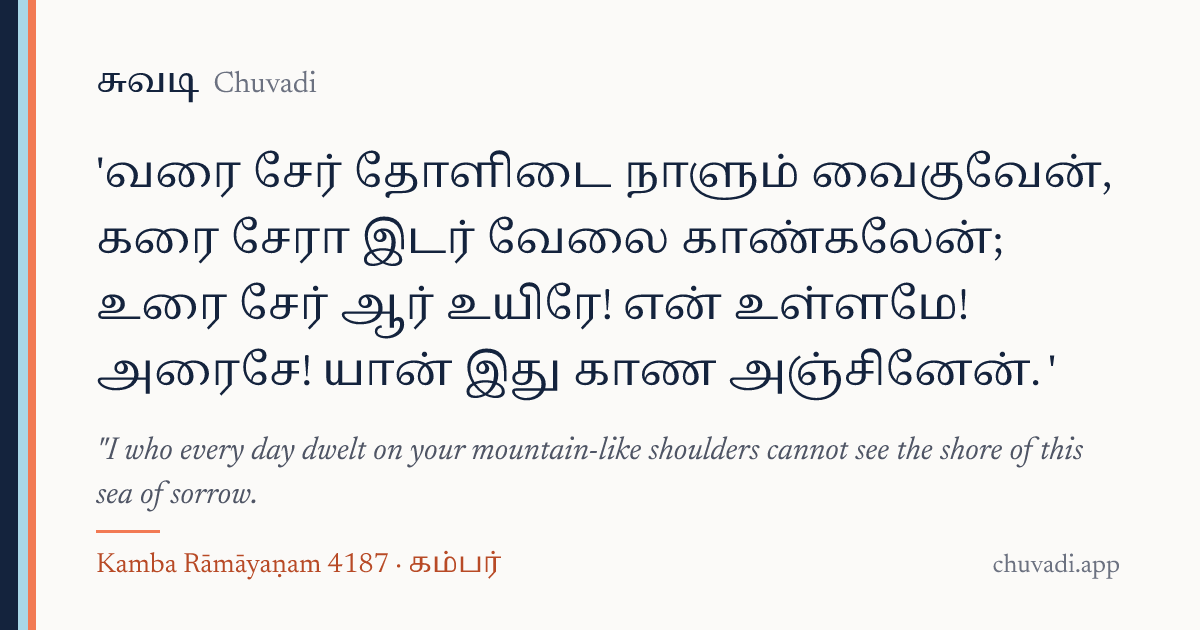
- "I who every day dwelt on your mountain-like shoulders
- cannot see the shore of this sea of sorrow.
- My precious life, rich in fame! My heart!
- My king! I am afraid to look on this."
What the poem says
Tārai addresses Vāli as her very life and heart, so close were they, and as her king and protector. Used to living on his shoulders as if on a mountain of joy, she now finds herself in a sea of grief with no shore in sight.
She cannot even bring herself to name what has happened, calling it only "this." The commentary notes the mountain-and-sea pairing also used for Aṅkataṉ's grief a few verses earlier.