



கம்பராமாயணம் 4217 · கிட்கிந்தா 8.14
பாடல் · The poem
Tap a word to see its gloss in the commentary and where else it occurs.
பாட வேறுபாடு · Project Madurai reads
பொருள் · Meaning in Tamil
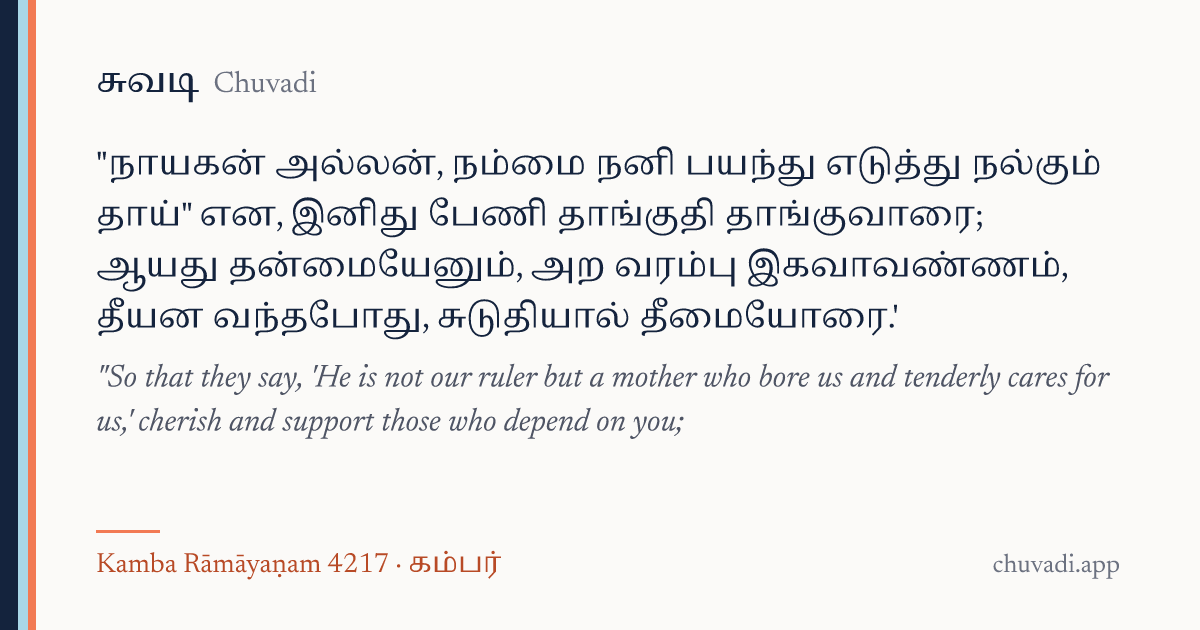
நாயகன் அல்லன் - (இவன் நமக்கு) அரசன் அல்லன்; நம்மைப் பயந்து எடுத்து - நம்மைப் பெற்றெடுத்து; நனி நல்கும் தாய் என - நன்கு பாதுகாக்கும் தாயே என்று (எண்ணியும் சொல்லியும்); இனிது பேணி - இனிதாக (மக்கள் உன்னை) ஆதரிக்கும்படி; தாங்குவாரைத் தாங்குதி - பாதுகாத்தற்குரிய குடிமக்களைப் பாதுகாப்பாயாக; ஆயது தன்மையேனும் - அங்ஙனம் பாதுகாத்தலே அரச இயல்பாயினும்; தீயன வந்த போது - (எவராலேனும்) தீமை பயக்கும் செயல்கள் நேருமாயின்; தீமையோரை அவ்வாறு - தீங்கு செய்தவர்களை; அற வரம்பு இகவாவண்ணம் - தருமத்தின் எல்லையைக் கடவாதபடி; சுடுதி- (காய்ந்து) தண்டிப்பாயாக.
குடிமக்களிடத்து அன்பு காட்டி ஒழுகுதலும், அவ்வாறு நடக்கையில் எவரேனும் தவறு செய்தால் குற்றத்திற்கேற்ற படி தண்டித்தலும் அரசர்க்கு ஏற்ற முறையாகும் என்பது கருத்தாம். 'குடிபுறம் காத்தோம்பிக் குற்றம் கடிதல், வடுவன்று வேந்தன் தொழில்', 'கொலையில் கொடியாரை வேந்தொறுத்தல் பைங்கூழ் களைகட்டதனொடு நேர்', 'தக்காங்கு நாடித் தலைச் செல்லா வண்ணத்தால், ஒத்தாங்கு ஒறுப்பது வேந்து', 'கடுமொழியும் கையிகந்த தண்டமும் வேந்தன் அடுமுரண் தேய்க்கும் அரம்' (குறள் 549, 550, 561, 567) என்னும் கருத்துக்கள் இங்குக் காணத்தக்கன.
நாயகன் அல்லன் என்ற உண்மையை மறைத்துத் தாய் என மற்றொரு தன்மையை ஏற்றிக் கூறியதால் இப்பாடல் ஒழிப்பணியின்பாற்படும். மன்னனையும் கடவுளையும் தாயெனக் கூறுதல் மரபாகும். 'தாயொக்கும் அன்பில்' (171), 'தாயென உயிர்க்கு நல்கி' (4061), 'அம்மையே அப்பா' (திருவாச. பிடித்த 3) என்பன காண்க.
ஆங்கிலம் · English translationAI
Translation
- "So that they say, 'He is not our ruler but a mother who bore us
- and tenderly cares for us,' cherish and support those who depend on you;
- yet even with that nature, without crossing the bounds of dharma,
- when evil arises, burn the evildoers."
What the poem says
A king should care for his people so tenderly that they think of him not as a ruler but as a mother. Yet when wrongdoers appear, he must punish them firmly, though always within the limits of justice.
The commentary cites several Tirukkuṟaḷ couplets: punishing criminals is like weeding a field, and punishment should match the offence and not be excessive.