



கம்பராமாயணம் 4297 · கிட்கிந்தா 9.60
பாடல் · The poem
Tap a word to see its gloss in the commentary and where else it occurs.
பாட வேறுபாடு · Project Madurai reads
பொருள் · Meaning in Tamil
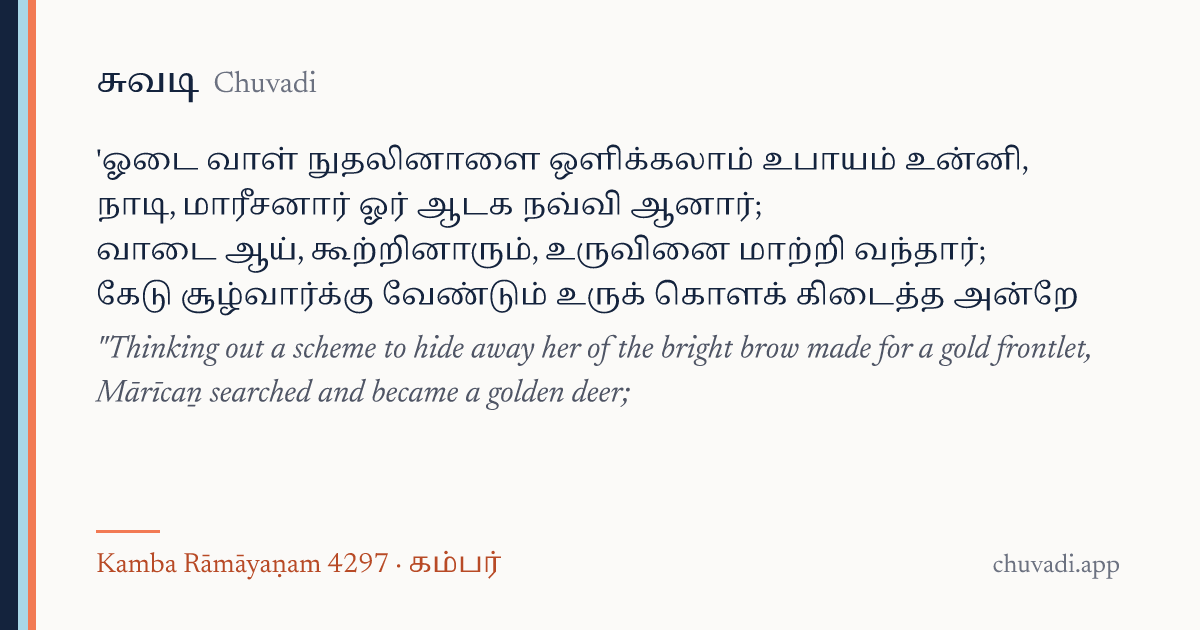
மாரீசனார் - (முன்பு) மாரீசனார்; ஓடை வாள் நுதலினாளை - (என்னை வருத்த) பொன்பட்டம் அணிதற்குரிய நெற்றியையுடைய சீதையை; ஒளிக்கலாம் உபாயம் எண்ணி - வஞ்சனையால் கவர்ந்து மறைப்பதற்குரிய வழியை ஆலோசித்து; நாடி - அறிந்து; ஓர் ஆடக நவ்வி ஆனார் - பொன் மயமானதொரு மான் வடிவம் கொண்டார்; கூற்றினாரும் - (இப்பொழுது) யமனாரும்; வாடை ஆய் - (என்னை வருத்த) வாடைக்காற்றாக, உருவினை மாற்றி வந்தார் - தன் உருவத்தை மாற்றிக் கொண்டு வந்தார்; கேடு சூழ்வார்க்கு - கெடுதி செய்ய நினைப்பார்க்கு; வேண்டும் உருக்கொளக் கிடைத்த அன்றே - வேண்டிய வடிவங்களெல்லாம் எடுக்க முடிந்தன அல்லவா? (என்னே கொடுமை என்றவாறு.
ஓடை - நெற்றிப்பட்டம். நெற்றி அழகில் கொண்ட ஈடுபாட்டால் 'ஓடை வாள் நுதலினாள்' என்றான். பிரிந்து நின்ற தன்னை வருத்துதல் நோக்கி வாடையை யமன் என்றான், 'கூதிர் வாடை வெங்கூற்றினை நோக்கினன்' (35.55) என முன்னும் வந்தது காண்க. 'கூதிர் உருவில் கூற்றம், காதலர்ப் பிரிந்த எற்குறித்து வருமே' (குறுந் - 197) என்ற கூற்றையும் ஒப்பிட்டுக் காணலாம். மாரீசனார் கூற்றினார் என்ற மரியாதைப் பன்மைகள் சினமும் இகழ்ச்சியும் பற்றி வந்தன. சீதையைக் கவரக் கேடு சூழ்ந்த மாரீசனுக்கும், பிரிந்திருக்கும், தன்னை வருத்தலாகிய கேடு சூழ்ந்த வாடைக்கும் மானுரு எடுக்கவும், யமன் உரு எடுக்கவும் முடிந்ததே என வியப்பானாய் 'வேண்டும் உருக்கொளக்கிடைத்த அன்றே' என்றான். சிறப்பாக ஒன்றைக் கூறி அதனின்று பொதுப்பொருள் ஒன்றும் கூறியமையின் இப் பாடல் வேற்றுப் பொருள்வைப்பணி.
ஆங்கிலம் · English translationAI
Translation
- "Thinking out a scheme to hide away her of the bright brow made for a gold frontlet,
- Mārīcaṉ searched and became a golden deer;
- Death too has changed his shape and come as the north wind;
- for those who plot harm, any form they want is there for the taking!"
What the poem says
Irāmaṉ links two disguises. Mārīcaṉ the demon took the form of a golden deer to help carry off Cītai, she of the lovely brow. Now Yama, the god of death, has disguised himself as the cold north wind, which is killing Irāmaṉ by inches in his separation.
The honorific plural he uses for both is sarcastic. The final line moves from these particular cases to a general truth, that those bent on harm can always find the shape they need, a figure called "placing a general statement".