



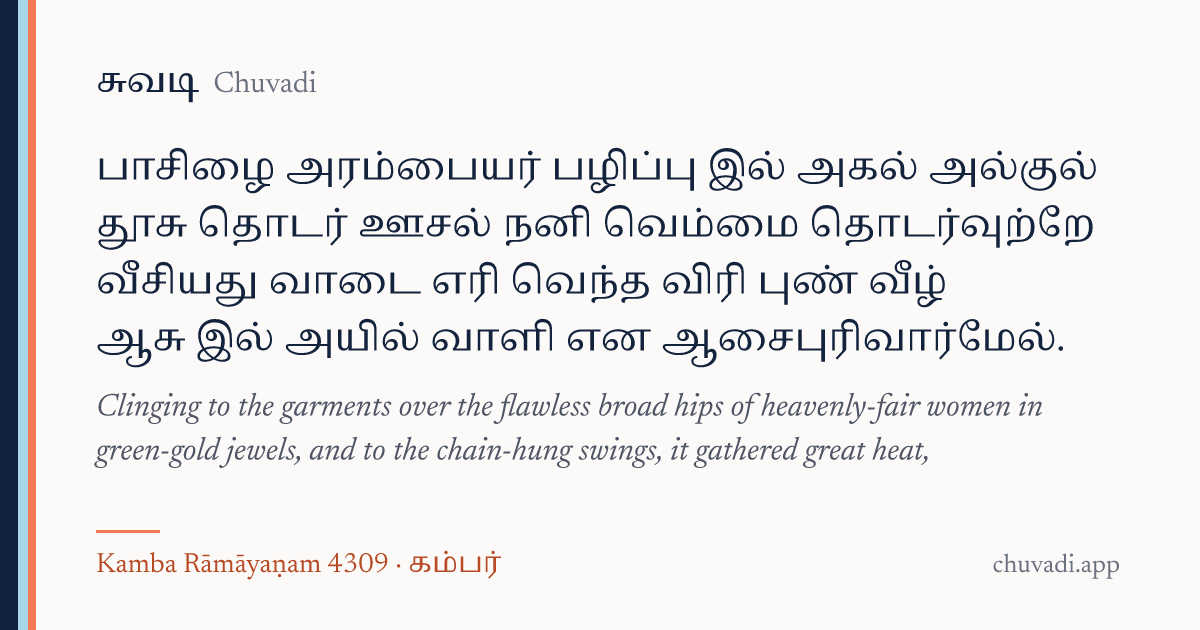
கம்பராமாயணம் 4309 · கிட்கிந்தா 9.72
பாடல் · The poem
Tap a word to see its gloss in the commentary and where else it occurs.
பாட வேறுபாடு · Project Madurai reads
பொருள் · Meaning in Tamil
வாடை - வாடைக்காற்றானது; பாசிழை அரம்பையர் - பசும்பொன்னாலாகிய அணிகலன்களை அணிந்த மகளிரின்; பழிப்பு இல் அகல் அல்குல் - குற்றமற்ற அகன்ற மறைவிடத்தை மறைத்த; தூசு - ஆடையினையும்; தொடர் ஊசல் - சங்கிலிகளால் இணைக்கப்பட்ட ஊஞ்சலினையும்; தொடர்வுற்று - சார்ந்து; ஆசை புரிவார்மேல் - (அவர்கள்மேல்) காதல் கொண்டவர்களான ஆண்கள் மீது; எரிவெந்த விரிபுண் - நெருப்புப் பட்டு வெந்து பரந்த புண்ணில்; வீழ் - விழுந்து தைக்கும்; ஆசு இல் அயில் வாளி என - குற்றமற்ற கூர்மையான அம்பு போல; நனி வெம்மை வீசியது - மிகுந்த வெப்பம் உண்டாகும்படி வீசிற்று.
மகளிர் அழகைக் கண்டு அவர்கள் பால் காதல் கொண்டு தவிக்கின்ற ஆடவர் மேல், அம்மகளிர் அணிந்த ஆடை மீதும், ஆடிய ஊஞ்சலின் மீதும் பட்டு வருகின்ற வாடைக்காற்று வீசி வெம்மை செய்து வருத்தியது. இயல்பாகவே வருந்தி நிற்கும் ஆடவர் மீது வாடைக் காற்று வீசி, மேலும் வருத்தியமைக்கு வெந்த விரி புண்ணின்கண் வேல் கொண்டு நுழைப்பான்போல் காய்ந்த நோய் உழப்பாரைக் கலக்கிய வந்தாயோ" (கலி - 120) 'எறிவேல் பாய்ந்த புண்ணில் ஆம் பெரும் புழையில் கனல் நுழைந்தாலென' (325) என்பன ஈண்டு ஒப்பு நோக்கத்தக்கன. வாடை காதலருக்கு வெப்பம் பெருக வீசுவதைத் 'தழல் வீசி உலாவரு வாடை தழீஇ (5232) என்ற அடியும் உணர்த்தும்.
ஆங்கிலம் · English translationAI
Translation
- Clinging to the garments over the flawless broad hips of heavenly-fair women in green-gold jewels,
- and to the chain-hung swings, it gathered great heat,
- and the north wind blew upon those who longed for them
- like flawless sharp arrows falling into a wide wound already seared by fire.
What the poem says
The cold north wind blows over the clothes of beautiful women and the swings they played on, and then reaches the men who long for them. Cold though it is, it feels burning hot to these lovesick men.
The poet compares it to a sharp arrow driven into a wound already burned raw by fire: the men were suffering already, and the wind, carrying a trace of the women it has touched, makes their pain far worse. Kampaṉ later uses the same idea of a wind that scorches lovers in describing Cītai's suffering.