



கம்பராமாயணம் 4769 · கிட்கிந்தா 16.10
பாடல் · The poem
Tap a word to see its gloss in the commentary and where else it occurs.
பாட வேறுபாடு · Project Madurai reads
பொருள் · Meaning in Tamil
வெப்பு உறு - வெப்பம் பொருந்திய; செந்தீ நீர் வளியாலும் - சிவந்த நெருப்பாலும், நீரினாலும், காற்றினாலும்; விளியாதீர் - இறவாது நிற்பீர்; செப்பு உறு தெய்வம் - சிறப்பாகப் பேசப்படுகின்ற தெய்வத் தன்மையுள்ள; பல்படையாலும் சிதையாதீர் - பலவகைப்பட்ட படைக்கருவிகளாலும் பிளவுற்று அழியாதிருப்பீர்; ஒப்பு உறின் - (உமக்கு) உவமையெடுத்துச் சொல்வதானால்; ஒப்பார் நும் அலது இல்லீர் - உம்மையே அல்லாமல் உவமையாகின்றவர் வேறு ஒருவரையும் பெறாமலிருப்பீர் (உமக்கு நீரே ஒப்பாவீர்), ஒரு காலே குப்புறின் - ஒரு தடவை பாய்ந்து குதிக்கும்போதே; அண்டத்து அப்புறமேயும் - இந்த அண்டத்து அப்புறத்திலும்; குதிகொள்வீர் - பாய்ந்து குதிக்கும் திறமுடையீர்
அனுமன் இளமையில் சூரியனைக் கனிந்த பழமென்று கருதித் தாவிய போது இந்திரன் வச்சிராயுதத்தால் அடித்தான்; அதனால் தன் மகன் கவுள் (கன்னம்) முறிந்து மூர்ச்சையுற்றதால் வாயுதேவன் சினங்கொண்டு, உலகில் காற்றின் இயக்கத்தையே நிறுத்திவிட்டான். அதனால் பிரமன், சிவன் முதலிய தேவர்களெல்லோரும் தோன்றி அந்த வாயுதேவனை மனங்குளிர்விப்பதற்காகத் தம் தம் படைக் கருவிகளால் அனுமன் அழியாதிருக்க வரமளித்தனர் என்பது வரலாறு. 'எவரினும் அதிகம் உயர்ந்தான்' (5509) எனப் பின்னரும் அனுமன் குறிக்கப்படுகிறான். காவிய நாயகனாகிய இராமனை 'உவமை நீங்கிய தோன்றல்' (266) எனவும், 'ஒப்பு இறையும் பெறலரிய ஒருவன்' (2570) எனவும் முன்னே வந்துள்ள தொடர்கள் குறிக்கின்றன. காவிய நாயகனை விளக்கியவாறே அனுமனும் கட. கட எண்ணிப் போற்றுதற்கு உரியது.
தீ நீர் வளி - உம்மைத் தொகை.
ஆங்கிலம் · English translationAI
Translation
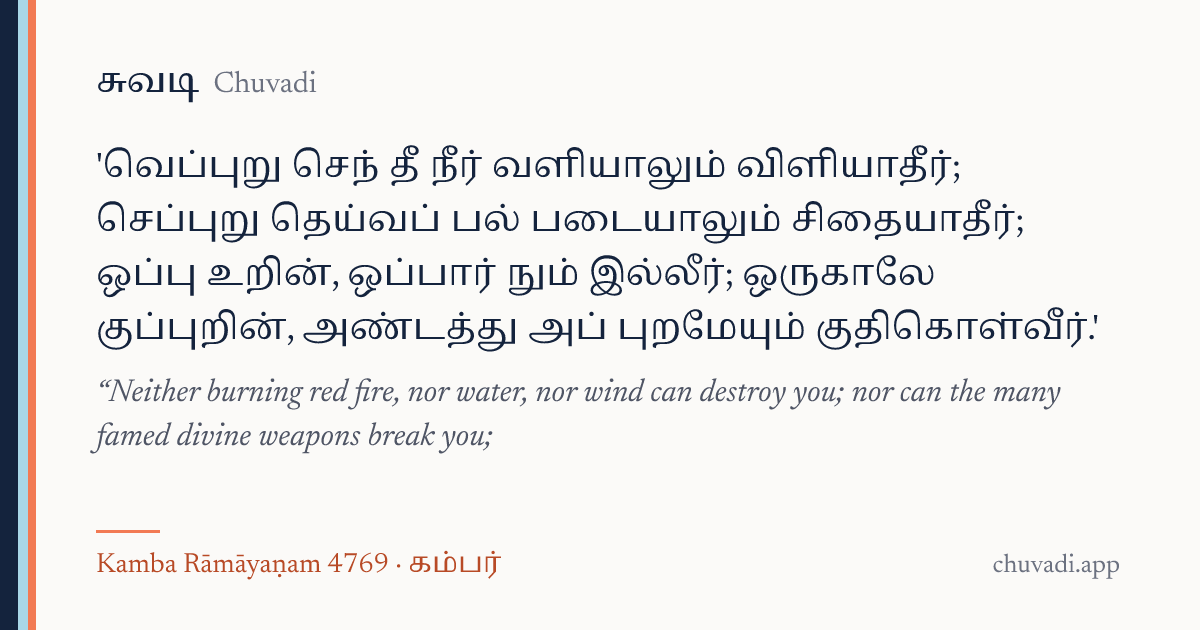
- “Neither burning red fire, nor water, nor wind can destroy you;
- nor can the many famed divine weapons break you;
- if one looks for a match, you have none but yourself; with one
- leap you could land even beyond the bounds of the cosmic egg.”
What the poem says
Cāmpavaṉ goes on: no element and no divine weapon can harm Aṉumaṉ, he has no equal, and a single jump could carry him past the edge of the universe. Behind this lies the story of Aṉumaṉ's childhood: he leapt at the rising sun thinking it a ripe fruit, Intiraṉ struck him with the thunderbolt and broke his jaw, and the Wind god in anger stopped all air in the world. To appease him the gods each granted the boy immunity from their own weapons. The poet gives Aṉumaṉ the same "matchless" praise he elsewhere reserves for Irāmaṉ.