



கம்பராமாயணம் 4771 · கிட்கிந்தா 16.12
பாடல் · The poem
Tap a word to see its gloss in the commentary and where else it occurs.
பொருள் · Meaning in Tamil
மேரு கிரிக்கும் மீது உற - மேரு மலைக்கும் மேலாக, நிற்கும் - ஓங்கி நிற்கும்; பெரு மெய்யீர் - பெரிய உடம்பையுடையீர்; மாரி துளிக்கும் தாரை இடுக்கும் - மேகங்கள் சொரியும் மழைத்துளிகளின் நடுவிடும்; வர வல்லீர் - (சிறு வடிவெடுத்து) நுழைந்து வரும் வல்லமையுடையீர்! பாரை எடுக்கும் நோன்மை வலத்தீர் - இப் பூமியையே பேர்த்தெடுக்கும் மிக்க வலிமையுடையவராவீர்! பழி அற்றீர் - (பெரு வரங்களைத் தீய வழியில் செலுத்தாததால் சிறிதும்) பழிப்பில்லாதவராவீர்; சென்று ஒண் கையகத்தும் - மேலே சென்று அழகிய கைகளாலும்; சூரியனைத் தொடவல்லீர் - சூரிய தேவனைத் தொடவும் வல்லவராவீர்.
அனுமன் தன் உடம்பு வளரவேண்டுமென்று நினைத்தால் மேருமலையைக் காட்டிலும் அவனுடம்பு பெரியதாகும்; அந்த உடம்பைச் சிறிதாக ஒடுக்க விரும்பினால் அணுவைக் காட்டிலும் அவனுடம்பு சிறியதாகும் என்பது.
இவ்விரண்டும் யோக சித்திகளும் முறையே மகிமா, அணிமா என்னும் சித்திகளாகும்.
தாரை: நீரொழுக்கு. நோன்மை வலம்: ஒரு பொருட் பன்மொழி. மேரு கிரிக்கும்: உம்மை உயர்வு சிறப்பு. ஒப்பு: 'பிறியா அறத்தின் அனுமன் வளர்ச்சி பெரு மேருவினிற் பெரியனாம்; சிறிதா யொடுக்குமெனின் மேனியற்ப அணுவானதிற் சிறியனாம்' - (உத்தர -அனுமமட். 7)
ஆங்கிலம் · English translationAI
Translation
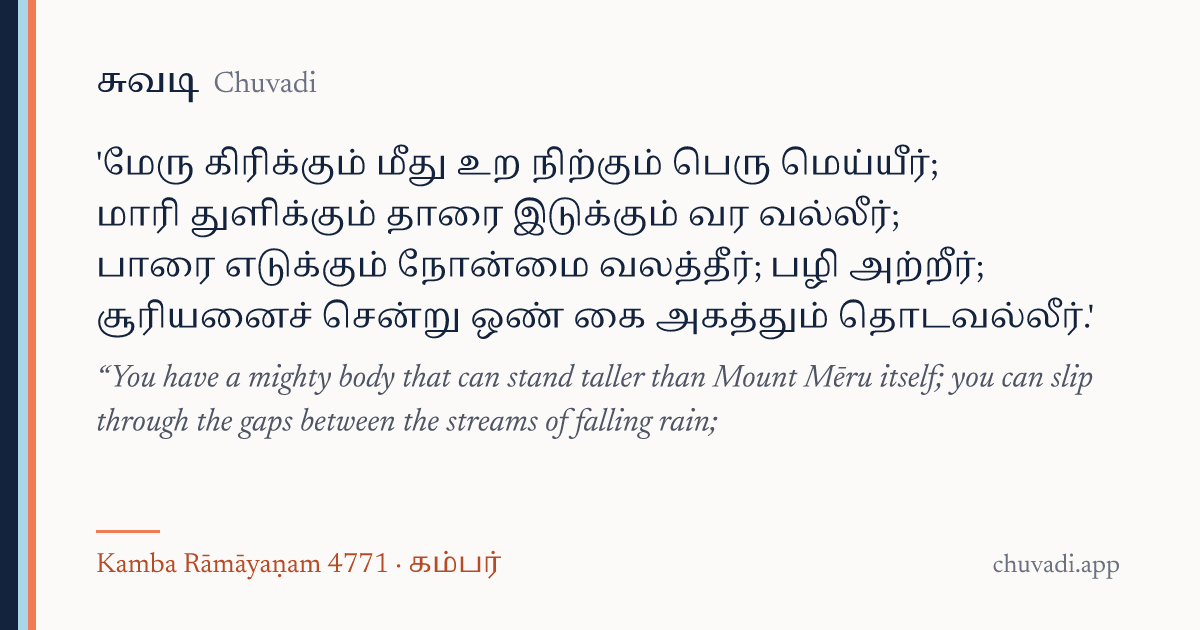
- “You have a mighty body that can stand taller than Mount Mēru itself;
- you can slip through the gaps between the streams of falling rain;
- you have strength enough to lift the earth; you are free of blame;
- you can go up and touch the Sun with your bright hand.”
What the poem says
Aṉumaṉ can grow larger than Mount Mēru or shrink smaller than the drops of a rainstorm, the yogic powers called mahimā and aṇimā. He could heave up the earth and reach the Sun. Yet he has never misused these gifts, so he is "free of blame". The commentary cites a later Tamil work that describes the same two powers in almost the same terms.