



கம்பராமாயணம் 5080 · சுந்தர 3.198
பாடல் · The poem
Tap a word to see its gloss in the commentary and where else it occurs.
பாட வேறுபாடு · Project Madurai reads
பொருள் · Meaning in Tamil
பயன் ஓர்வார் - செயலின் பயனை ஆராய்ந்த; பருணிதர் - பேரறிஞர்கள்; யாம் - நாம்; பழையம் என - நீண்டகால நட்புடையேம் என்று கருதி; பண்பல செய்வரோ - முறையற்ற செயல்களைச் செய்வாரோ? (செய்யமாட்டார்) ஆகையினாலும் கீழ்மையர் - தாழ்ந்த இயல்பைப் பெற்றவர்; வெகுள்வுற்றால் - சினம் அடைந்தால்; விழைவு நீங்கிய - ஆசையிலிருந்து விலகிய; மேன்மையர் ஆயினும் - சிறந்தவராக இருந்தாலும்; பெறுவது - (அத்தீயவரால்) அடைவது; பிழைகொல் - தீமையே; நன்மைகொல் - நன்மையே; என்று ஐயுறும் - என்று சந்தேகத்தை வழங்கும்; பீழையால் - அச்சத்தால்; பெருந் தென்றல் - பெருமையுடைய தென்றற்காற்று (உரிமையுடன் உலவாது); உழையர் - ஏவலாளர்கள்; கூவ - அழைக்க; புக்கு - மாளிகைக்கு உள்ளே நுழைந்தும்; ஏகு என - (உழையர்) “போ” என்று கூற; பெயர்வது ஓர் ஊசலின் - திரும்பிச் செல்வதாகிய ஓர் ஊசல் தன்மையால்; உளதாகும் - தான் இருப்பதாகத் தன்னைக் காட்டிக்கொள்ளும்.
‘பழையம் எனக்கருதிப் பண்பல செய்யும் கெழுதகைமை கேடு தரும்” என்னும் குறள் இக்கவியுள் அமைந்துள்ளது. தென்றல் வந்து செல்லும் ஊசல் தன்மையால் இருப்பதாக அறியப்படுகிறதே அன்றி தன் இயல்பாகிய வீசும் தன்மையில் அங்கே இல்லை என்பதால் ஆணையின் சிறப்பு புலப்படும். மண்டோதரி இராவணனைப் பிரிந்திருப்பதால் தென்றல் இயல்பாக வீச அஞ்சியது போலும்; அழைத்தால் வந்து அனுப்பினால் போவது என்ற நிலைமையில் இருப்பதாயிற்று.
ஆங்கிலம் · English translationAI
Translation
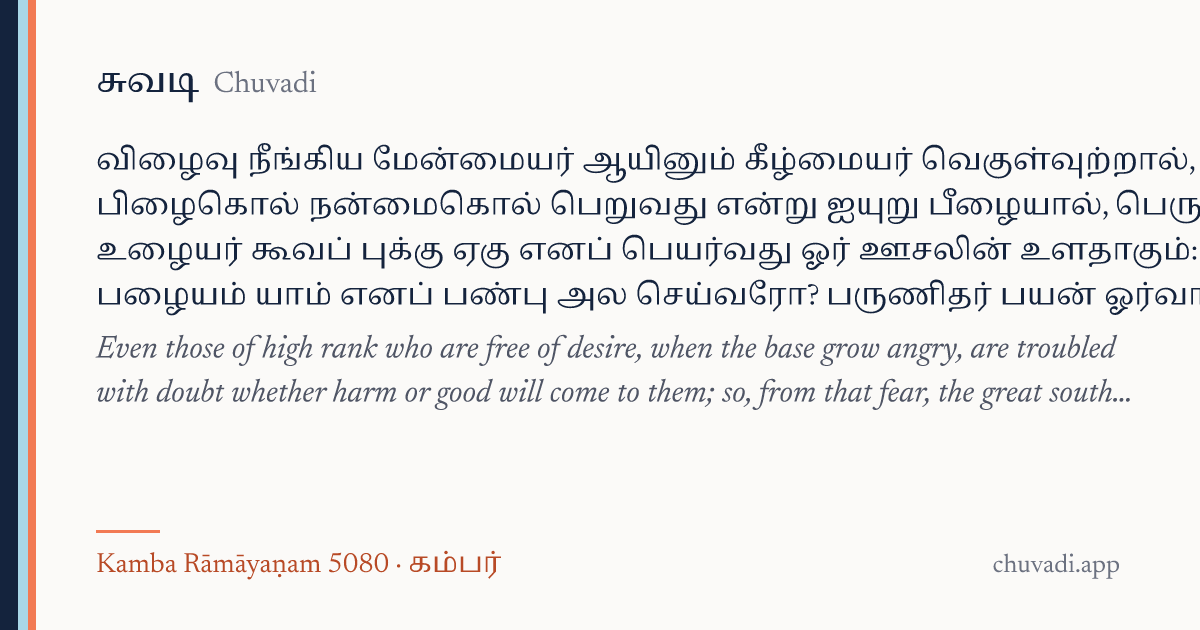
- Even those of high rank who are free of desire, when the base grow angry,
- are troubled with doubt whether harm or good will come to them; so, from that fear, the great south wind
- exists there only as a swing, entering when the servants call and leaving when they say 'Go';
- will the wise who weigh the outcome do improper things, thinking, 'We are old friends'?
What the poem says
Even the south wind, a god in Indian belief, dares not blow freely into Maṇṭōtari's chamber. It comes in only when the servants call it and leaves when they send it away, swinging back and forth like a swing.
The poet explains with a general truth. Even a noble being free of desire cannot be sure what an angry tyrant will do to him, and the wise never take liberties because of an old acquaintance. This echoes a couplet of the Tirukkuṟaḷ, and it shows how much everyone fears Irāvaṇaṉ's authority.