



கம்பராமாயணம் 5334 · சுந்தர 5.59
பாடல் · The poem
Tap a word to see its gloss in the commentary and where else it occurs.
பொருள் · Meaning in Tamil
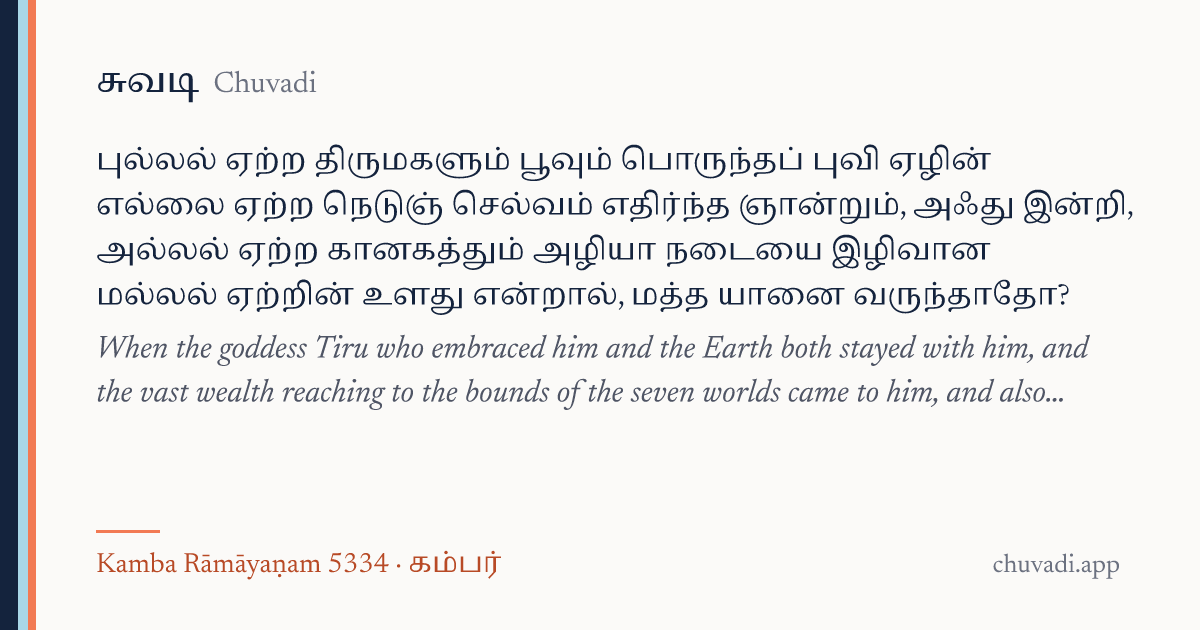
புல்லல் ஏற்றதிரு மகளும் - தழுவுதலை மேற்கொண்ட திருமடந்தையும்; பூவும் - நிலமடந்தையும்; பொருந்த - தன்பக்கல் தங்க (அதனால்); புவி ஏழின் - ஏழு உலகங்களின்; எல்லை ஏற்ற - எல்லையை ஏற்றுக் கொண்ட; நெடும் செல்வம் - நீட்சி மிக்க செல்வமானது; எதிர்ந்த ஞான்றும் - எதிர்ப்பட்ட காலத்திலும்; அஃது இன்றி - அச்செல்வம் இல்லாமல்; அல்லல் ஏற்ற - துன்பம் மிக்குயர்ந்த; கானகத்தும் - காட்டின் கண்ணேயும்; அழியா நடையை - தளர்ச்சியடையாத நடையை, இழிவான மல்லல் - தாழ்வுற்ற வளத்தைப் பெற்ற; ஏற்றின் உளது - காளையின்பால் உள்ளது; என்றால் - என்று கூறினால்; மத்த யானை - மதம் மிக்க யானையானது; வருந்தாதோ - வருத்தம் அடையாதோ.
காளையின்பால் இராமபிரான் நடை உள்ளது என்று கூறின் யானை வருந்தும் என்று கூறிப் புதிய அணிக்கு வழிவகுத்த கவிச்சக்கரவர்த்தி புலமையை வழிபடுக. கானகத்தும் - என்பதில் உள்ளஉம் - அசை ‘காமக்கடல் மன்னும் உண்டோ’ (குறள் 1164) அழகர் மன்னும் உம்மும் அசை நிலை என்றார்.காலத்தும் என்னும் பாடம் கானத்தும் என்று பாடபேதம்ஆயிற்று போலும். நடையை என்பதில் உள்ள ஐ அசை - உருபு அன்று. நடைஉளது, என்றால் புகழானை........ விளக்கினான் (சிந்தா 260.5)
ஆங்கிலம் · English translationAI
Translation
- When the goddess Tiru who embraced him and the Earth both stayed with him, and the vast wealth
- reaching to the bounds of the seven worlds came to him, and also without it,
- in the forest full of hardship: his gait, which never faltered there,
- if one says it is found in a common bull, will not the rutting elephant grieve?
What the poem says
Last Aṉumaṉ describes Irāmaṉ's walk. Whether he was about to receive a kingdom spanning the seven worlds, with Śrī and the Earth goddess as his consorts, or was walking the forest in hardship without any of it, his stately gait never changed.
A noble gait is usually compared to a bull's. But to say Irāmaṉ walks like a mere bull would offend the elephant, who would feel it had been passed over, for only the majestic elephant comes anywhere near. The commentary praises this as an original figure of speech.