



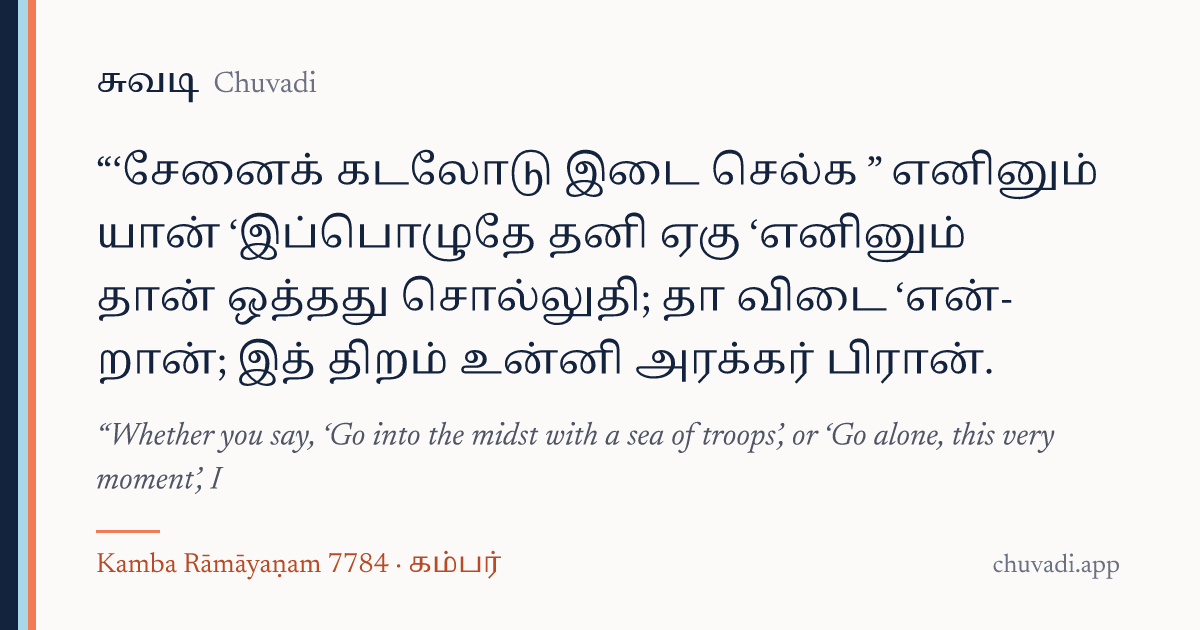
கம்பராமாயணம் 7784 · யுத்த 17.13
பாடல் · The poem
Tap a word to see its gloss in the commentary and where else it occurs.
பாட வேறுபாடு · Project Madurai reads
பொருள் · Meaning in Tamil
சேனைக் கடலோடு இடை செல்க எனினும் - படைக் கடல் சூழ இடையில் (போருக்குக்) செல்க என்று கட்டளை இட்டாலும் தனி ஏகு எனினும் - அவ்வாறன்றித் தனியாகவே (போருக்குச்) செல் என்று கட்டளை இட்டாலும்; யான் இப்பொழுதே - நான் இக்கணத்தே (அதுசெய்வேன்); தான் ஒத்தது சொல்லுதி - இரண்டனுள் பொருத்தமானதைச் சொல்வாய்; விடை தா என்றான் - விடை தருக (என்று அதிகாயன்) கூறினான்; இத்திறம் உன்னி அரக்கர் பிரான் - இவ்வாறு தன் மகன் கூறிய தன்மையை எண்ணி அரக்கர் தலைவனாகிய இராவணன் ஏவினனால் (15) என்பதோடு முடியும்.
தான் - அசை சேனைக்கடல் - உருவகம், செல்க - வியங்கோள் வினைமுற்று. தா - தாவென் கிளவி ஒப்போன் கூற்று. மகன் தந்தையிடம் ஒப்போனாகப் பேசுவதால் இச்சொல் வந்தது.
ஆங்கிலம் · English translationAI
Translation
- “Whether you say, ‘Go into the midst with a sea of troops’,
- or ‘Go alone, this very moment’, I
- will do it; say which you think fit; give me leave,” so he
- said; and thinking on this, the lord of the demons —
What the poem says
Atikāyaṉ leaves the choice to his father: he will go at once, either at the head of a sea of troops or alone, whichever Irāvaṇaṉ thinks best. He asks only for permission to leave. Irāvaṇaṉ weighs his son's words; the sentence runs on to the next verses, where he gives his orders.