



கம்பராமாயணம் 7786 · யுத்த 17.15
பாடல் · The poem
Tap a word to see its gloss in the commentary and where else it occurs.
பாட வேறுபாடு · Project Madurai reads
பொருள் · Meaning in Tamil
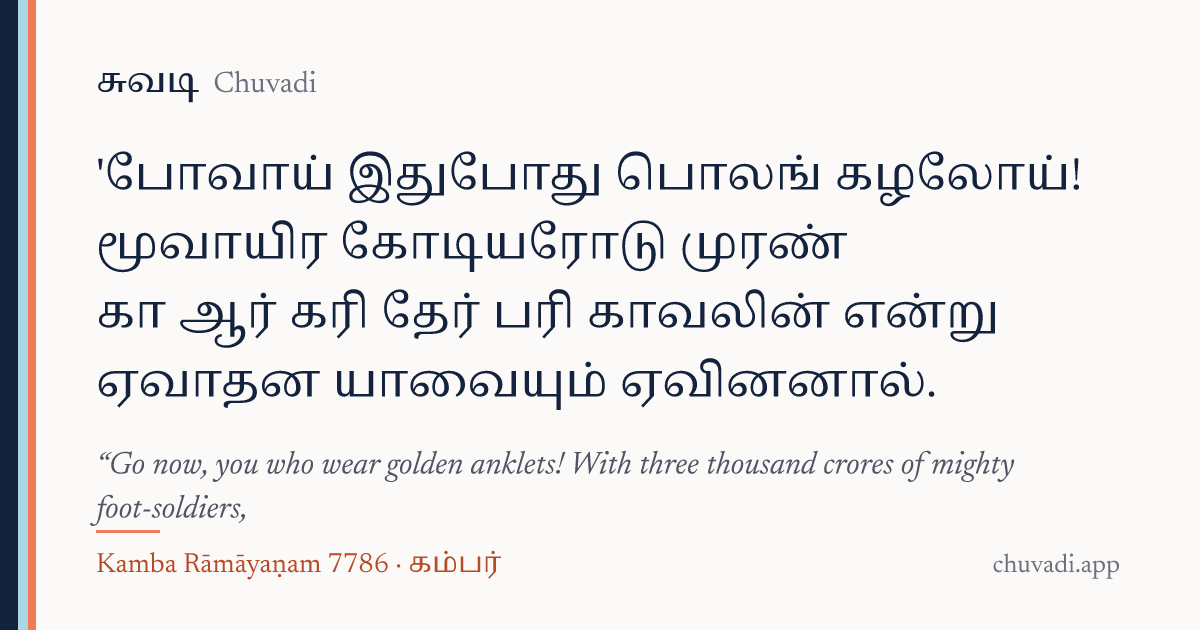
பொலங்கழலோய் - பொன்னால் செய்யப்பட்ட வீரக் கழல் அணிந்தவனே; முரண் மூவாயிர கோடியரோடு - வலிமை உள்ள மூவாயிரங்கோடி காலாட்படை, கா ஆர் கரி - காத்தலைப் பொருந்திய யானைப்படை; தேர் - தேர்ப்படை; பரி - குதிரைப் படை, காவலின் போவாய் இது போது - (ஆகியவை) காவல் செய்யப் (போர்க்களம்) போவாய் இப்போது; என்று ஏவாதன யாவையும் ஏவினனால் - என்று கூறி (இதுவரை போருக்கு அனுப்பாத பெரும் படையை (அதிகாயனுடன் செல்க என) ஏவினான்.
முரண் - வலிமை, கா - காத்தல், ஆர் - பொருந்திய, பரி - குதிரை, பொலங்கழல் - மூன்றாம் வேற்றுமை உருபும் பயனும் உடன் தொக்க தொகை, கா - முதனிலைத் தொழிற் பெயர்.
ஆங்கிலம் · English translationAI
Translation
- “Go now, you who wear golden anklets!
- With three thousand crores of mighty foot-soldiers,
- guarding elephants, chariots and horses, as your escort,” so saying,
- he sent forth all the forces he had never yet sent out.
What the poem says
Irāvaṇaṉ sends Atikāyaṉ off at once. He gives him an enormous escort: three thousand crores of strong infantry with elephants, chariots and cavalry. This is a reserve force that had not yet been committed to the war.