



கம்பராமாயணம் 782 · பால 12.44
பாடல் · The poem
Tap a word to see its gloss in the commentary and where else it occurs.
பொருள் · Meaning in Tamil
இவண் - சனகனது அரச சபையில்; இற்று - இந்த நிகழ்ச்சியானது; இன்னது ஆக - இப்படி நடக்க; மதியொடும் - சந்திரனோடு; எல்லி நீங்கப் பெற்று - இரவு கழிந்து; உயிர் பின்னும் - அந்தக் குமரனை மறுபடியும்; காணும் ஆசையால் - காணவேண்டுமென்ற ஆர்வத்தால்; சிறிது பெற்ற - (தேய்ந்து வரும்) உயிரைச் சிறிது பெற்றுள்ள; சிற்றிடைப் பெரிய கொங்கை - சிறுத்த இடையையும் பெருத்த தனங்களையும்; சேய் அரிக் கரிய - செவ்வரி படர்ந்த கரியவாய; வாள்கண் - ஒளிமிக்க கண்களையும்; பொன்தொடி - பொன்னாலாகிய வளைக்கைகளையும்; மடந்தைக்கு - அணிந்த சீதைக்கு; அப்பால் - (கன்னி மாடமாகிய) அந்த இடத்தில்; உற்றது - நேர்ந்ததை; புகலல் உற்றாம் - (இனி) கூறத் தொடங்குவோம்.
முன்பே சீதை வருந்திக் கொண்டிருக்க வேதனைக்குக் காரணமான சந்திரனும் இரவும் நீங்க மீண்டும் இராமனைக் காணலாம் என்ற ஆசை உண்டாகிறது. அதனால் சிறிது உயிர் தங்கிய சீதைக்கு நேர்ந்ததைக் கம்பர் கூறத்தொடங்குகின்றார். சீதை இராமனைத் தன்னுயிர் என்றே கருதினாளாதலின் 'உயிர்' என்றார்.
ஆங்கிலம் · English translationAI
Translation
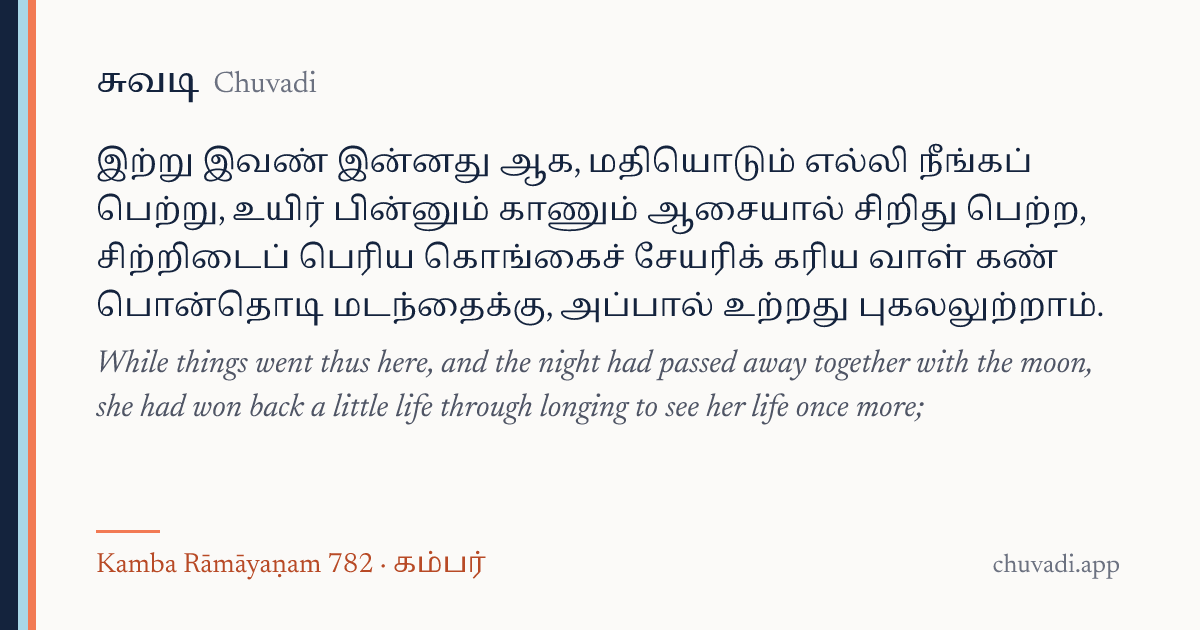
- While things went thus here, and the night had passed away together with the moon,
- she had won back a little life through longing to see her life once more;
- she of the slender waist and full breasts, of dark, bright, red-streaked eyes,
- the maiden with golden bangles: what befell her over there we now begin to tell.
What the poem says
The poet turns from the assembly hall to Cītai in her maiden's quarters. She glimpsed Irāmaṉ the day before and has spent a night of lovesick agony, tormented by the moon.
Now that the night and the moon are gone, the hope of seeing him again has brought a little life back into her. She thinks of Irāmaṉ as her very life, which is why the verse speaks of her longing "to see her life".