



கம்பராமாயணம் 969 · பால 15.6
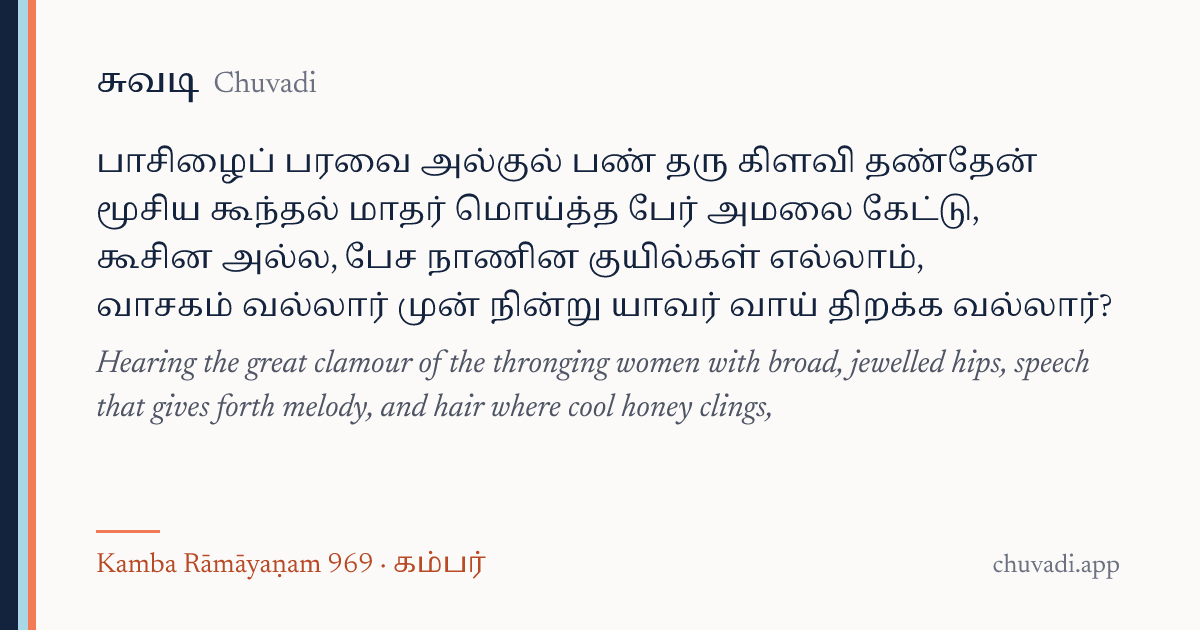
பாடல் · The poem
Tap a word to see its gloss in the commentary and where else it occurs.
பொருள் · Meaning in Tamil
குயில்கள் எல்லாம் - அந்தச் சோலையில் உள்ள குயில்கள் யாவும்; பாசிழைப் பரவை அல்குல் - பசும்பொன்னால் அமைந்து மணிகள் இழைத்து இயற்றிய அணிகள் பூண்ட பரந்த அல்குலையும்; பண்தரு கிளவி - இசையென்னுமாறு வெளிப்படும் இனிய சொற்களையும்; தண்தேன் மூசிய கூந்தல் மாதர் - (சூடிய மலரிலிருந்து) குளிர்ந்த தேன் பரவிய கூந்தலையும் உடைய பெண்டிரின்; மொய்த்தபேர் அமலை கேட்டு - நெருங்கிச் சூழ்ந்த பேரொலியைக் கேட்டு; கூசின அல்ல - (புதியோரைக் கண்ட) கூச்சத்தால் (வாய்மூடிக்) கிடந்தன அல்ல; பேச நாணின - (அந்த மகளிர்முன் தமக்குற்ற தாழ்வுணர்ச்சி மேலீட்டால்) பேசுதற்கு வெட்கமுற்று (வாய்மூடிக்) கிடந்தன; வாசகம் வல்லார் முன்நின்று - (இனிமையாகப்) பேச வல்லார் முன்னிலையில்; யாவர் வாய் திறக்க வல்லார்? - யாரே வாய் திறந்து (பேச) வல்லவர்கள்?
புதியோர் முன்பு பேச இயலாமை கூச்சம் எனவும், உயர்ந்தோர்முன், தன் சிறுமையினால் செயலிழந்து பேச இயலாமை நாணம் எனவும் படும். “கருமத்தால் நாணுதல் நாணு” (திருக். 1012) என்பார் வள்ளுவனாரும். சோலைக்குயில்கள் வாய்மூடிக் கிடப்பதற்குப் புதியாரைக் கண்டு இயல்பாய் வரும் கூச்சம் காரணம் அன்று; அம் மகளிரைப்போன்று இனிமை தோன்ற ஒலிக்க இயலாமற் போன செயலால் வரும் நாணம் காரணம் என்பதாம். வேற்றுப்பொருள்வைப்பணி.
ஆங்கிலம் · English translationAI
Translation
- Hearing the great clamour of the thronging women with broad, jewelled hips,
- speech that gives forth melody, and hair where cool honey clings,
- all the cuckoos fell silent, not out of shyness but ashamed to speak:
- who could open their mouths before those who are masters of speech?
What the poem says
The cuckoos of the grove go quiet when they hear the sweet chatter of the women. It is not the ordinary shyness one feels before strangers. They are ashamed, because their own famous song cannot match the women's voices.
The poet sums this up with a general maxim: who dares to speak in front of those who are masters of speech? Tamil distinguishes kūccam, shyness before strangers, from nāṇam, shame at one's own inferiority. A Tirukkuṟaḷ couplet on shame is cited.