



கம்பராமாயணம் 984 · பால 15.21
பாடல் · The poem
Tap a word to see its gloss in the commentary and where else it occurs.
பாட வேறுபாடு · Project Madurai reads
பொருள் · Meaning in Tamil
குலத் தேவியர் தம் - உயர்குலத்தைச் சார்ந்த (தன்) மனைவியரின்; ஒண் தாமரை வாள் முகத்துள் - அழகிய தாமரை போன்ற ஒளி பொருந்திய முகங்களில், மிளிர் உண்கண் எல்லாம் - விளங்குகின்ற மையுண்ட கண்கள் யாவும்; கண்டு ஆதரிப்பத் திரிவான் - தன் பேரழகைப் பார்த்து, விரும்புமாறு திரிபவன் ஆகிய; திண்தேர் அரசன் ஒருவன் - திண்ணிய தேர் ஊர்ந்து செல்லும் அரசன் ஒருவன்; வண்டு ஆதரிக்க - வண்டுகள் விரும்புமாறு; திரி மாமத யானை ஒத்தான் - திரிகின்ற மிகு மதங்கொண்ட யானை ஒன்றினைப் போன்றவன் ஆயினான்.
யானைகளின் மதநீரை யுண்ணுதற்கு, வண்டுகள் யானை செல்லுமிடம் எல்லாம் உடன் செல்வது போன்று இம்மன்னன் செல்லுமிடம் எல்லாம் அவன் தேவிமார்கள் விழி வண்டுகளும் உடன் திரிய அழகுச் செருக்கில் அவன் உலவினான் என்பதாம். யானைக்கு, வண்டுகள் உடன் திரிய அதன் மதம் காரணம் ஆயிற்று. இவனுக்கு மகளிர் விழி வண்டுகள் உடன் திரிய இவன் அழகு காரணம் ஆயிற்று. வண்டுகளும், விழிகளும் விருப்பத்தோடு உடன் திரிகின்றன என்பார் “ஆதரிக்க” என்றார்
ஆங்கிலம் · English translationAI
Translation
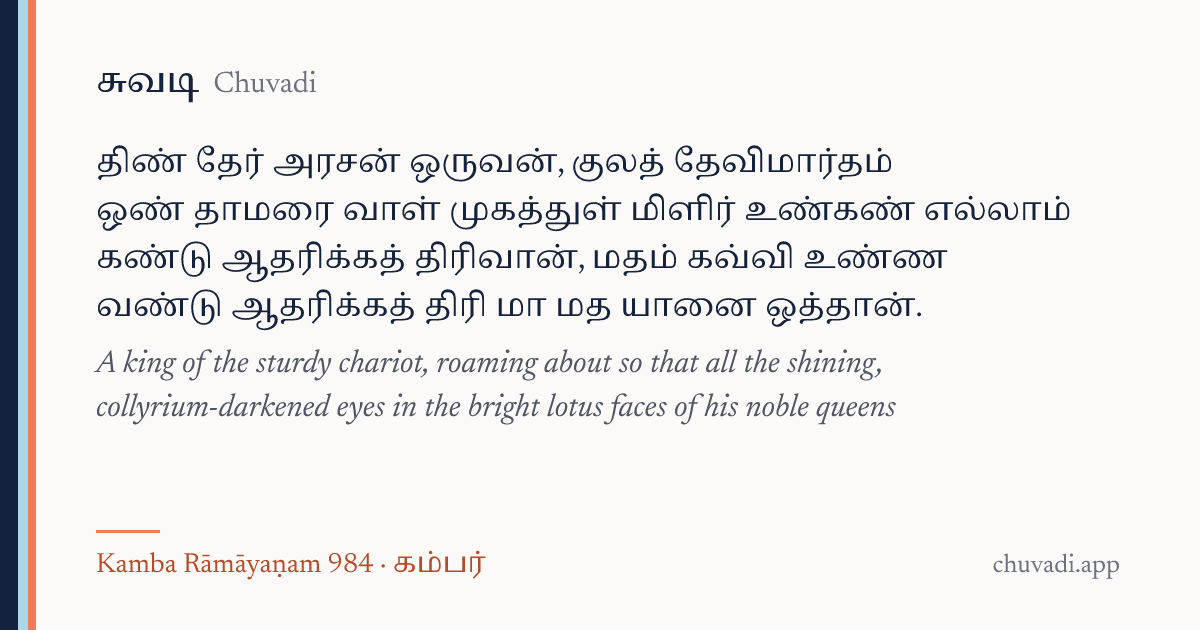
- A king of the sturdy chariot, roaming about so that all the shining, collyrium-darkened eyes
- in the bright lotus faces of his noble queens
- might look on him and long for him, was like a great rutting elephant
- that roams while the bees long to seize and drink its musth.
What the poem says
A handsome king strolls through the grove, and the eyes of all his queens follow him wherever he goes, full of longing. He is like an elephant in rut, trailed everywhere by bees eager for its musth. The women's dark, darting eyes are the bees, and his beauty draws them as the musth draws the bees.