



கம்பராமாயணம் 996 · பால 15.33
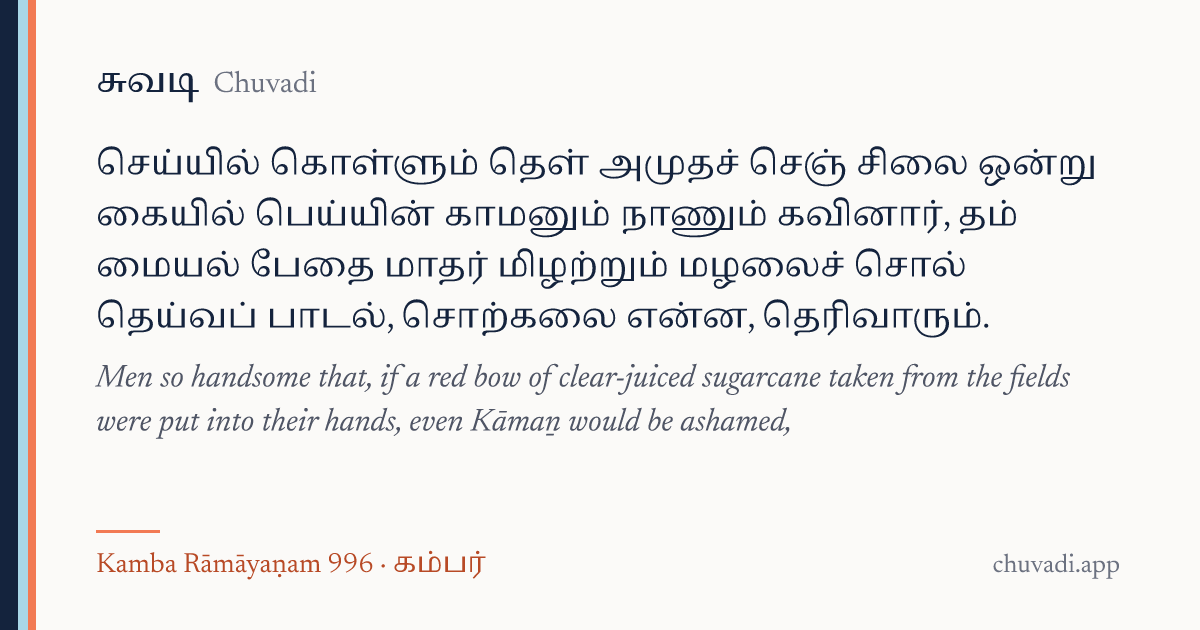
பாடல் · The poem
Tap a word to see its gloss in the commentary and where else it occurs.
பொருள் · Meaning in Tamil
செய்யில் கொள்ளும் - வயலிலிருந்து கொண்டு வரப்படுகிற; தெள் அமுதச் செஞ்சிலை ஒன்று - தெளிந்த தீஞ்சாறுகூடிய (கரும்பாகிய) செந்நிற வில் ஒன்றை; கையில் பெய்யின் - கரங்களில் பெற்றால்; காமனும் நாணும் - இவர் போன்ற அழகு நமக்கில்லையே என மன்மதனும் வெட்கமுறும்; கவினார் - அழகினையுடைய ஆடவர்கள்; மையல் பேதைமாதர் - (கேட்டார்க்குக்) காம மயக்கத்தை யுண்டாக்கும் பேதைமைக் குணம் நிறைந்த தம் மனைவியர்; மிழற்றும் மழலைச் சொல் - கூறுகின்ற மென் சொல்லால் (ஆகிய); தெய்வப் பாடல் - தெய்வத்தன்மையுள்ள பாடல்களை; சொற்கலை என்ன - இது சொற்களால் ஆகிய கலை; (இதை ஆராய வேண்டும் என); தெரிவாரும் - ஆராய்பவரும்.
அந்த ஆடவர்கள் கையில் ஒரு கரும்பில்லை. ஒரு கரும்பை ஏந்தினர் ஆயின், மன்மதனை வென்ற அழகுடையவர் ஆவர்; இப்போது கரும்பேந்தாத காரணத்தால் மன்மதனுக்குச் சமமான அழகர் ஆயினார் என்பார், “செஞ்சிலை ஒன்று கையிற் பெய்யின் காமனும் நாணும் கவினார்” என்றார். பெய்யும் எனும் பாடத்தில் முதல் அடி முழுவதும் காமனுக்கே அடையாகி வெற்றெனத் தொடுத்து நிற்றலின், “பெய்யின்” எனும் பாடமே கொள்ளப் பெற்றது. இல்பொருள் உவமை. செய்: வயல். மையல் கொண்ட ஆடவர்க்கு மங்கையர் சொல்பொருள் புரியாது போயினும் தெய்வப் பாடலாய்த் தோன்றும் என்பார் “மையல் பேதை மாதர் மிழற்றும் மழலைச் சொல் தெய்வப்பாடல்” என்றார். கண்ணகியின்பால் மையலுற்றிருந்த காலத்தில் கோவலன், “குழலும் யாழும் அமிழ்தும் குழைத்த நின் மழலைத் கிளவி” (சிலம்பு. 2:58) எனப் போற்றி மகிழ்ந்தமை காண்க. மகளிரின் பொருள் புரியா மழலைச் சொற்களை, அன்பின் மிகுதியால், சாத்திரங்களை யாராய்வதுபோல் பாராட்டி ஆராயலாயினர் என்க. சொற்கலை: சொற்களால் ஆகிய கலை, சொற் சொரூபமான கலை. வேதமாகிய சொற்கலை எனக் கொள்வாரும் உளர்
ஆங்கிலம் · English translationAI
Translation
- Men so handsome that, if a red bow of clear-juiced sugarcane taken from the fields
- were put into their hands, even Kāmaṉ would be ashamed,
- took the lisping, babbling words of their bewitching, innocent women
- for divine songs, and studied them as if they were a science of words.
What the poem says
Some of the men are so handsome that if they held a sugarcane bow, the love god Kāmaṉ's weapon, even he would be ashamed of his looks beside them.
These men are so in love that they treat the sweet, half-nonsensical chatter of their innocent wives as sacred song. They pore over it as though it were scripture to be studied. The commentary compares Kōvalaṉ in the Cilappatikāram, who praised Kaṇṇaki's prattle as sweeter than flute, lute and nectar.