



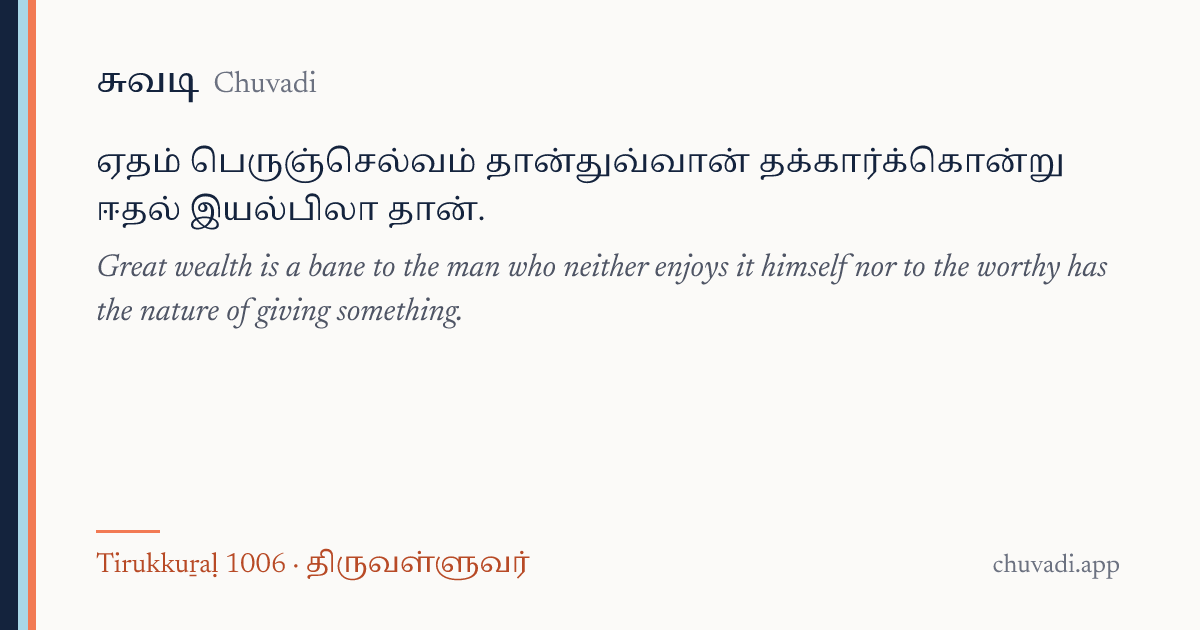
திருக்குறள் 1006
பாடல் · The poem
Tap a word to see where else it occurs.
பொருள் · Meaning in TamilAI
தானும் அனுபவிக்காமல், தகுதியானவர்களுக்கு ஒன்றைக் கொடுக்கும் இயல்பும் இல்லாதவனுக்கு, அவனுடைய பெருஞ்செல்வமே ஒரு கேடாகும்.
நன்றியில்செல்வம் அதிகாரம். ‘ஏதம்’ என்பது துன்பம், கேடு. காக்கும் கவலையும் இழக்கும் அச்சமும் மட்டுமே தருவதால், பயன்படுத்தாத செல்வம் உடையவனுக்கே சுமையாகிறது என்பது கருத்து. நுகர்வும் கொடையும் இல்லாதபோது செல்வம் வரமாக இல்லாமல் சாபமாகிறது.
ஆங்கிலம் · English translationAI
Translation
- Great wealth is a bane to the man who neither enjoys it himself nor to the worthy
- has the nature of giving something.
What the poem says
Ētam means harm or misery. Great wealth becomes a misfortune for the man who does not enjoy it (tāṉ tuvvāṉ) and who has no habit (iyalpu) of giving to the deserving (takkārkku).
The couplet takes the two uses of wealth from 1005, enjoying and giving, and adds that wealth without them is actively harmful, not just useless. It brings worry, envy and danger without any benefit. The second line's word order follows the Tamil.
யாப்பு · Metre: veṇpā scansion
வெண்பா · புணர்ச்சியுடன் Scans as a veṇpā once a final குற்றியலுகரம் is dropped before a vowel, as prosody reads it (நின்று உலகம் → நின் றுலகம்).
நேர் one letter, short or long, with any consonant after it · நிரை a short letter with the letter after it · a final உ before a vowel is dropped, and ஐ after a word's first letter counts as short.