



திருக்குறள் 1018
பாடல் · The poem
Tap a word to see where else it occurs.
பொருள் · Meaning in TamilAI
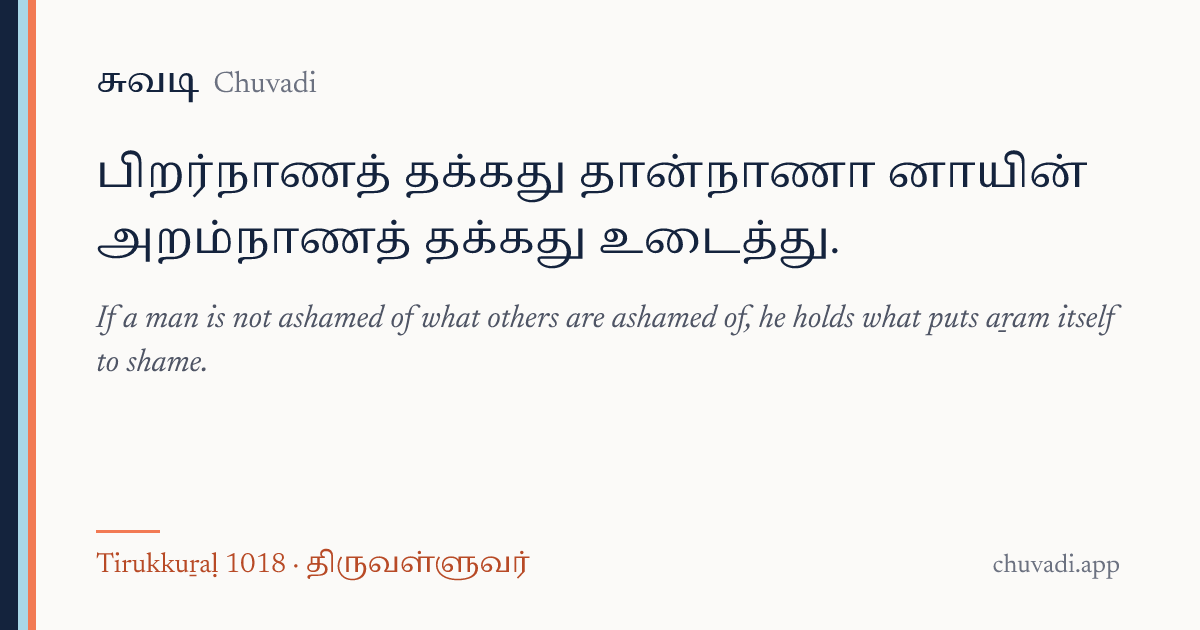
பிறர் நாணத்தக்க இழிசெயலுக்கு ஒருவன் தான் நாணாமல் இருப்பானாயின், அறமே அவனைக் கண்டு நாணும்படியான குற்றம் அவனிடம் உண்டு.
நாணுடைமை அதிகாரம். ‘நாணத்தக்கது’ என்ற தொடர் இருமுறை வந்து, மனிதன் நாணாதபோது அறம் நாணுகிறது என்ற கற்பனையை உருவாக்குகிறது. அறத்தை உணர்வுள்ள ஒன்றாகக் காட்டுவது இக்குறளின் சிறப்பு.
ஆங்கிலம் · English translationAI
Translation
- If a man is not ashamed of what others are ashamed of,
- he holds what puts aṟam itself to shame.
What the poem says
Someone who feels no shame at things that would shame others becomes a cause of shame to aṟam, virtue itself. Virtue is personified as being embarrassed by him.
Traditional commentators often take it further: aṟam will be ashamed and leave him. The Tamil says only that he possesses (uṭaittu) what aṟam would be ashamed of. The repeated nāṇa, 'to be ashamed', ties the man's lack of shame to virtue's shame at him.
யாப்பு · Metre: veṇpā scansion
வெண்பா · புணர்ச்சியுடன் Scans as a veṇpā once a final குற்றியலுகரம் is dropped before a vowel, as prosody reads it (நின்று உலகம் → நின் றுலகம்).
நேர் one letter, short or long, with any consonant after it · நிரை a short letter with the letter after it · a final உ before a vowel is dropped, and ஐ after a word's first letter counts as short.