



திருக்குறள் 1023
பாடல் · The poem
Tap a word to see where else it occurs.
பொருள் · Meaning in TamilAI
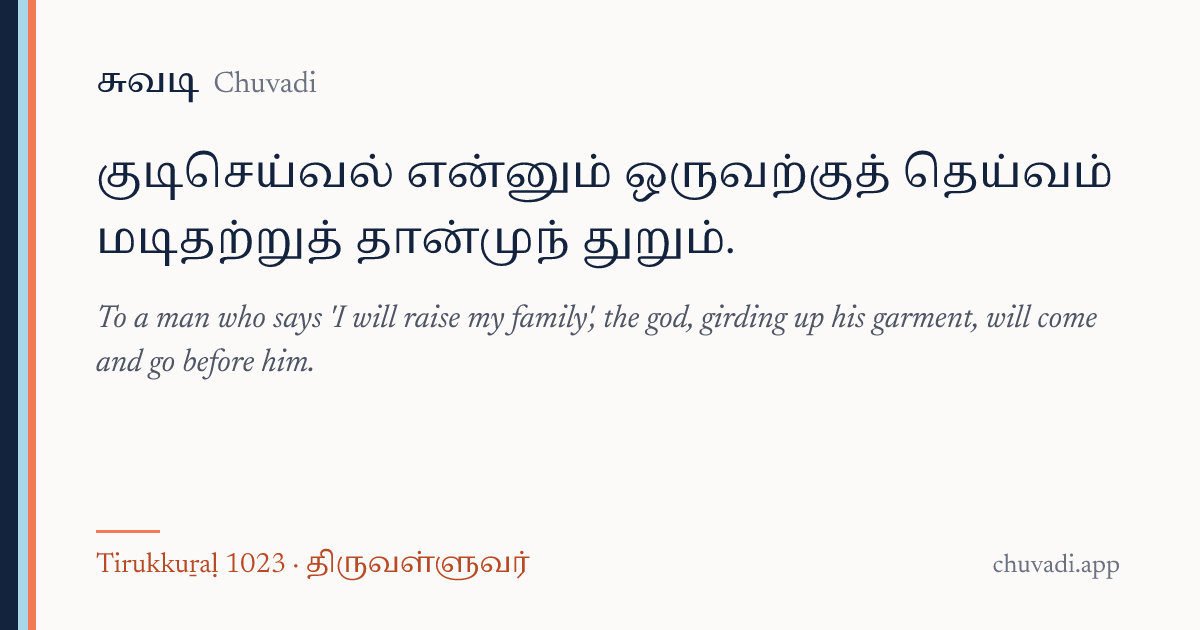
‘என் குடியை உயர்த்துவேன்’ என்று முனைந்து நிற்கும் ஒருவனுக்கு, தெய்வமே தன் ஆடையை இடுப்பில் இறுக்கிக் கட்டிக்கொண்டு அவனுக்கு முன்னால் வந்து உதவும்.
குடிசெயல்வகை அதிகாரம். ‘மடிதற்று’ என்பது வேலைக்குத் தயாராக ஆடையைச் சுருட்டிக் கட்டிக்கொள்ளும் காட்சி; தெய்வமே ஓர் உழைப்பாளியைப் போல முன்வருவதாகக் காட்டும் கற்பனை அழகானது. முயல்பவனுக்கே தெய்வத்தின் துணை என்பது கருத்து.
ஆங்கிலம் · English translationAI
Translation
- To a man who says 'I will raise my family', the god,
- girding up his garment, will come and go before him.
What the poem says
The image is bold. A deity (teyvam) tucks up his cloth (maṭi taṟṟu), as a man does before hard work, and goes ahead (muntuṟum) of the one who resolves to raise his family, helping to clear his path.
Maṭi is ambiguous. It means 'garment' or 'lap', and also 'idleness'. Most readers take maṭi taṟṟu as girding the loins. A play on the second sense, the god casting off sloth, may also be intended. The couplet does not say which god; teyvam may also mean fate.
யாப்பு · Metre: veṇpā scansion
வெண்பா Scans as a veṇpā as printed: every சீர் is one a veṇpā allows, and every join keeps வெண்டளை.
நேர் one letter, short or long, with any consonant after it · நிரை a short letter with the letter after it · a final உ before a vowel is dropped, and ஐ after a word's first letter counts as short.