



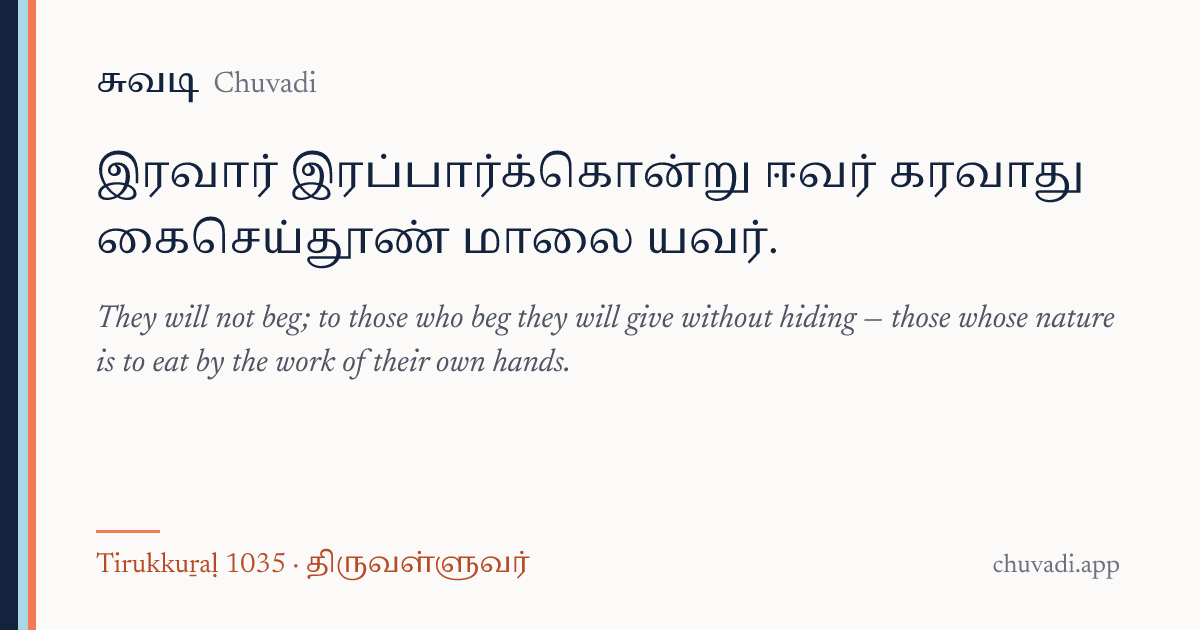
திருக்குறள் 1035
பாடல் · The poem
Tap a word to see where else it occurs.
பொருள் · Meaning in TamilAI
தம் கையால் உழைத்து உண்ணும் இயல்புடையவர்கள் பிறரிடம் இரக்கமாட்டார்கள்; தம்மிடம் இரப்பவர்களுக்கு ஒளிக்காமல் ஏதேனும் கொடுப்பார்கள்.
உழவு அதிகாரம். ‘இரவார்’, ‘இரப்பார்க்கு’ என்ற சொல் இணை, உழவர் யாசகம் கேட்பவர்கள் அல்லர், யாசகம் தருபவர்கள் என்று நிலைகளைத் தலைகீழாக்கிக் காட்டுகிறது. ‘கைசெய்தூண்’ என்பது சொந்த உழைப்பால் வரும் உணவு.
ஆங்கிலம் · English translationAI
Translation
- They will not beg; to those who beg they will give without hiding —
- those whose nature is to eat by the work of their own hands.
What the poem says
Those who live by kaicey ūṇ, food produced by their own hands, never need to ask anyone (iravār). They give to those who ask, and do it karavātu, without hiding what they have.
The couplet ties economic independence to generosity. Self-reliance frees one from begging and makes giving possible. Kai, 'hand', stresses physical labour.
யாப்பு · Metre: veṇpā scansion
வெண்பா · புணர்ச்சியுடன் Scans as a veṇpā once a final குற்றியலுகரம் is dropped before a vowel, as prosody reads it (நின்று உலகம் → நின் றுலகம்).
நேர் one letter, short or long, with any consonant after it · நிரை a short letter with the letter after it · a final உ before a vowel is dropped, and ஐ after a word's first letter counts as short.