



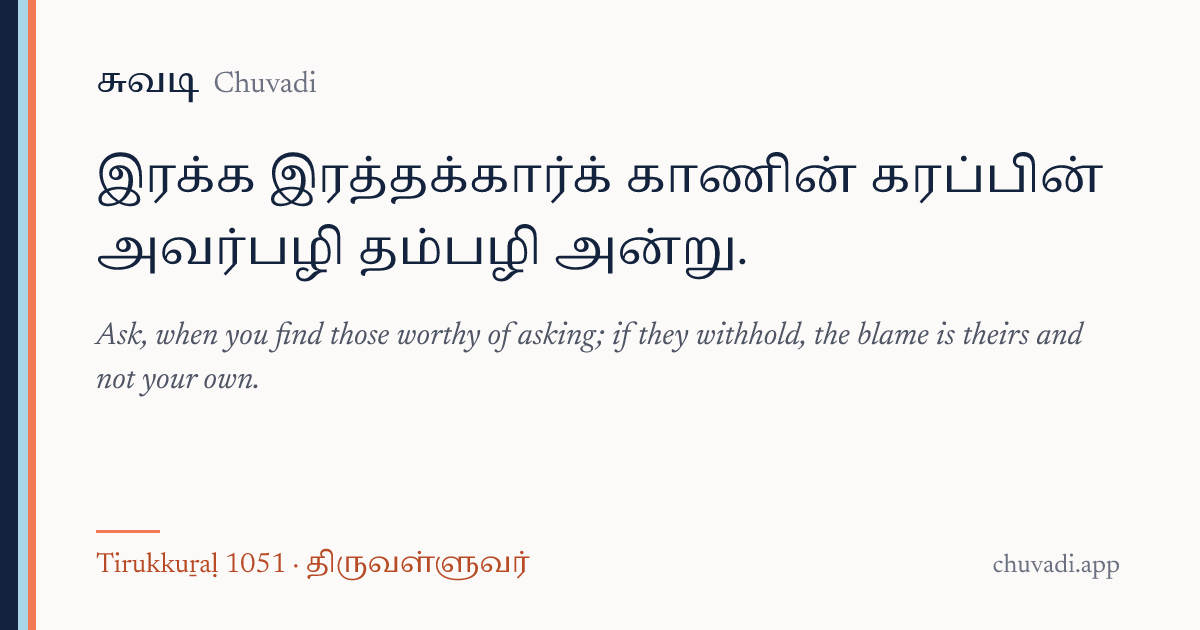
திருக்குறள் 1051
பாடல் · The poem
Tap a word to see where else it occurs.
பொருள் · Meaning in TamilAI
இரக்கத் தகுந்தவர்களைக் கண்டால் அவர்களிடம் கேட்கலாம்; அவர்கள் இருப்பதை மறைத்துக் கொடுக்காவிட்டால், அந்தப் பழி அவர்களுடையதே, கேட்டவருடையது அன்று.
இரவு அதிகாரம், தகுந்தவரிடம் கேட்பது இழிவு அன்று என்று தொடங்குகிறது. கேட்பவன் தவறு செய்யவில்லை; உள்ளதை ஒளித்தவனே குற்றவாளி என்று பழியைச் சரியான இடத்தில் வைக்கிறார்.
ஆங்கிலம் · English translationAI
Translation
- Ask, when you find those worthy of asking; if they withhold,
- the blame is theirs and not your own.
What the poem says
After the miseries of poverty, the chapter on asking (iravu) allows that there is a right way to ask. If the poor man finds people fit to be asked, generous and able, he may ask them; should they then hide what they have (karattal, 'concealing', the chapter's recurring word for meanness), the disgrace (paḻi) falls on them. The couplet shifts shame from the asker to the refuser. This is a carefully limited permission: the next chapter will argue the opposite, that one should never ask at all.
யாப்பு · Metre: veṇpā scansion
வெண்பா Scans as a veṇpā as printed: every சீர் is one a veṇpā allows, and every join keeps வெண்டளை.
நேர் one letter, short or long, with any consonant after it · நிரை a short letter with the letter after it · a final உ before a vowel is dropped, and ஐ after a word's first letter counts as short.