



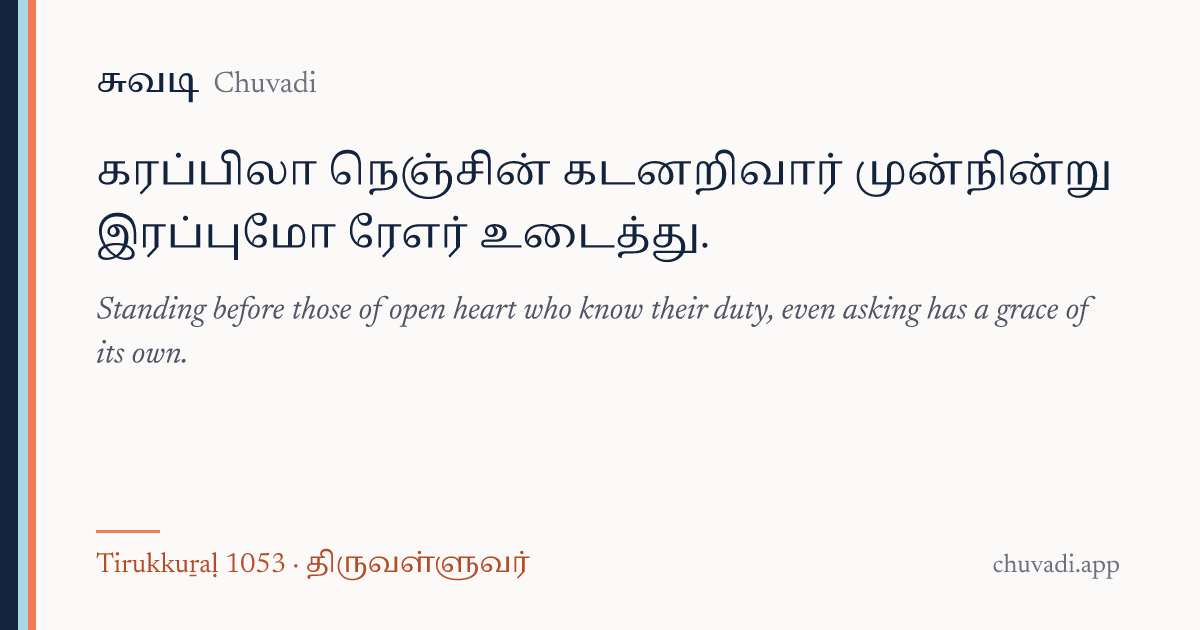
திருக்குறள் 1053
பாடல் · The poem
Tap a word to see where else it occurs.
பொருள் · Meaning in TamilAI
உள்ளதை மறைக்காத நெஞ்சமும், தம் கடமையை அறிந்த பண்பும் உடையவர்களின் முன்னே நின்று கேட்பதிலும் ஓர் அழகு உண்டு.
‘ஏர்’ என்பது அழகு, சிறப்பு. கொடுப்பதைக் கடமையாக உணர்பவர் முன் கேட்பது தாழ்வு அன்று, பெருமையே என்று இரவு அதிகாரம் வேறுபடுத்திக் காட்டுகிறது.
ஆங்கிலம் · English translationAI
Translation
- Standing before those of open heart who know their duty,
- even asking has a grace of its own.
What the poem says
The word ēr, beauty or grace, is unexpected beside iravu, asking, which is usually a word of shame. When the one asked has a heart without concealment (karappilā neñcu) and knows his kaṭaṉ, his duty or obligation, then to stand before him and ask is even graceful. Kaṭaṉ implies that giving is owed, a debt the fortunate pay to the needy, not a favour. The couplet suggests that a generous giver turns a humiliating act into an honourable one.
யாப்பு · Metre: veṇpā scansion
வெண்பா · புணர்ச்சியுடன் Scans as a veṇpā once a final குற்றியலுகரம் is dropped before a vowel, as prosody reads it (நின்று உலகம் → நின் றுலகம்).
நேர் one letter, short or long, with any consonant after it · நிரை a short letter with the letter after it · a final உ before a vowel is dropped, and ஐ after a word's first letter counts as short.