



திருக்குறள் 1073
பாடல் · The poem
Tap a word to see where else it occurs.
பொருள் · Meaning in TamilAI
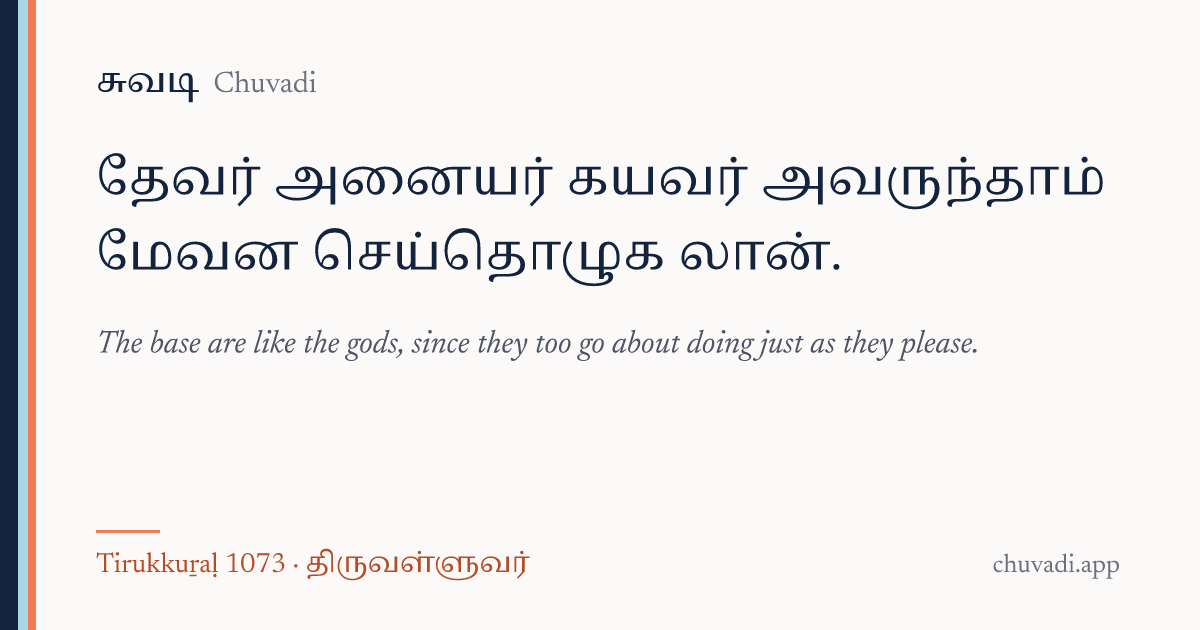
தாம் விரும்பியதையே செய்து வாழ்வதால், கயவர்கள் தேவர்களைப் போன்றவர்கள்.
தேவர் யாருக்கும் கட்டுப்படாமல் விரும்பியபடி நடப்பவர்; கயவரும் அறம், நாணம் என்ற எதற்கும் கட்டுப்படாதவர். உயர்ந்தோரோடு ஒப்பிட்டே இழிவைக் காட்டும் நுட்பம் கயமை அதிகாரத்தில் தொடர்கிறது. புகழ்ச்சி போலத் தோன்றும் இந்தச் சொல்லில் கூர்மையான கேலி மறைந்திருக்கிறது.
ஆங்கிலம் · English translationAI
Translation
- The base are like the gods, since they too
- go about doing just as they please.
What the poem says
The comparison with the dēvar, the gods, is mock-praise. Gods act by their own will, without being bound by rules; so do the base, who follow only their desires (mēvaṉa). The surface resemblance hides an opposite cause: the gods are free because they are above law, the base because they ignore it. The chapter keeps using flattering comparisons to make its accusations sharper.
யாப்பு · Metre: veṇpā scansion
வெண்பா Scans as a veṇpā as printed: every சீர் is one a veṇpā allows, and every join keeps வெண்டளை.
நேர் one letter, short or long, with any consonant after it · நிரை a short letter with the letter after it · a final உ before a vowel is dropped, and ஐ after a word's first letter counts as short.