



திருக்குறள் 110
பாடல் · The poem
Tap a word to see where else it occurs.
பொருள் · Meaning in TamilAI
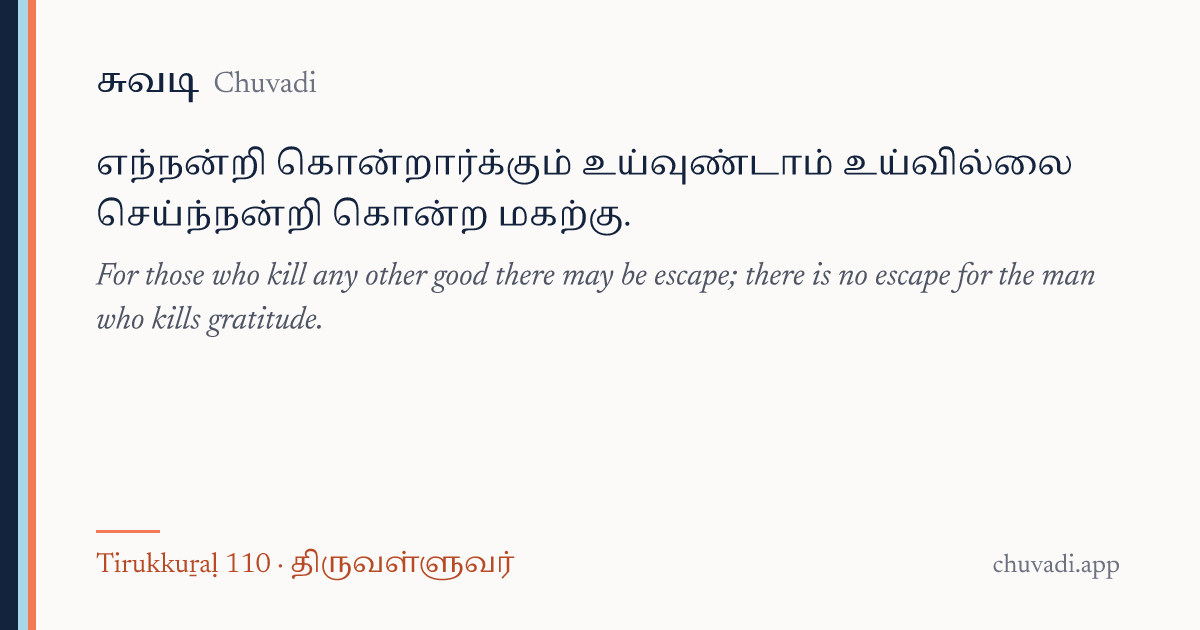
எந்த அறத்தை அழித்தவர்களுக்கும் தப்பிப் பிழைக்க வழி உண்டு; ஆனால், தனக்குச் செய்யப்பட்ட நன்றியை அழித்தவனுக்கு உய்வே இல்லை.
செய்ந்நன்றி அறிதல் அதிகாரத்தின் நிறைவுக் குறள். ‘நன்றி கொல்லுதல்’ என்ற கடுமையான சொல்லாட்சி நன்றி மறத்தலை ஒரு கொலையாகவே காட்டுகிறது; ‘உய்வுண்டாம்’, ‘உய்வில்லை’ என்ற எதிர்நிலை அந்த முடிவை உறுதியாக்குகிறது.
ஆங்கிலம் · English translationAI
Translation
- For those who kill any other good there may be escape; there is no escape
- for the man who kills gratitude.
What the poem says
The chapter ends with a stark judgement. Whoever has destroyed any other kind of good may find uyvu, deliverance or redemption; but for one who has 'killed' ceynnaṉṟi, the kindness done to him, there is none.
'Killing' a kindness means betraying or forgetting it, repaying good with harm. Traditional commentators read uyvu as release from the consequences of sin, so that ingratitude is a wrong for which no expiation exists. The repetition of uyvu, 'escape', across the line break creates a sharp contrast: there is escape, there is no escape. The chapter's title word ceynnaṉṟi closes the argument.
யாப்பு · Metre: veṇpā scansion
வெண்பா Scans as a veṇpā as printed: every சீர் is one a veṇpā allows, and every join keeps வெண்டளை.
நேர் one letter, short or long, with any consonant after it · நிரை a short letter with the letter after it · a final உ before a vowel is dropped, and ஐ after a word's first letter counts as short.