



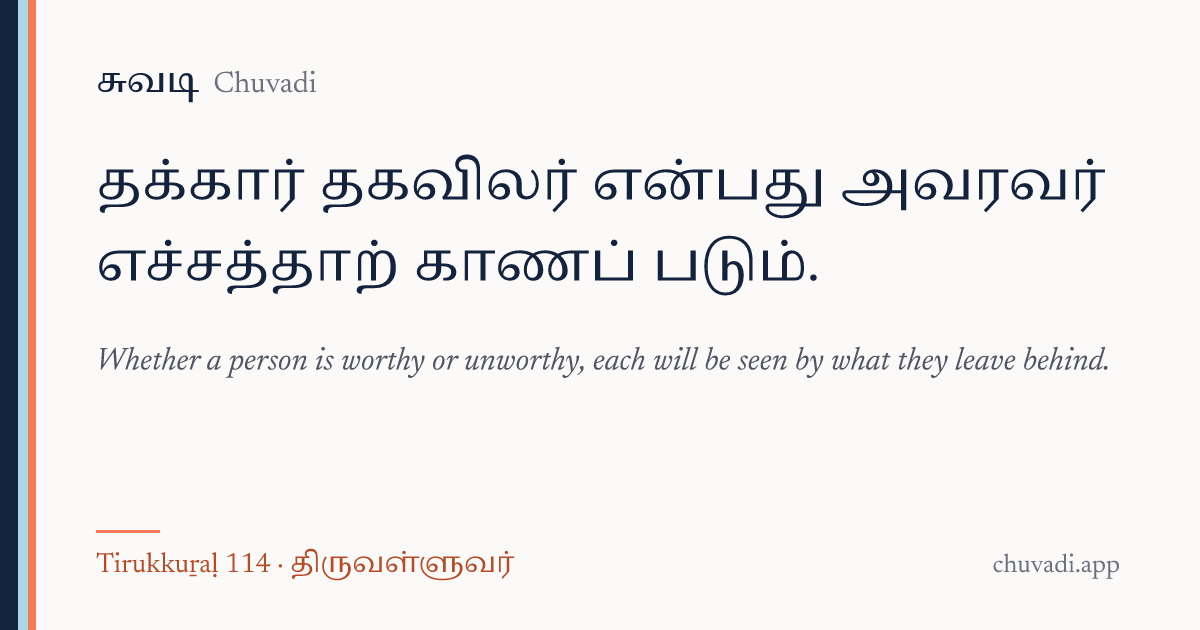
திருக்குறள் 114
பாடல் · The poem
Tap a word to see where else it occurs.
பொருள் · Meaning in TamilAI
ஒருவர் நடுநிலை உடையவரா, இல்லாதவரா என்பது அவரவர் விட்டுச் செல்லும் எச்சத்தால் தெரிந்துவிடும்.
நடுவு நிலைமை அதிகாரத்தில் ‘எச்சம்’ என்ற சொல் மீண்டும் வருகிறது. அதை ஒருவர் விட்டுச் செல்லும் மக்கள் என்றும், புகழ் அல்லது பழி என்றும் கொள்ளலாம்; இதற்கு வேறு பொருளும் கொள்ளப்படுகிறது. ஒருவரின் வாழ்வு முடிந்த பின் எஞ்சுவதே அவரை அளக்கும் அளவுகோல் என்பது கருத்து.
ஆங்கிலம் · English translationAI
Translation
- Whether a person is worthy or unworthy, each
- will be seen by what they leave behind.
What the poem says
How do we tell the fair from the unfair? By their eccam, what remains of them.
This is the word that also appeared in 112, and it is genuinely ambiguous. Many traditional commentators read it as children: the character of one's descendants reveals one's own. Others take it as one's name and reputation after death, or the outcome of one's deeds. The second reading avoids the uncomfortable suggestion that people without children cannot be judged, and fits the chapter's concern with moral consequence. Takkār, 'the fitting', and takavilar, 'the unfitting', echo the takuti, fairness, of 111.
யாப்பு · Metre: veṇpā scansion
வெண்பா · புணர்ச்சியுடன் Scans as a veṇpā once a final குற்றியலுகரம் is dropped before a vowel, as prosody reads it (நின்று உலகம் → நின் றுலகம்).
நேர் one letter, short or long, with any consonant after it · நிரை a short letter with the letter after it · a final உ before a vowel is dropped, and ஐ after a word's first letter counts as short.