



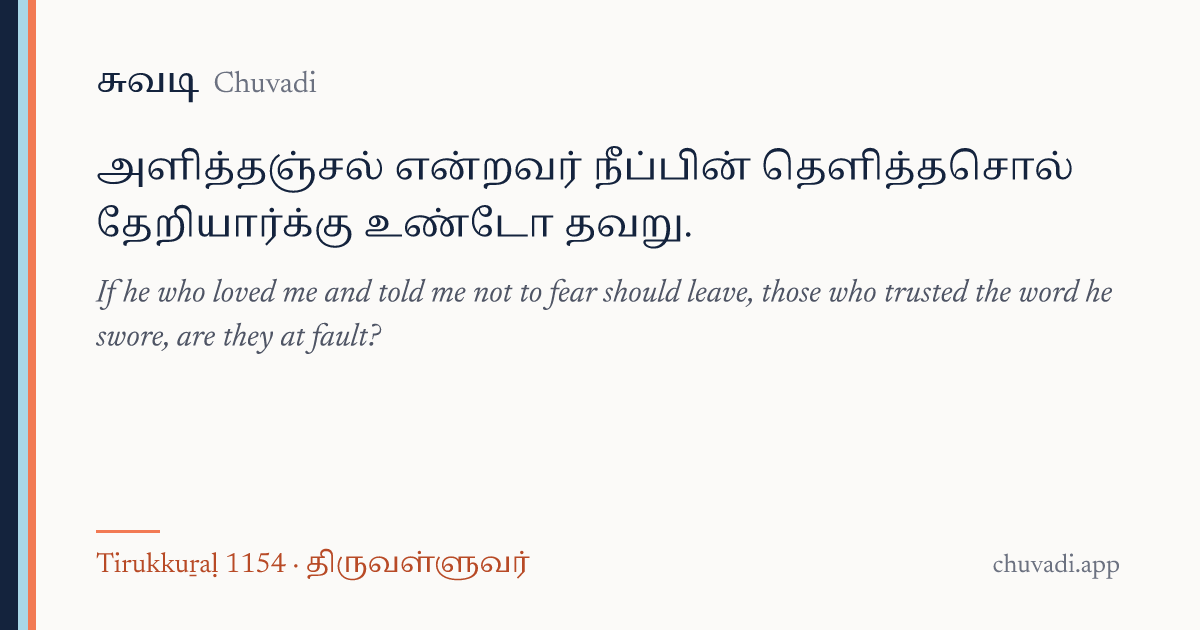
திருக்குறள் 1154
பாடல் · The poem
Tap a word to see where else it occurs.
பொருள் · Meaning in TamilAI
அன்பு செய்து ‘அஞ்சாதே’ என்று சொன்னவரே பிரிந்து சென்றால், அவர் உறுதியாகச் சொன்ன சொல்லை நம்பியவர் மேல் ஏதேனும் குற்றம் உண்டோ?
பிரிவாற்றாமை அதிகாரத்தில் தலைவி கூற்று. குற்றம் வாக்குத் தவறியவர் மேலே, நம்பியவள் மேல் இல்லை என்று மென்மையாக, ஆனால் உறுதியாக வாதிடுகிறாள்.
ஆங்கிலம் · English translationAI
Translation
- If he who loved me and told me not to fear should leave, those who trusted
- the word he swore, are they at fault?
What the poem says
He was kind (aḷittu) and said 'do not fear' (añcal); if he now leaves, can she be blamed for having believed his assuring words (teḷitta col)? The question defends her trust. Teḷitta suggests words made clear or confirmed, a promise. The couplet echoes 1149, where his añcal ōmpu was also recalled, and shifts the blame for her suffering to him.
யாப்பு · Metre: veṇpā scansion
வெண்பா Scans as a veṇpā as printed: every சீர் is one a veṇpā allows, and every join keeps வெண்டளை.
நேர் one letter, short or long, with any consonant after it · நிரை a short letter with the letter after it · a final உ before a vowel is dropped, and ஐ after a word's first letter counts as short.