



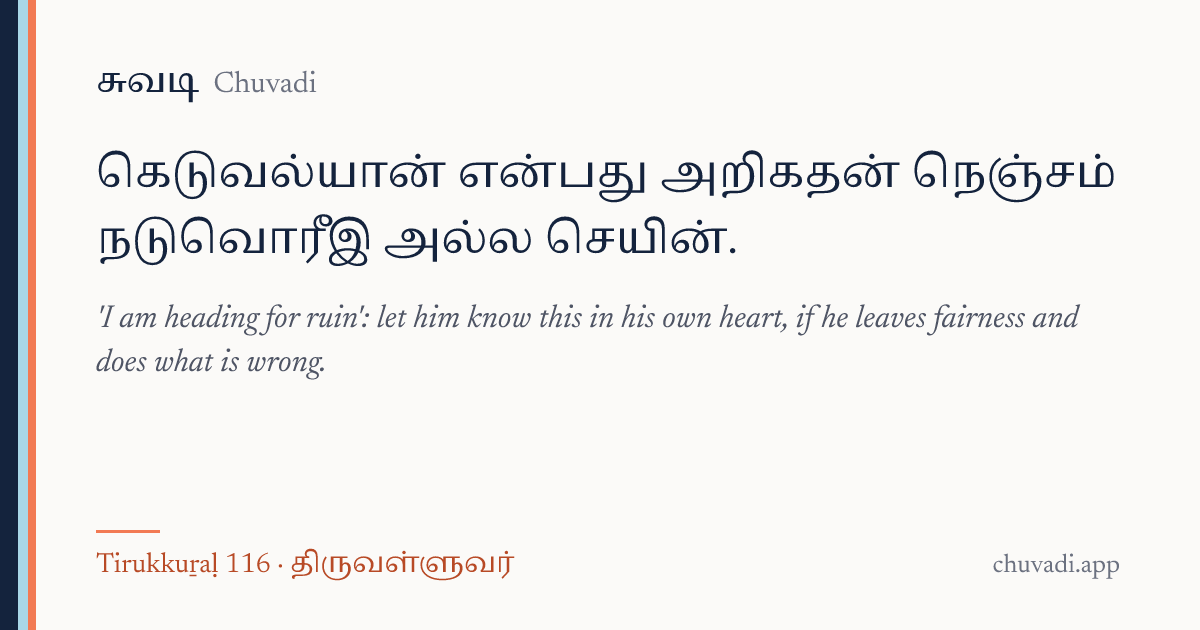
திருக்குறள் 116
பாடல் · The poem
Tap a word to see where else it occurs.
பொருள் · Meaning in TamilAI
ஒருவனுடைய நெஞ்சம் நடுநிலையை விட்டு விலகி முறையற்றதைச் செய்ய எண்ணினால், அதுவே ‘நான் அழியப் போகிறேன்’ என்பதற்கான அறிகுறி என்று அவன் அறிந்துகொள்ளட்டும்.
நடுவு நிலைமை அதிகாரம் அழிவின் முதல் அடையாளத்தை வெளியே அல்லாமல் மனத்துக்குள்ளேயே காட்டுகிறது. ‘நடுவொரீஇ’ என்பது நடுநிலையிலிருந்து நீங்கி.
ஆங்கிலம் · English translationAI
Translation
- 'I am heading for ruin': let him know this in his own heart,
- if he leaves fairness and does what is wrong.
What the poem says
The couplet is phrased as an inner warning. If someone abandons impartiality and does what is not right, let his own heart recognise that he is going to ruin.
The first person keṭuvalyāṉ, 'I shall perish', puts the realisation in the wrongdoer's own mouth. The idea is that the consequence is already contained in the act, and an honest heart can see it. Naṭu orīi, 'abandoning the middle', repeats the chapter's central image of fairness as a central line. The couplet pairs well with 117, which turns to the opposite case.
யாப்பு · Metre: veṇpā scansion
வெண்பா · புணர்ச்சியுடன் Scans as a veṇpā once a final குற்றியலுகரம் is dropped before a vowel, as prosody reads it (நின்று உலகம் → நின் றுலகம்).
நேர் one letter, short or long, with any consonant after it · நிரை a short letter with the letter after it · a final உ before a vowel is dropped, and ஐ after a word's first letter counts as short.