



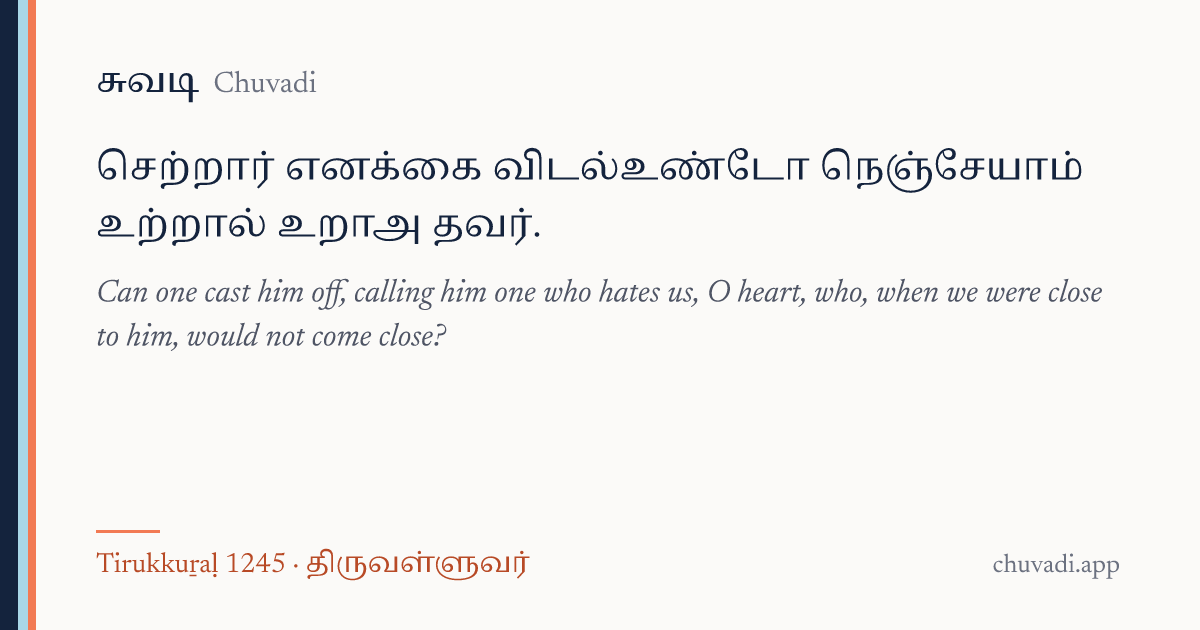
திருக்குறள் 1245
பாடல் · The poem
Tap a word to see where else it occurs.
பொருள் · Meaning in TamilAI
நெஞ்சே, நாம் அவரை நெருங்கிச் சென்றாலும் அவர் நம்மை நெருங்கவில்லை; அதற்காக அவரைப் பகைவர் என்று கைவிட்டுவிட முடியுமா?
நெஞ்சொடுகிளத்தல் அதிகாரத்தில் தலைவி பேசுகிறாள். அவருடைய அன்பின்மை தெரிந்தும் அவரை விட முடியாத நிலையே இங்கு சொல்லப்படுகிறது.
ஆங்கிலம் · English translationAI
Translation
- Can one cast him off, calling him one who hates us, O heart,
- who, when we were close to him, would not come close?
What the poem says
He has not returned their love, yet the heart cannot simply reject him as an enemy. She asks whether such a thing is possible.
Ceṟṟār means one who hates or spurns. Uṟṟāl uṟāatavar, 'one who does not draw near when we draw near', describes his coldness. The question expects the answer no: even unreturned love cannot be thrown away. Some take the line as encouragement to give him up, but the tone of the chapter favours the sadder reading.
யாப்பு · Metre: veṇpā scansion
வெண்பா Scans as a veṇpā as printed: every சீர் is one a veṇpā allows, and every join keeps வெண்டளை.
நேர் one letter, short or long, with any consonant after it · நிரை a short letter with the letter after it · a final உ before a vowel is dropped, and ஐ after a word's first letter counts as short.