



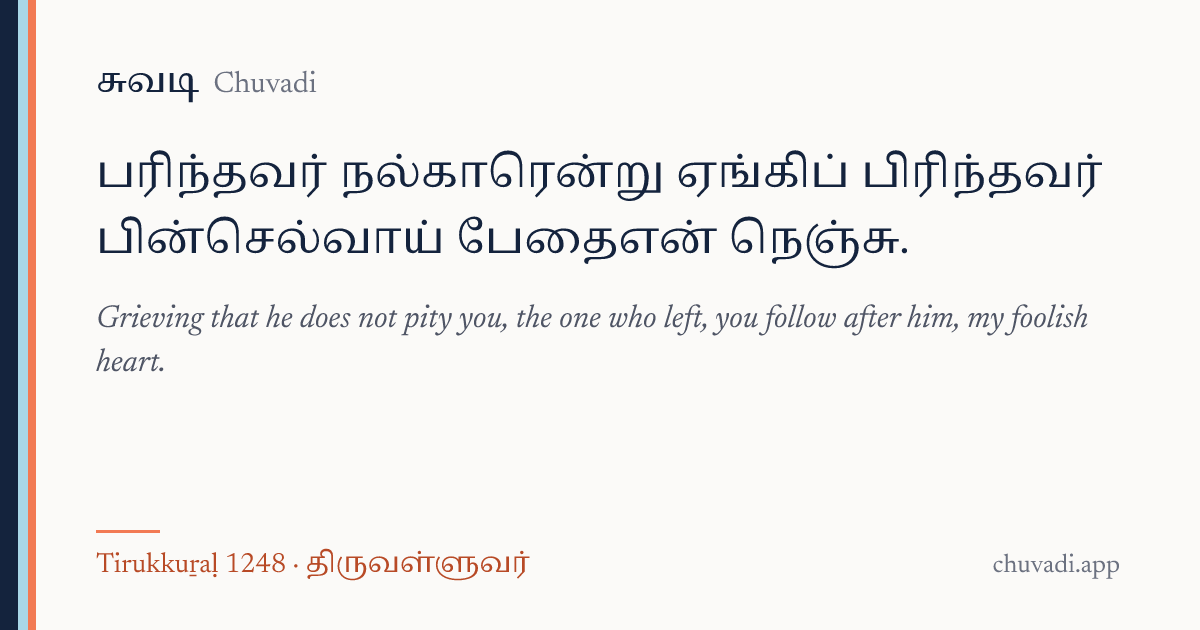
திருக்குறள் 1248
பாடல் · The poem
Tap a word to see where else it occurs.
பொருள் · Meaning in TamilAI
என் பேதை நெஞ்சே, அவர் இரக்கம் கொண்டு அன்பு காட்டவில்லையே என்று ஏங்கி, பிரிந்து சென்றவர் பின்னாலேயே நீ போகிறாயே!
நெஞ்சொடுகிளத்தல் அதிகாரத்தில் தலைவியின் கூற்று. குறை சொல்லிக்கொண்டே பின்தொடர்வது, அறிவுக்கும் அன்புக்கும் உள்ள முரணைக் காட்டுகிறது.
ஆங்கிலம் · English translationAI
Translation
- Grieving that he does not pity you, the one who left,
- you follow after him, my foolish heart.
What the poem says
The heart laments that he shows no tenderness, yet it keeps running after the man who left. The heroine calls it simple-minded for this.
Parintavar nalkār, 'he does not show grace with tenderness', is the complaint; piṉcelvāy, 'you go behind', is the heart's helpless response. The first and second lines contradict each other, which is the point.
யாப்பு · Metre: veṇpā scansion
வெண்பா · புணர்ச்சியுடன் Scans as a veṇpā once a final குற்றியலுகரம் is dropped before a vowel, as prosody reads it (நின்று உலகம் → நின் றுலகம்).
நேர் one letter, short or long, with any consonant after it · நிரை a short letter with the letter after it · a final உ before a vowel is dropped, and ஐ after a word's first letter counts as short.