



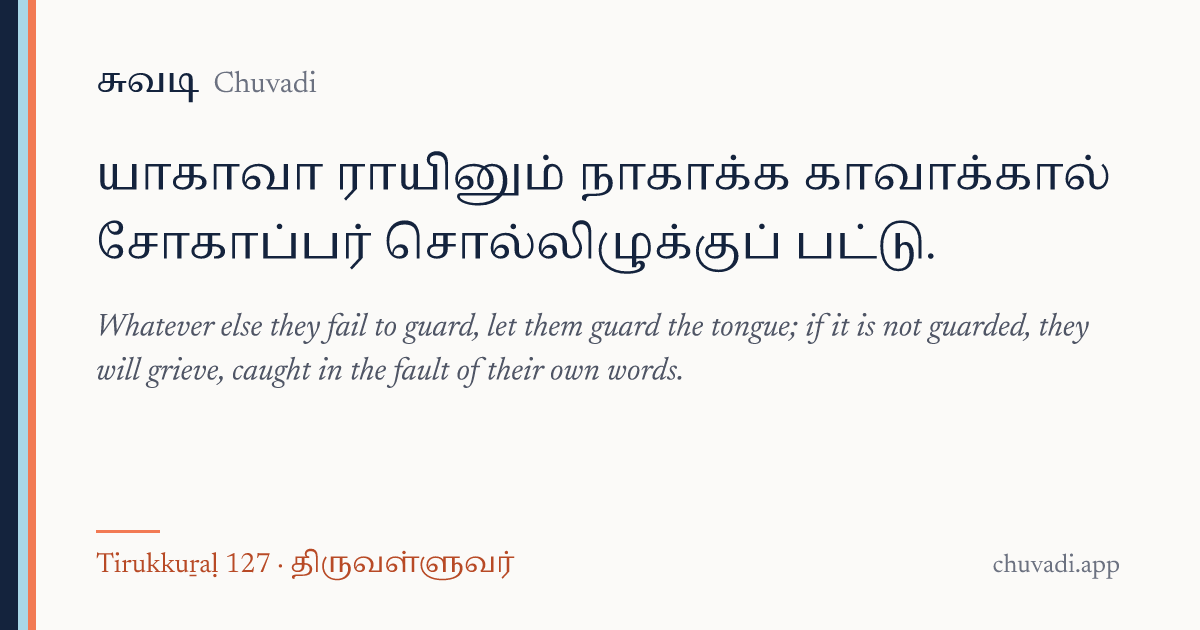
திருக்குறள் 127
பாடல் · The poem
Tap a word to see where else it occurs.
பொருள் · Meaning in TamilAI
வேறு எதைக் காக்காவிட்டாலும் நாவை மட்டுமாவது காக்க வேண்டும்; அதைக் காக்கத் தவறினால், சொல்லில் நேரும் குற்றத்தில் சிக்கித் துயருறுவார்கள்.
அடக்கமுடைமை அதிகாரத்தின் புகழ்பெற்ற குறள், ‘கா’ என்ற ஓசை மீண்டும் மீண்டும் ஒலிக்கும்படி அமைந்துள்ளது. ‘சோகாப்பர்’ என்பது துயருறுவர்; ‘சொல்லிழுக்கு’ என்பது சொல்லால் வரும் தவறு.
ஆங்கிலம் · English translationAI
Translation
- Whatever else they fail to guard, let them guard the tongue; if it is not guarded,
- they will grieve, caught in the fault of their own words.
What the poem says
The chapter turns to speech. Whatever else one may neglect to restrain, one must restrain the tongue, or else one will suffer through the slip of one's own words.
The couplet is famous for its sound: yākāvār, nākākka, kāvākkāl, cōkāppar repeat the syllable kā, from kā, 'to guard'. Col iḻukku, 'the slip of a word', uses the same verb iḻukku, 'to slip', as couplet 35. The idea that a careless tongue undoes a person echoes the chapter on sweet speech (91 to 100), where harsh words were shown to be foolish; here they are dangerous.
யாப்பு · Metre: veṇpā scansion
வெண்பா Scans as a veṇpā as printed: every சீர் is one a veṇpā allows, and every join keeps வெண்டளை.
நேர் one letter, short or long, with any consonant after it · நிரை a short letter with the letter after it · a final உ before a vowel is dropped, and ஐ after a word's first letter counts as short.