



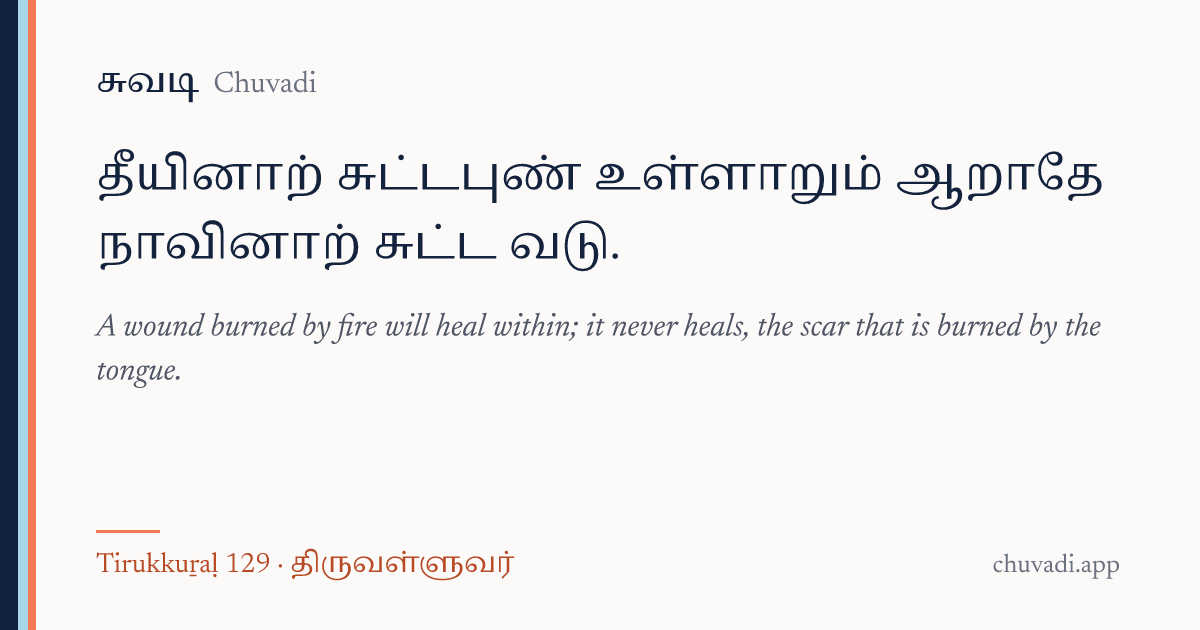
திருக்குறள் 129
பாடல் · The poem
Tap a word to see where else it occurs.
பொருள் · Meaning in TamilAI
நெருப்பால் சுட்ட புண் உள்ளே ஆறிவிடும்; ஆனால் நாவால் சுட்ட வடு ஒருபோதும் ஆறாது.
அடக்கமுடைமை அதிகாரத்தின் மிகப் புகழ்பெற்ற உவமை. ‘புண்’ ஆறிவிடும், ‘வடு’ நிலைத்துவிடும் என்ற சொல் தேர்வே பொருளைத் தாங்குகிறது; கடுஞ்சொல் உடலை அல்ல, உள்ளத்தைச் சுடுகிறது.
ஆங்கிலம் · English translationAI
Translation
- A wound burned by fire will heal within; it never heals,
- the scar that is burned by the tongue.
What the poem says
This is one of the best-known couplets in Tamil. A burn from fire may heal from within, but a burn caused by the tongue leaves a vaṭu, a scar, that never heals.
The verb cuṭu, 'to burn', is used for both fire and tongue, making the comparison exact. The contrast between puṇ, a wound, and vaṭu, a scar, is deliberate: the fire-wound closes, while the tongue's mark remains. Uḷ āṟum, 'heals inside', may also suggest that the tongue's wound is inside too, in the heart, where it cannot be reached. The couplet sums up the chapter's warning against unrestrained speech.
யாப்பு · Metre: veṇpā scansion
வெண்பா Scans as a veṇpā as printed: every சீர் is one a veṇpā allows, and every join keeps வெண்டளை.
நேர் one letter, short or long, with any consonant after it · நிரை a short letter with the letter after it · a final உ before a vowel is dropped, and ஐ after a word's first letter counts as short.