



திருக்குறள் 14
பாடல் · The poem
Tap a word to see where else it occurs.
பொருள் · Meaning in TamilAI
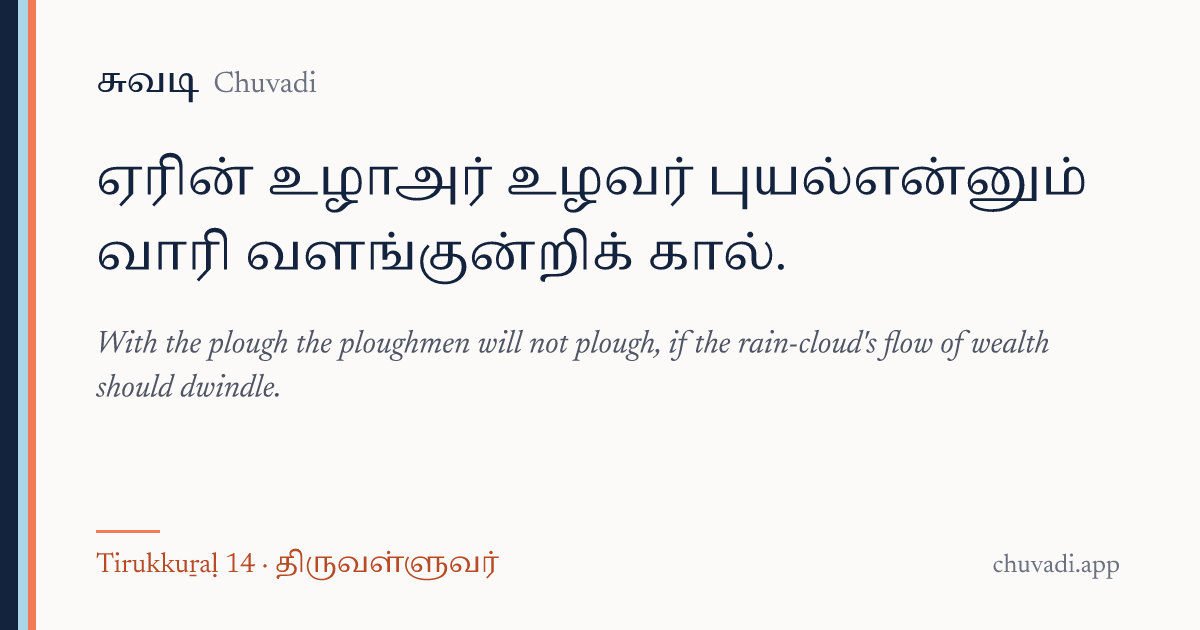
மழை என்னும் வருவாய் தன் வளத்தில் குறைந்துவிட்டால், உழவர்கள் ஏரைக் கொண்டு நிலத்தை உழ மாட்டார்கள்.
‘புயல்’ என்பது இங்கே மேகத்தையும் மழையையும் குறிக்கிறது; ‘வாரி’ என்பது வருவாய், செல்வம். உலகுக்கு உணவளிக்கும் உழவே மழையைச் சார்ந்தது என்று வான்சிறப்பு அதிகாரம் வலியுறுத்துகிறது.
ஆங்கிலம் · English translationAI
Translation
- With the plough the ploughmen will not plough,
- if the rain-cloud's flow of wealth should dwindle.
What the poem says
Here the argument narrows from the world at large to agriculture, which the Kuṟaḷ elsewhere treats as the foundation of all other work. If the rain fails, the farmers simply stop ploughing; without rain the whole chain of labour halts at its first link.
Puyal, now 'storm', here means the rain-cloud. Vāri is 'income, abundance', the steady yield that rain brings. The Tamil stacks the plough, the ploughmen and the act of ploughing into the first line (ēriṉ uḻāar uḻavar), a repetition that mirrors the steady, ordinary work that drought would bring to a standstill.
யாப்பு · Metre: veṇpā scansion
வெண்பா Scans as a veṇpā as printed: every சீர் is one a veṇpā allows, and every join keeps வெண்டளை.
நேர் one letter, short or long, with any consonant after it · நிரை a short letter with the letter after it · a final உ before a vowel is dropped, and ஐ after a word's first letter counts as short.