



திருக்குறள் 143
பாடல் · The poem
Tap a word to see where else it occurs.
பொருள் · Meaning in TamilAI
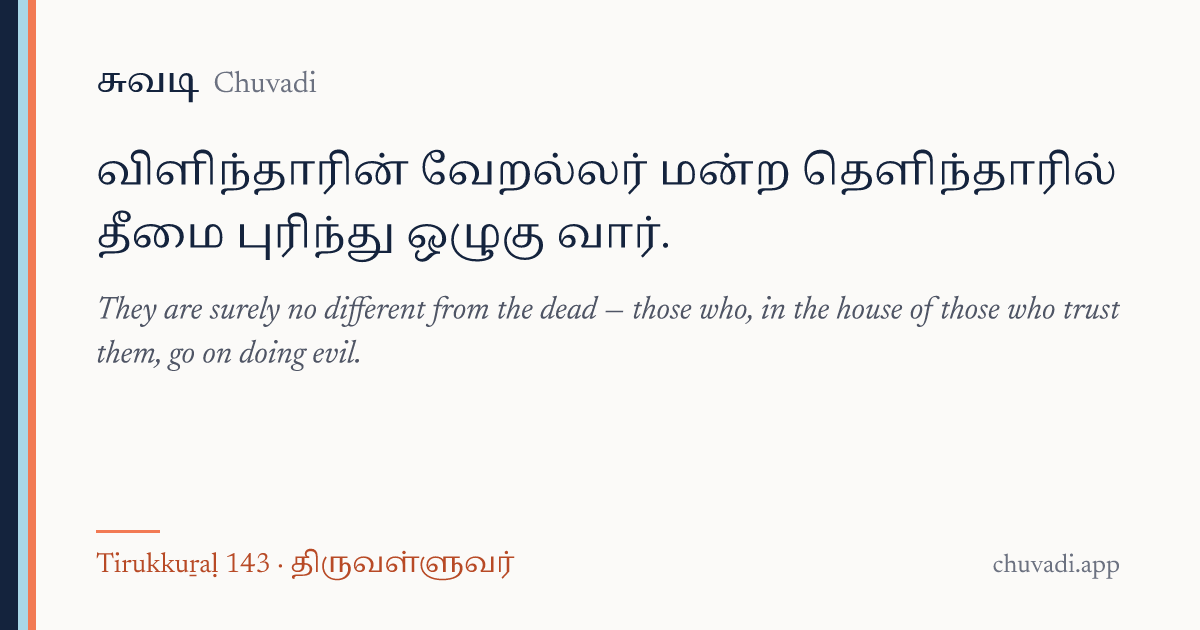
தம்மை ஐயமின்றி நம்பியவர்களின் இல்லத்தில் தீங்கு செய்து நடப்பவர்கள், உயிரோடு இருந்தாலும் இறந்தவர்களிலிருந்து வேறுபட்டவர்கள் அல்லர்.
நம்பிக்கைத் துரோகம் பெரும் இழிவு என்பதைப் பிறனில் விழையாமை அதிகாரம் இங்கு வலியுறுத்துகிறது. ‘தெளிந்தார்’ என்பவர் தெளிவாக நம்பியவர்கள்; அவர்களுக்கு இழைக்கும் தீங்கு இரட்டிப்புக் குற்றம்.
ஆங்கிலம் · English translationAI
Translation
- They are surely no different from the dead — those who, in the house of those who trust them,
- go on doing evil.
What the poem says
The dead, viḷintār, have lost everything that makes a life; the man who betrays a friend's trust by seducing his wife is no different. Teḷintār, "those who have become clear", here means those who trust, who have no suspicion of him.
The particular horror is betrayal from within confidence: the wrong is done in the home of someone who opened it freely. Maṉṟa, "surely", gives the verdict a tone of certainty. Commentators read teḷintār il either as "the house of one who trusts" or as "the wife of one who trusts"; il can mean both house and wife.
யாப்பு · Metre: veṇpā scansion
சரிபார்க்க இயலவில்லை Does not scan with the rules checked here. It may need a sandhi reading the checker does not model yet, or the text may differ from the edition prosodists use.
- line 2 has 4 சீர், a வெண்பா line needs 3
- «ஒழுகு» → «வார்» breaks வெண்டளை
நேர் one letter, short or long, with any consonant after it · நிரை a short letter with the letter after it · a final உ before a vowel is dropped, and ஐ after a word's first letter counts as short.