



திருக்குறள் 163
பாடல் · The poem
Tap a word to see where else it occurs.
பொருள் · Meaning in TamilAI
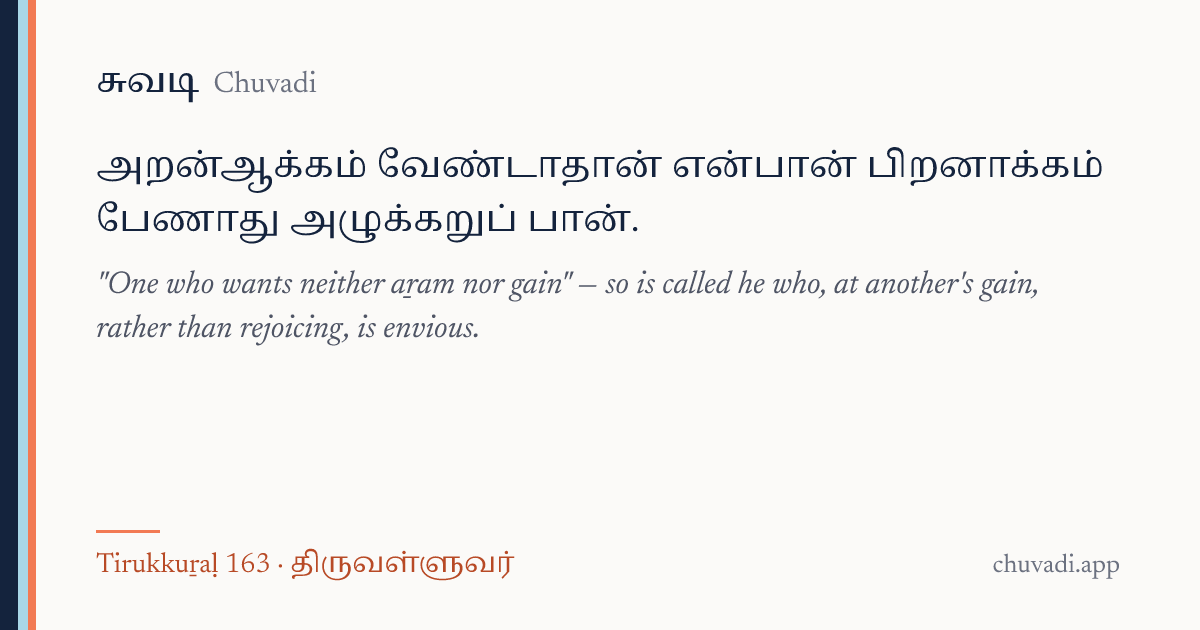
பிறருடைய வளர்ச்சியைக் கண்டு மகிழாமல் பொறாமைப்படுபவன், தனக்கு அறமும் செல்வமும் வேண்டாம் என்று விலக்குபவன் என்றே கருதப்படுவான்.
பொறாமை கொள்வது, தன் நன்மையைத் தானே மறுப்பது போன்றது என்று அழுக்காறாமை அதிகாரம் காட்டுகிறது. ‘பேணாது’ என்பது போற்றி மகிழாமல்.
ஆங்கிலம் · English translationAI
Translation
- "One who wants neither aṟam nor gain" — so is called he who, at another's gain,
- rather than rejoicing, is envious.
What the poem says
The envious man condemns himself. By resenting another's prosperity, ākkam, he shows that he does not really want aṟam or prosperity for himself, since envy destroys both.
The compound aṟaṉ ākkam may be read "aṟam and prosperity" or "the prosperity that comes from aṟam"; commentators take it both ways. The verb pēṇātu, "not cherishing", implies that the right response to another's good fortune is to welcome it. The repetition of ākkam ties his wish for gain to his hatred of gain in others.
யாப்பு · Metre: veṇpā scansion
வெண்பா · புணர்ச்சியுடன் Scans as a veṇpā once a final குற்றியலுகரம் is dropped before a vowel, as prosody reads it (நின்று உலகம் → நின் றுலகம்).
நேர் one letter, short or long, with any consonant after it · நிரை a short letter with the letter after it · a final உ before a vowel is dropped, and ஐ after a word's first letter counts as short.