



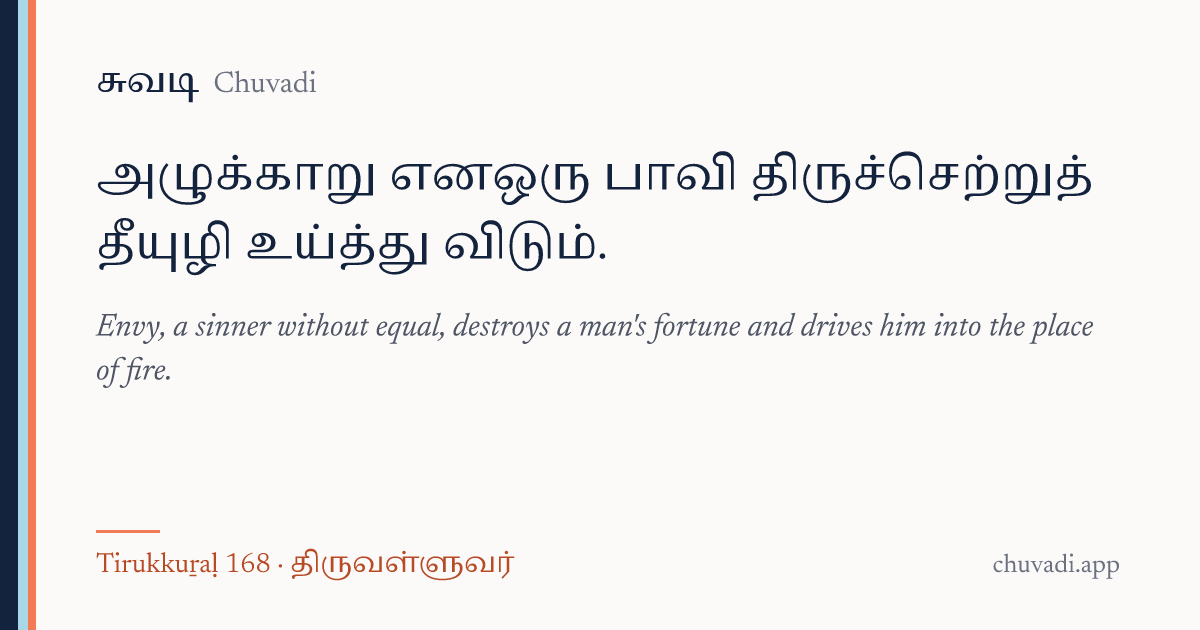
திருக்குறள் 168
பாடல் · The poem
Tap a word to see where else it occurs.
பொருள் · Meaning in TamilAI
பொறாமை என்னும் ஒப்பற்ற பாவி, ஒருவனுடைய செல்வத்தை அழித்து, அவனைத் தீய நரகத்திலும் கொண்டு சேர்த்துவிடும்.
பொறாமையை ஒரு கொடிய மனிதனாக உருவகப்படுத்துகிறது அழுக்காறாமை அதிகாரம். இம்மையில் செல்வ அழிவும், மறுமையில் நரகமும் என இரு கேடுகளையும் சுட்டுகிறது.
ஆங்கிலம் · English translationAI
Translation
- Envy, a sinner without equal, destroys a man's fortune
- and drives him into the place of fire.
What the poem says
Envy is personified as pāvi, a sinner or evil being, oru, unique in its kind. It wrecks tiru, wealth or fortune, in this life and then leads one into tīyuḻi, "the evil place".
Tīyuḻi can mean hell, as most traditional commentators read it, or more generally a state of misery. The English "place of fire" keeps the root tī, fire or evil, which carries both senses. The couplet moves from worldly loss in the first line to something worse in the second.
யாப்பு · Metre: veṇpā scansion
வெண்பா · புணர்ச்சியுடன் Scans as a veṇpā once a final குற்றியலுகரம் is dropped before a vowel, as prosody reads it (நின்று உலகம் → நின் றுலகம்).
நேர் one letter, short or long, with any consonant after it · நிரை a short letter with the letter after it · a final உ before a vowel is dropped, and ஐ after a word's first letter counts as short.