



திருக்குறள் 188
பாடல் · The poem
Tap a word to see where else it occurs.
பொருள் · Meaning in TamilAI
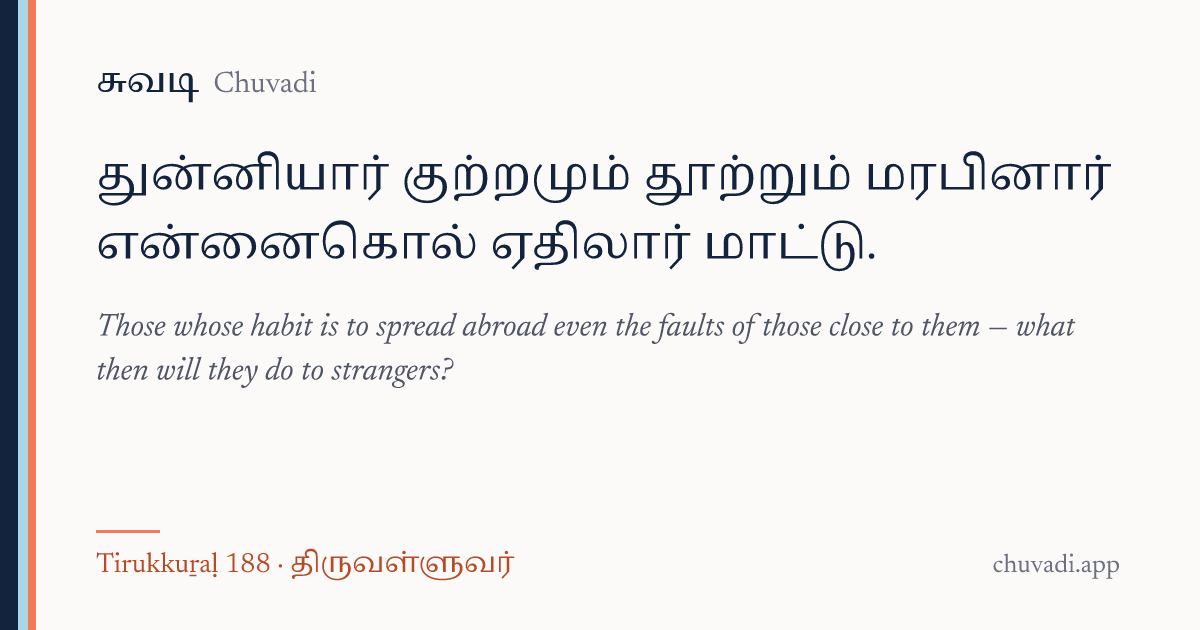
தம்மோடு நெருங்கிப் பழகியவர்களின் குற்றங்களையே ஊரெல்லாம் பரப்பும் பழக்கம் உடையவர்கள், அயலாரிடம் என்னதான் செய்ய மாட்டார்கள்?
நெருங்கியவர்களையே விட்டுவைக்காதவர் அந்நியரை எப்படி நடத்துவார் என்ற கேள்வியால், புறங்கூறாமை அதிகாரம் அந்தப் பழக்கத்தின் ஆழத்தை அளக்கிறது. ‘துன்னியார்’ என்பவர் நெருங்கியவர்; ‘ஏதிலார்’ என்பவர் அயலார்.
ஆங்கிலம் · English translationAI
Translation
- Those whose habit is to spread abroad even the faults of those close to them —
- what then will they do to strangers?
What the poem says
An argument from the greater to the lesser. If they gossip about their own intimates, tuṉṉiyār, what might they do to people they have no tie with, ētilār?
Tūṟṟu means to scatter or broadcast, as winnowing scatters chaff. Marapiṉār, "those of such custom", suggests the slander has become a settled habit. The couplet ends with the question eṉṉaikol, "what indeed?", leaving the answer to the reader's imagination.
யாப்பு · Metre: veṇpā scansion
வெண்பா Scans as a veṇpā as printed: every சீர் is one a veṇpā allows, and every join keeps வெண்டளை.
நேர் one letter, short or long, with any consonant after it · நிரை a short letter with the letter after it · a final உ before a vowel is dropped, and ஐ after a word's first letter counts as short.