



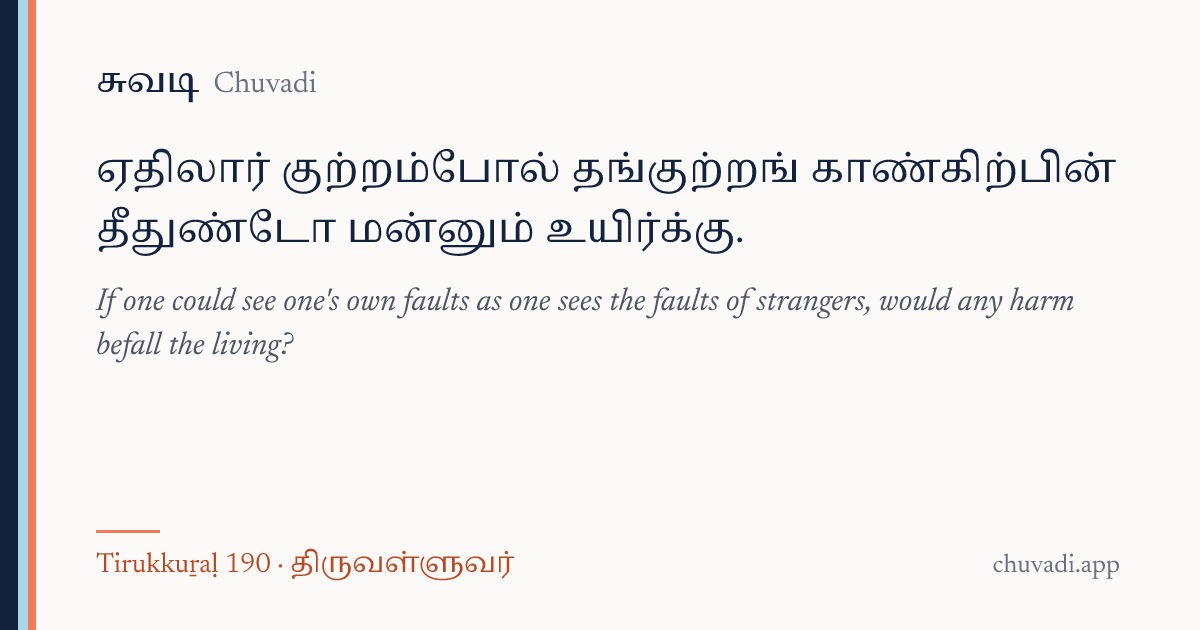
திருக்குறள் 190
பாடல் · The poem
Tap a word to see where else it occurs.
பொருள் · Meaning in TamilAI
அயலாரின் குற்றங்களைக் காண்பது போலத் தம்முடைய குற்றங்களையும் காணும் திறன் இருந்தால், உலகில் வாழும் உயிர்களுக்கு ஏதேனும் தீங்கு வருமோ?
புறங்கூறாமை அதிகாரத்தின் நிறைவுக் குறள். பிறர் குறையை நோக்கும் கண்ணைத் தன்பக்கம் திருப்புவதே புறங்கூறலுக்கு மருந்து என்று முடிக்கிறது.
ஆங்கிலம் · English translationAI
Translation
- If one could see one's own faults as one sees the faults of strangers,
- would any harm befall the living?
What the poem says
The chapter closes by turning attention inward. If people looked at their own faults the way they eagerly look at others', there would be no evil, tītu, for any living being.
Maṉṉum uyir, "the abiding soul" or "living beings that endure", may mean all creatures or the individual self. If the latter, the harm meant is to oneself; if the former, to the world. Both readings fit. The question form, tītuṇṭō, "is there evil?", implies a firm no.
யாப்பு · Metre: veṇpā scansion
வெண்பா Scans as a veṇpā as printed: every சீர் is one a veṇpā allows, and every join keeps வெண்டளை.
நேர் one letter, short or long, with any consonant after it · நிரை a short letter with the letter after it · a final உ before a vowel is dropped, and ஐ after a word's first letter counts as short.